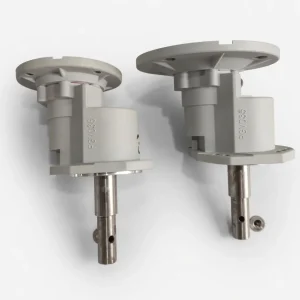
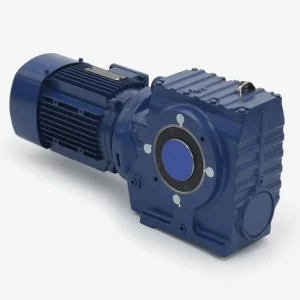
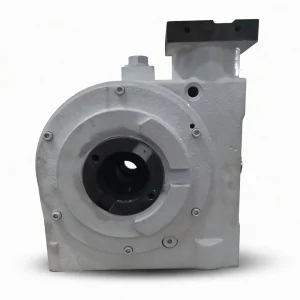
Description
Picture the inside of a busy roll-over car wash on a Saturday morning. Soap, hot water, and recycled spray hit the brush gantry every 90 seconds. The drive that swings those brushes around the vehicle has to keep working through 70,000 cycles a year, soaked, often in caustic, with grit blowing into every gap. That’s the job the XRV050 worm gearbox for car washers was built around. Built on the NMRV-50 frame and weatherized for tunnel and roll-over wash bays, the XRV050 from akgnx Co., Ltd combines a 50 mm center-distance worm set with IP55-rated motor integration, sealed bearings, and a corrosion-resistant alloy housing — engineered specifically for the constant water-and-detergent assault that destroys generic NMRV units within a season.
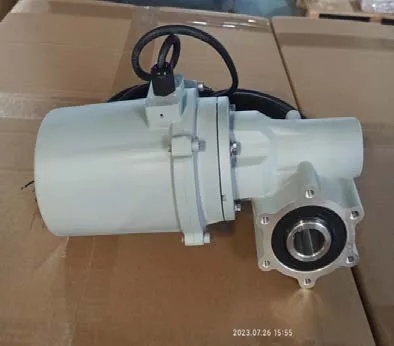
XRV050 Specifications and Where the Numbers Come From
The XRV050 shares its 50 mm center distance with the standard MRV050, but everything around the gearset is specified for wet-bay duty. The integrated motor is wound for 220V/380V three-phase or 230V single-phase, both rated IP55, with an extended drive shaft sealed by a double-lip Viton lip seal that survives caustic detergent at pH 12. Output torque sits at 86 N·m at the most common 25:1 ratio — comfortable headroom for a typical 8 m brush gantry on a roll-over wash, where steady-state torque rarely exceeds 35 N·m and peak torque (snagging on a side mirror) tops out around 70 N·m.
| Parameter | Value | Notes |
|---|---|---|
| Center distance | 50 mm | NMRV050 standard |
| Output torque @ i=25 | 86 N·m | Peak 130 N·m short-term |
| Ratios available | 7.5, 10, 15, 20, 25, 30, 40, 50, 60, 80, 100 | 25 and 30 most common in roll-overs |
| Input motor | 0.55–1.5 kW | IP55, single or three-phase |
| Output bore | 25 mm hollow | Solid shaft also available |
| Housing | ADC12 die-cast aluminum, epoxy-coated | Salt-spray ≥720 hrs (ASTM B117) |
| Worm wheel | CuSn12Ni2 bronze | ≥85 HB |
| Lubricant | Synthetic PAG ISO VG320 | Lifetime fill, no service interval |
| Operating temp | −10°C to +50°C ambient | −25°C with cold-climate option |
| Weight | 7.2 kg (with motor) | Bare gearbox 4.8 kg |
A 24-Month Field Story: Three Roll-Over Bays, Two Cities, One Drivetrain
A regional fuel-station chain runs 32 forecourt car-wash bays across Spain and Portugal. Up until 2023, brush-gantry drives were a generic NMRV50 paired with a TEFC motor — and they failed, on average, every 9 to 11 months. The pattern was always the same: water creeping past the input shaft seal, oil emulsifying, the worm wheel scoring within weeks. Replacement cost per bay (parts, labor, three days of lost wash revenue) ran around €1,800. The chain’s mechanical group switched 14 bays to the XRV050 in February 2024 as a controlled trial.
Twenty months later, the numbers tell the story. Zero gearbox failures across the trial group, against four failures in the matched control group of NMRV50-equipped bays over the same period. Average gearbox running temperature dropped 6°C — a side-effect of the synthetic PAG fill replacing the mineral oil the supplier had used. The motor windings stayed clean because the IP55 rating actually held up to the 60-bar wash gun the staff used to clean the gantry frame at end-of-shift. After the trial, the chain rolled the XRV050 out to all 32 bays, with payback period calculated at 14 months once parts and downtime savings were folded in. Two specification details made the difference: the welded-style epoxy seam on the housing parting line, and a breather routed up into the gantry housing rather than exposed at the gearbox surface.

What Actually Kills a Standard NMRV in a Wash Bay
When a generic NMRV50 fails inside a car wash, the post-mortem usually points at one of three things. First — the input shaft oil seal. Standard NBR rubber lasts about 4,000 hours in dry industrial duty; in a wash bay, where detergent at pH 11–12 hits the seal lip every cycle, the rubber hardens and cracks within 5–6 months. Second — the housing parting line. Standard die-cast units rely on the gasket and the bolt-down force to keep water out. Six months of vibration plus thermal cycling, and water finds the gap. Third — galvanic corrosion at the steel motor flange against the aluminum gearbox face, eating away the spigot fit until the motor moves on its own bolts.
XRV050 deals with each of these head-on. The input seal is FKM (Viton), rated for caustic exposure up to pH 13 and 200°C. The parting line gets a continuous bead of anaerobic sealant under the gasket, then bolted at 12 Nm (above NMRV standard) on M6 stainless cap screws. The motor flange spigot is anodized to break the galvanic couple. None of this is exotic engineering — but you have to specify it, and a generic stocked NMRV won’t have it.
Where the XRV050 Fits Beyond Car Washes
The XRV designation is built around car-wash duty, but the same set of features answers other low-power wet drives. We see XRV050 going into fish-market floor scrubbers, swimming-pool cover drives, mushroom-farm humidity-cycle ventilation dampers, irrigation pivot turn drives, and outdoor parking-lot vacuum-arm hoists. Anywhere a 0.55–1.5 kW motor lives outdoors or in a high-humidity room and needs a self-locking right-angle drive — XRV050 will outlast a generic NMRV by a factor of three to four. For chloride-rich environments (coastal car washes, seawater pump rooms, marine boat lifts), step up to the HSRV050 stainless variant instead.
Brand Compatibility: What the XRV050 Replaces Directly
| Existing Unit | XRV050 Drop-In Match |
|---|---|
| Motovario NMRV50 + TEFC motor | Direct, same flange and bolt pattern |
| Bonfiglioli VF49 | Direct (note: B14 face flange, B5 needs adapter) |
| SEW S37 / S47 | Compatible with adapter plate |
| STM RV50, Varvel RT50, Siti MU50 | Direct (same NMRV50 envelope) |
| OEM Istobal car-wash drive | Match torque + 25:1 ratio, same gantry mounting |
| OEM WashTec / Christ / Otto Christ | Match the brush gantry torque arm fitment |
Installing an XRV050 — Five Things Worth Getting Right
- Mount the gearbox so the breather faces up. Sounds obvious. Plenty of installs end up with the breather sideways or, worse, pointing into the spray pattern. Pick the mounting orientation that puts the breather above the housing centerline.
- Use a wet-environment cable gland on the motor. The motor is IP55 — but only if the cable entry is sealed. M20 nylon glands with O-ring backup work fine.
- Apply anti-seize to the output shaft. Aluminum housing + steel shaft + water = galvanic seize within a year on a hollow-shaft fit. A thin film of marine-grade anti-seize prevents the shaft from welding into the bore.
- Loop the motor cable in a drip catenary. Don’t run the cable horizontally into the motor terminal box. A small downward loop (50 mm sag) stops water tracking down the cable into the windings.
- Check the breather monthly for the first quarter. If you see oil mist or a discoloration on the housing around the breather, the gearbox is overfilled — drain a small amount and re-check temperature.
Spare Parts and Wash-Ready Accessories
akgnx stocks the components that fail first in wash duty, ready to ship next-day from China:
- Replacement seal kits: FKM input + output lip seals, plus housing gasket and breather. Average install time 35 minutes.
- Stainless output shafts: 25 mm solid or hollow, AISI 316L for coastal car washes — see stainless worm shaft options.
- Worm-and-wheel sets: Pre-lapped pairs for 25:1 and 30:1 ratios (the two ratios that cover 80% of car-wash demand).
- IEC B14 motor adapters: If you’re swapping in a brand-name motor (WEG, ABB, Siemens), the adapter ring lets you keep the existing motor stock.
- Cold-climate breather kits: Heated breather + low-pour-point oil for outdoor wash bays in regions where winter ambient drops below −10°C.
Why Wash Equipment Builders Spec the XRV050
akgnx ships the XRV050 to OEM wash-equipment builders and to operators who buy direct for retrofit. We’ve been making NMRV-pattern reducers since 2008. Lead time on the XRV050 with motor is 10 working days from order; bare gearbox without motor ships in 7 days. Every unit goes through a no-load run-in test plus a wet spray-cabinet test (60 minutes at 60-bar / 60°C demineralized water) before crating. Pricing sits roughly 40% below European-branded equivalents at landed cost, and the warranty runs 24 months including the motor windings. Find out more about akgnx production and quality systems.
What Operators Have Told Us
“Switched our chain over to the XRV050 about 18 months ago. The thing that surprised me was how quiet they run — our old units used to whine in the 2 kHz range, you could hear it through the wall in the office. These are noticeably quieter at the same RPM.”
— Javier R., Operations Lead, fuel-station car-wash chain, Spain
“Bought XRV050 for a tunnel wash retrofit — three brush stations and one wax dryer drive. Compatibility with our existing gantry was perfect, no machining needed. The IP55 motor was the selling point for me; we’d had three motor failures in two years on the old units.”
— Daniel O., Workshop Manager, car-wash equipment installer, Germany
“Used XRV050 on a swimming-pool cover drive that’s basically permanently outdoors. Ten months in, no rust spots on the housing, no oil weeping. The previous unit (different brand) was leaking around the output shaft after six months.”
— Sam K., Aquatic Facility Engineer, leisure center, United Kingdom
“Specified eight XRV050 for a self-service jet-wash chain. Order to install in 16 days, drawings matched the existing layout. Not a single failure in the first season — and our previous failure rate was around 30% per year on this position.”
— Krystian M., Technical Director, self-service car wash operator, Poland
XRV050 Questions Operators Ask Most
Q1: Can the XRV050 handle a high-pressure end-of-shift wash on the gantry frame?
Yes — the IP55 rating handles direct hose spray. For hoses above 80 bar, aim away from the breather and motor terminal box; that’s not a sealing issue, it’s just preventing water from being driven in through air paths. Repeated 100-bar direct hits should use the HSRV050 stainless variant with IP69K seals.
Q2: What ratio do most car-wash gantries actually run?
25:1 is the most common — gives a brush rotation of around 56 rpm with a 1400 rpm motor, which is the speed sweet spot for cleaning effectiveness without flinging soap off the bristles. 30:1 sees use on smaller-diameter brushes where the operator wants slightly slower bristle tip speed.
Q3: How does the self-locking property help during a power cut?
At 25:1 and above, the worm geometry holds the brush in place when the motor stops. So if a vehicle is mid-wash and power drops, the gantry doesn’t free-wheel forward and pin the car. That’s a real safety benefit specific to worm drives — helical gear reducers don’t have it.
Q4: Will the XRV050 fit my existing OEM wash bay?
If your existing drive is an NMRV50 (any brand), yes — same bolt pattern, same shaft height, same flange. For OEM bays from Istobal, WashTec, Otto Christ, or Karcher, send us a photo of the existing drive and the gantry torque arm; we’ll confirm fitment before shipping.
Q5: What’s the typical service life in continuous wash operation?
Field data from operators running 60–80 wash cycles per day points to 25,000–30,000 operating hours before any rebuild — call it 5–6 years of normal commercial operation. Generic NMRV50 in the same duty rarely makes it past 18 months.
Q6: Do you offer the XRV050 with a brake motor for emergency stop?
Yes — DC injection brake or spring-applied disc brake versions are available with 12 days lead time. The disc brake adds 1.8 kg and 65 mm to the motor end. Talk to our drive specialists about brake selection for your wash control logic.
Stop Replacing Wash-Bay Drives Every Year
Get XRV050 pricing, lead time, and a fitment check against your existing gantry — same business day.