
A worm gearbox that is correctly specified but incorrectly installed will fail early — often within the first 1,000 hours rather than the design life of 20,000+ hours. The three most common installation errors — wrong mounting orientation combined with incorrect oil fill level, motor shaft misalignment, and inadequate first-fill lubrication — are all entirely preventable with a systematic installation procedure. This guide covers the complete worm gearbox installation process step by step: receiving inspection, mounting orientation selection, base-plate or machine-frame installation, motor mounting and shaft alignment, first-fill lubrication, and commissioning checks. Each step includes the specific tolerance or measurement that confirms correct completion.
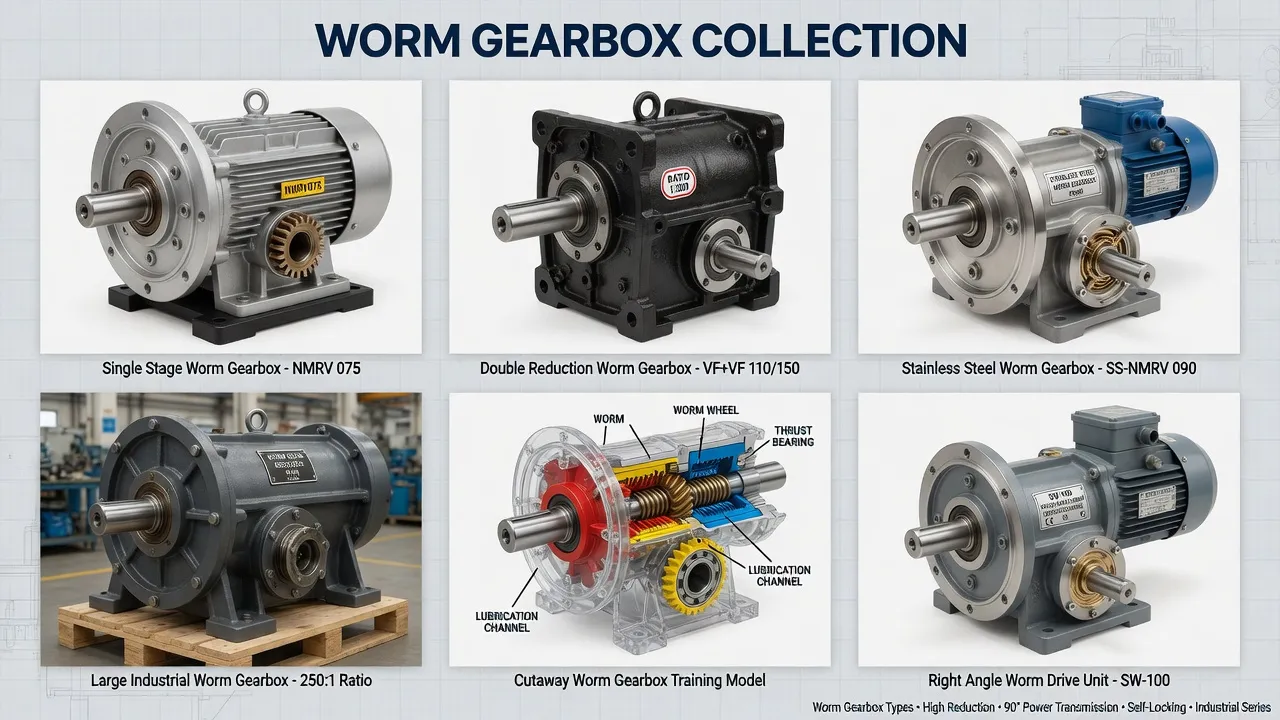
Step 1 — Receiving Inspection Before Installation
Before any mechanical installation, perform these checks on the received unit:
- Verify the nameplate: Confirm frame size (NMRV063, etc.), ratio (i=50), and IP rating match the order specification. Incorrect ratio is the most common receiving error — a 50:1 and 60:1 NMRV063 are physically identical externally.
- Check for transport damage: Inspect housing for cracks, check input and output shafts are not bent (roll on V-blocks or rotate by hand — any wobble above 0.05 mm indicates a damaged shaft). Check all flange faces are undamaged and free of burrs that would prevent flush motor seating.
- Verify oil fill condition: For shipped-with-oil units, check the sight glass or oil level plug. For shipped-dry units (clearly marked “fill before operation”), do not run the unit before filling.
- Check output shaft rotation: Rotate the input shaft by hand through several turns. The output should turn smoothly with consistent resistance. Grinding, clicking, or uneven resistance indicates internal damage and the unit should be returned before installation.
Step 2 — Select and Confirm the Mounting Orientation
The mounting orientation governs the oil fill level — this is the most critical decision in worm gearbox installation. The worm wheel and lower bearings must be adequately lubricated by oil bath; the upper bearings are lubricated by oil splash. If the oil level is set for the wrong orientation, either the worm wheel runs partially dry (causing accelerated wear) or the input shaft seal is flooded above its designed oil level (causing leakage).
Standard NMRV mounting position codes and their meanings:
| Code | Motor Position | Output Shaft Position | Oil Fill Level Note |
|---|---|---|---|
| B3 | Horizontal, foot-mount on base | Horizontal, perpendicular to motor | Standard fill to sight glass centre |
| B5 | Horizontal, flange-mount on wall | Horizontal, perpendicular to motor | Slightly reduced vs B3 — check table |
| B6 | Horizontal, output shaft pointing up | Vertical, shaft up | Reduced fill — shaft-up orientation |
| V1 | Vertical, motor above gearbox | Horizontal | Increased fill — input shaft pointing up |
| V5 | Vertical, motor below gearbox | Horizontal | Reduced fill — check manufacturer table |
| V6 | Horizontal, output shaft pointing down | Vertical, shaft down | Increased fill — output shaft down |
Critical rule: Every NMRV catalog contains a mounting-position oil-volume table specific to each frame size and position code. Find this table, look up your frame size and selected position code, and use the stated fill volume — not the “full” mark on a generic sight glass. A B3-rated gearbox installed in V1 (motor on top) and filled to the B3 level mark will be 35–50% underfilled relative to the V1 requirement, running the lower worm-wheel bearing partially dry. This mistake shortens service life from years to months.
Step 3 — Mounting to the Machine Frame or Base Plate
For foot-mount (B3) gearboxes: the machine base or base plate must be flat to within 0.2 mm across the full foot contact area. Uneven base causes housing distortion when the foot bolts are tightened, shifting the internal bearing alignment. Check the base flatness with a straightedge and feeler gauge before mounting.
- Bolt specification: Use the bolt size and class specified in the catalog. NMRV030–063: M8 8.8 class. NMRV075–110: M10 8.8 class. NMRV130–150: M12 8.8 class. Under-spec bolts allow micro-movement during operation that fatigues the shaft seal and creates vibration harmonics.
- Torque to specification: Tighten all foot bolts in a cross-pattern to the catalog torque specification. Do not rely on “feel” — use a calibrated torque wrench. Under-torqued bolts creep during thermal cycling; over-torqued bolts can crack the aluminum foot casting in NMRV030–063 frames.
- Anti-vibration pads: For gearboxes in high-vibration environments (crusher feeder, screw conveyor adjacent to vibrating screen), fit anti-vibration rubber pads between the foot and base plate. These reduce vibration transmission to the shaft seals — the primary cause of premature seal failure in high-vibration applications.
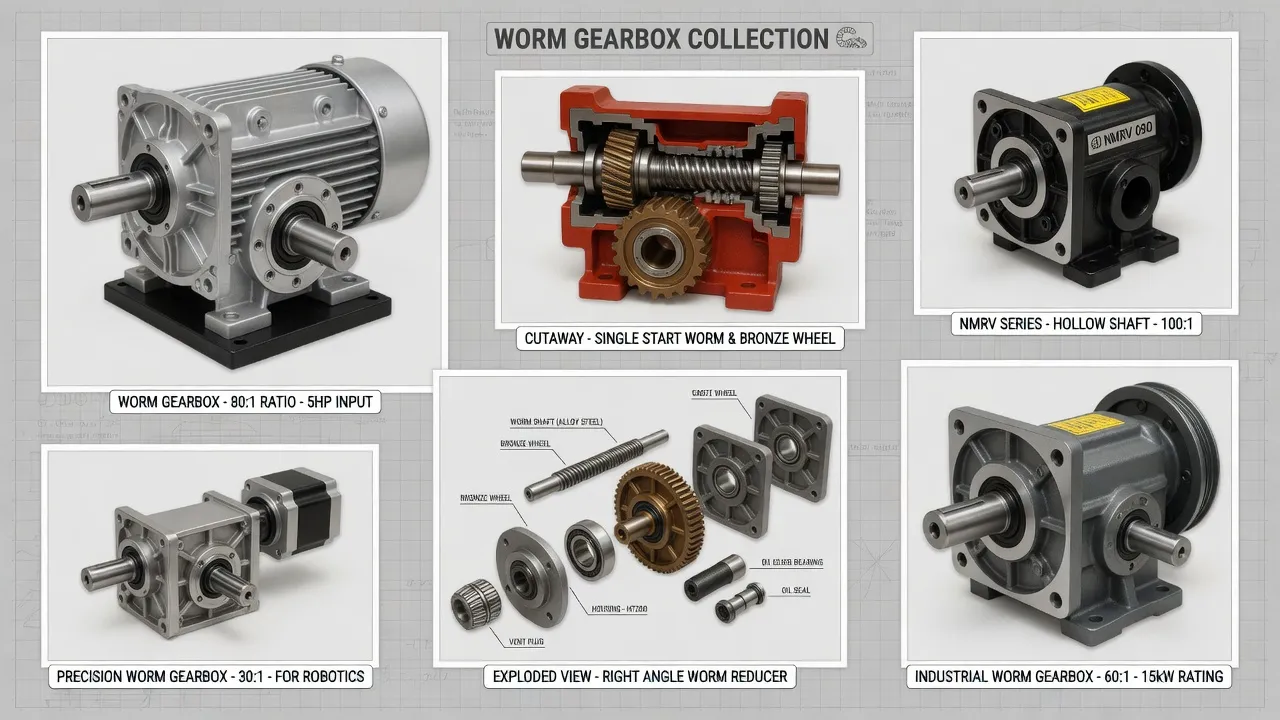
Step 4 — Motor Mounting and Shaft Alignment
The motor mounts to the gearbox input flange — IEC B5 or B14 depending on the gearbox specification. Before mounting the motor:
- Clean all mating surfaces: Remove any protective coating from the motor shaft and gearbox input shaft bore. Remove any burrs from the keyway edges with a fine file. Clean the motor flange face and gearbox input flange face — paint, rust, or debris on either face prevents flush seating and creates angular misalignment.
- Apply shaft grease (not adhesive): Apply a thin film of assembly grease to the motor shaft before sliding into the gearbox input coupling. This prevents fretting corrosion between shaft and coupling bore — a common cause of assembly difficulty at future motor replacement. Never use thread-lock adhesive or permanent assembly compound on the shaft interface.
- Install key and retaining hardware: Fit the key to the motor shaft keyway. Slide the motor shaft into the input coupling or direct-mount bore. Torque the motor flange bolts in a cross-pattern to specification. Install the shaft retaining screw or circlip if required by the design.
- Verify zero angular misalignment: On B5 flange-mounted motors, the flange faces mate directly — angular misalignment is controlled by the flange pilot bore (the register bore on both faces). Verify the pilot bore is clean and undamaged. After assembly, check that both faces are fully flush with no visible gap at any point around the circumference — a gap indicates a burr or debris on the mating face.
For gear-drive or belt-drive input (non-direct-motor-mount), align the input shaft parallel (≤0.05 mm per 100 mm) and angular (≤0.05°/100 mm) using a laser alignment tool or dial indicator set. Misalignment above these limits generates cyclic radial load on the input shaft bearings — the primary cause of premature bearing failure in non-directly-coupled drives.
Step 5 — First-Fill Lubrication
For gearboxes shipped dry (no factory oil fill), the first-fill procedure is critical:
- Select the correct lubricant: ISO VG220 PAO synthetic is the recommended first fill for most NMRV applications. Verify the lubricant carries no active-sulfur EP additives (which corrode the bronze worm wheel). For food-industry installations, use NSF-H1 certified PAO VG220.
- Confirm the correct fill volume: Look up the fill volume in the mounting-position oil-volume table in the catalog for your specific frame size and mounting position code. Fill volumes range from 0.05 litres (NMRV030, B3) to 5.5 litres (NMRV150, B3). For non-standard mounting positions, the fill volume differs significantly from the B3 baseline.
- Fill through the oil fill port: The oil fill port is typically the highest plug on the housing for the given mounting position. Remove the fill plug, fill with a clean funnel and measured container (measuring the volume rather than relying on sight-glass level alone for the first fill). Reinstall the fill plug with a fresh sealing washer — do not reuse the old washer.
- Check oil level at sight glass (if fitted): After filling the measured volume, verify the sight glass shows oil at the correct level. If the level appears incorrect relative to the measured fill volume, recheck the mounting position code in the catalog — a common error is filling to the wrong position’s level marking.
For gearboxes pre-filled at the factory with PAO synthetic: no first-fill action is required. Simply verify the fill plug is tight and the oil level is at the correct mark for the specified mounting position before installation. If the unit is to be installed in a different mounting orientation than the factory-default B3 position, drain and refill to the correct volume for the new orientation before installing. Our NMRV worm gearbox range ships pre-filled with PAO synthetic as standard — mounting position must be specified at order to ensure the correct factory-fill level is set. For detailed installation and technical reference, see the worm gearbox installation and technical guide.
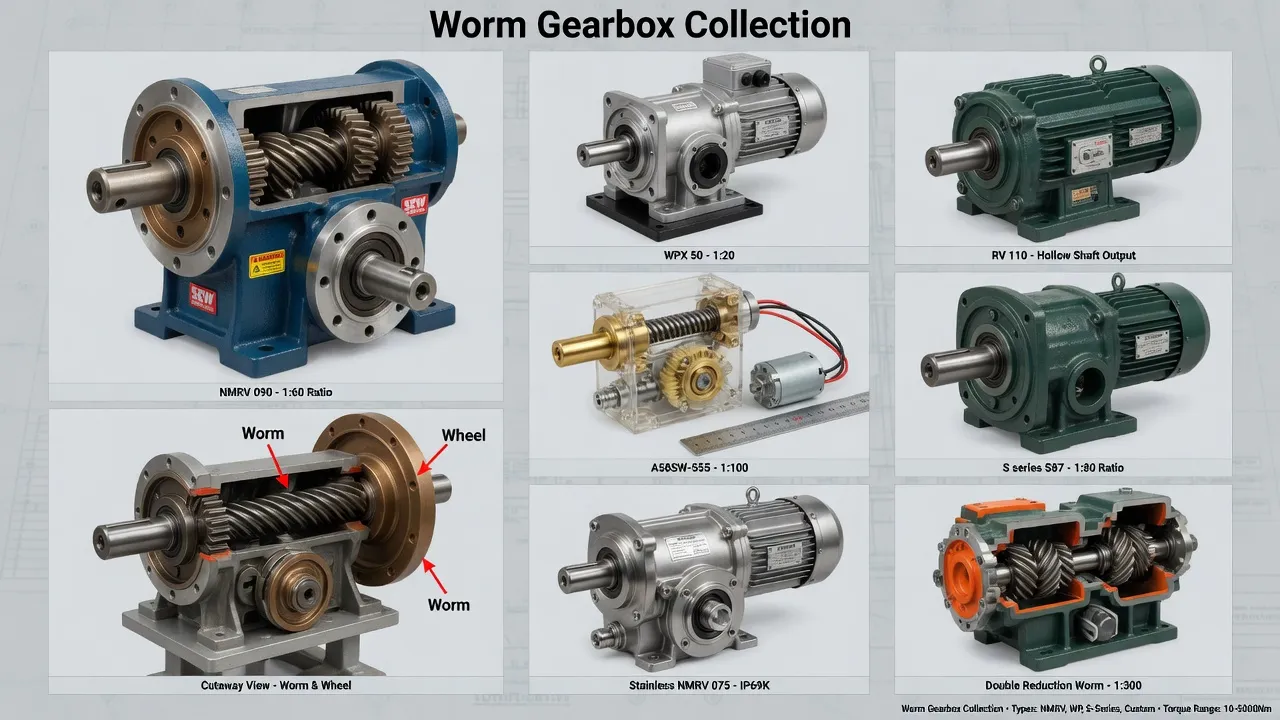
Step 6 — Commissioning Checks Before Full-Load Run
Before running at full load, perform a graduated commissioning sequence:
- No-load test (30 minutes): Run the motor at full rated speed with no load on the output shaft. Check for: unusual noise (grinding, clicking — stop immediately if present); vibration above the pre-installation baseline; any oil leakage at shaft seals or housing joints. Measure and record the housing temperature at the end of the 30-minute run.
- 25% load test (2 hours): Apply 25% of rated output torque. Re-check noise, vibration, and temperature. Temperature should be higher than no-load but stabilising within the first 60 minutes. Record steady-state housing temperature as the baseline for future maintenance comparisons.
- 50% load test (4 hours): Apply 50% rated torque. By the end of this test, the oil temperature should be approaching its steady-state operating value. Measure the oil temperature if a thermocouple is fitted, or measure housing surface temperature as a proxy.
- Full load (verify thermal compliance): Apply full rated load. Monitor temperature to confirm it stabilises below the oil temperature limit (typically 90°C for PAO in standard NMRV) and below the housing surface temperature limit (typically 75°C external surface). Document the steady-state temperature as the commissioning baseline.
After the commissioning sequence: check and re-torque all motor flange bolts and foot mounting bolts to specification — thermal cycling during the initial run-in period causes bolt preload relaxation of 10–15%, and retorquing at this stage establishes the stable long-term preload.
First Oil Change — The Run-In Requirement
Worm gearboxes require a first oil change after 200–300 hours of operation. During the run-in period, micro-conformance of the worm thread surface against the bronze wheel tooth face generates fine metallic particles — even in a correctly operating unit. These particles remain in suspension in the oil and act as an abrasive if left in service. Draining and refilling with fresh PAO after the run-in period removes these particles, establishes a clean lubricant baseline, and is one of the highest-ROI maintenance actions available. At most applications, 200–300 operating hours is reached within the first 2–4 weeks of continuous operation. Do not defer this service.
Frequently Asked Questions
Can I install a worm gearbox in any orientation not listed in the catalog?
Only in the orientations for which oil-fill volumes are published. If your required orientation is not in the catalog mounting-position table, contact the manufacturer before installation — an unsupported orientation may leave some bearings or the worm wheel inadequately lubricated regardless of fill level. Non-standard orientations sometimes require a housing vent-port plug relocation and an oil-level check port relocation to function correctly.
What happens if I overfill the oil?
Overfilling reduces the air space in the housing. As the gearbox heats up during operation, the oil expands and the internal air pressure rises. This excess pressure forces oil past the shaft seal lip — the primary cause of oil leakage from overfilled gearboxes. Symptoms: oil appears at both shaft seals within the first few hours of operation even though the seals are new and in good condition. Remedy: drain to the correct level for the installed orientation and clean the seal areas.
The motor shaft and gearbox input shaft don’t line up perfectly — how much misalignment is acceptable?
For direct B5 flange-mount assemblies, the IEC pilot bore register should provide angular alignment within 0.02–0.05 mm per 100 mm automatically when the flanges are properly cleaned and seated flush. Parallel offset between motor and gearbox shaft centrelines on direct-mount assemblies should be zero — the pilot bore alignment controls this. For separately mounted motor with flexible coupling: angular misalignment ≤0.05°/100 mm and parallel offset ≤0.05 mm at the coupling is the accepted limit for standard flexible couplings. Exceeding these limits generates cyclic bearing loads that produce bearing failure typically at 800–3,000 hours — far short of the 20,000+ hour design life.
How do I know if the run-in is complete?
Two indicators: (1) steady-state housing temperature decreases by 3–6°C compared to the first-hour temperature at the same load — confirming the worm-wheel surface is conforming and reducing mesh friction. (2) The oil changes from clear golden to slightly bronze-tinged, confirming fine bronze particles are being generated by the conformance process. When temperature has stabilised and the first oil change has been performed at 200–300 hours, the run-in is complete and the unit is operating at its catalog-rated efficiency.
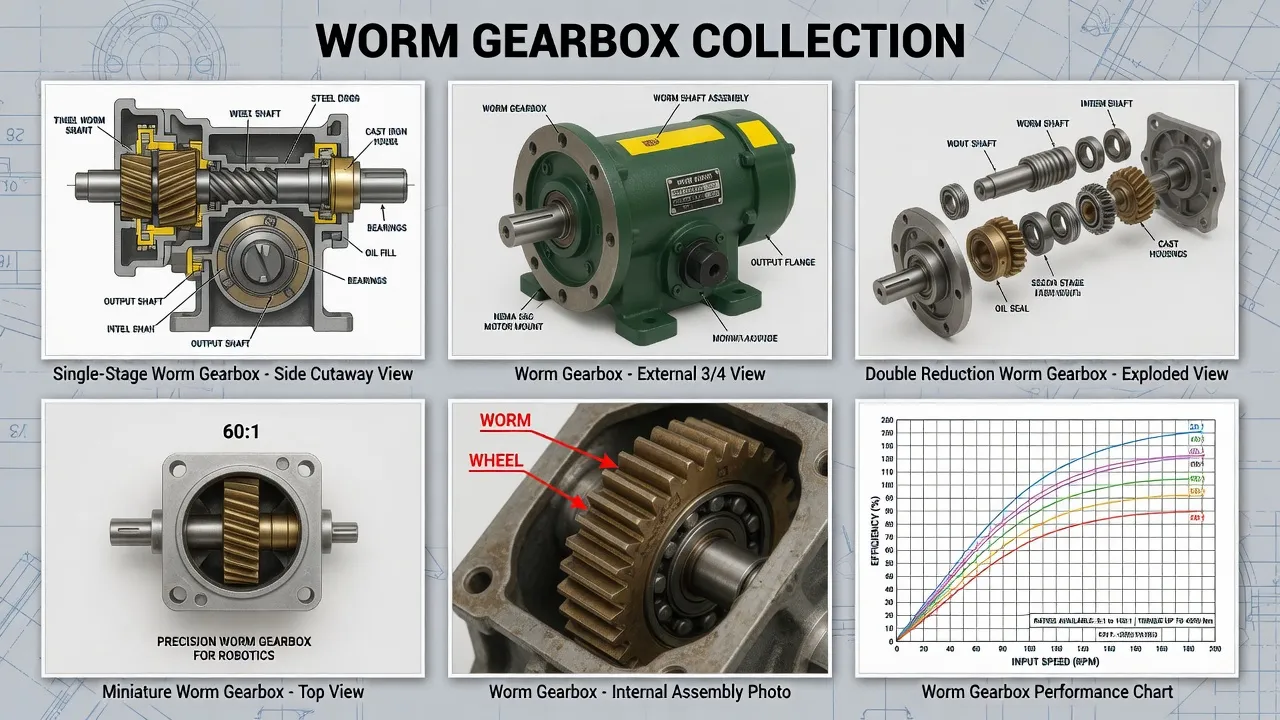
Need Installation Support or a Pre-Configured Worm Gearbox for Your Application?
Tell our team your mounting orientation, motor frame, oil fill requirement, and application — we’ll supply the correct pre-configured unit with installation documentation included.