
A leaking shaft seal is the most visible maintenance problem in a worm gearbox fleet — and one of the most preventable. Yet seal failure accounts for roughly 35–40% of all worm gearbox maintenance calls in field service data, making it the single leading cause of unplanned lubrication interventions. The frustrating part: most seal failures are not caused by defective seals or inferior gearboxes. They are caused by five specific installation, operating, or specification errors that are entirely avoidable once understood. This article covers the anatomy of worm gearbox seals, the seven root causes of failure in order of field frequency, the seal material types and when each is correct, and five evidence-based actions to extend seal service life to the 4–6 year target in normal service.
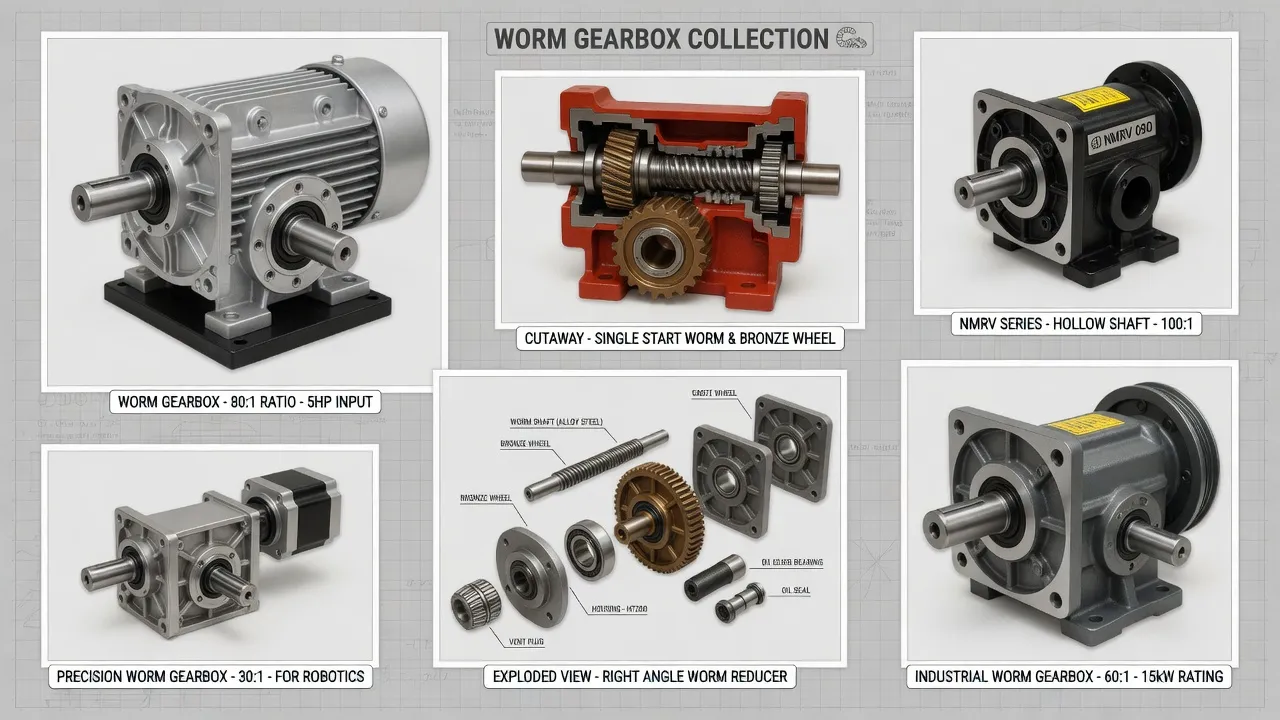
Types of Seals in a Worm Gearbox
A standard worm gearbox uses three types of sealing elements. Each has different failure modes and service life expectations:
| Seal Type | Location | Standard Material | Expected Life |
|---|---|---|---|
| Double-lip shaft seal (radial) | Input and output shaft exits through housing | FKM (Viton) — standard current production; NBR (nitrile) — older units | 4–6 years normal service; 2–3 years high-temp or chemical exposure |
| Static O-ring / gasket | Housing cover joints, inspection port, fill plug | FKM O-ring or liquid silicone RTV sealant | Essentially unlimited if undisturbed; replace whenever disassembled |
| Breather / vent plug | Top of housing — pressure equalization | Sintered metal or membrane vent | 3–5 years; replace when blocked (causes seal blowout from pressure buildup) |
The double-lip radial shaft seal is the primary failure component — it is the only dynamic seal in the system (the shaft rotates through it continuously). The outer lip retains the lubricant; the inner lip excludes contaminants. Both lips depend on continuous elastic contact against the shaft running surface for sealing effectiveness. Any condition that degrades the lip material, increases lip-to-shaft pressure, or damages the shaft running surface leads to leakage.
7 Root Causes of Worm Gearbox Seal Failure
- Thermal degradation (most common in high-ratio continuous-duty units):
At oil temperatures above 80°C, NBR seal material hardens, loses elasticity, and cracks within 12–24 months. FKM (Viton) seals remain serviceable to 150°C continuous — this is the primary reason FKM replaced NBR as the default specification in modern worm gearboxes. If your unit has NBR seals and runs hot, hardening-induced leakage is almost inevitable within 2–3 years. Solution: upgrade to FKM seal kit at the next service. - Over-pressure from blocked breather (second most common):
When the breather vent becomes blocked with dust, paint overspray, or insect debris, the thermal cycling of the gearbox (heating during operation, cooling when stopped) creates net positive pressure inside the housing. This pressure pushes oil past the shaft seals far faster than the design contact pressure allows. A blocked breather causing seal blowout is frequently misdiagnosed as a “seal failure” when the actual failure is the blocked vent. Always check breather condition before attributing leakage to seal degradation. - Shaft running surface damage:
The shaft seal relies on a precision-machined, hardened running surface (typically Ra 0.4–0.8 µm, ground and polished) for reliable low-leakage contact. If the shaft develops corrosion pitting, fretting marks from coupling micro-movement, or mechanical damage from improper shaft-mounting practices, the seal lip cannot maintain continuous contact. Even minor shaft surface damage (0.05 mm deep pitting) creates a leak path that no seal design can prevent. Shaft sleeve repair kits are available for most standard shaft sizes. - Lubricant incompatibility:
PAG lubricants cause NBR seal swelling and accelerated degradation within months. Mineral-to-synthetic conversions without verifying seal compatibility are a frequent cause of apparent “early seal failure” that is actually a lubricant specification error. Standard current-production worm gearboxes use FKM seals compatible with all three lubricant types. Older units with NBR seals must have seals replaced before switching to PAG. - Incorrect oil fill level (overfilling):
Overfilling — particularly in vertical or angled mounting positions — creates elevated oil-side pressure on the shaft seal lip, accelerating wear and reducing the effective seal service life. The most common scenario: a gearbox filled to the B3 horizontal-mount level and then installed in a V1 vertical-mount position without adjusting the oil volume. The excess oil increases static pressure at the lower shaft seal, causing leakage within months of commissioning. - Excessive shaft radial load (bearing wear allowing shaft movement):
As bearings wear, the shaft develops increasing radial runout. A shaft running with 0.05–0.10 mm of radial runout at the seal location repeatedly pushes the seal lip off-center and back — a pumping action that works oil past the seal lip independent of seal material condition. Fixing the seal without addressing the bearing wear that caused the shaft runout results in the replacement seal leaking almost as quickly as the failed one. Always measure shaft radial play at the seal location before replacing seals on a high-hours unit. - Seal installation damage:
A double-lip seal installed without a proper seal driver (tapped in asymmetrically with a hammer, or pressed in at an angle) has a damaged or cocked lip from day one. Leakage appears within weeks of commissioning and is often attributed to a “defective seal” — the actual cause is installation technique. Always use a seal driver of the correct diameter, and install seals with the lip facing inward (oil-side). Apply a thin film of the operating lubricant to the seal lip before installation.
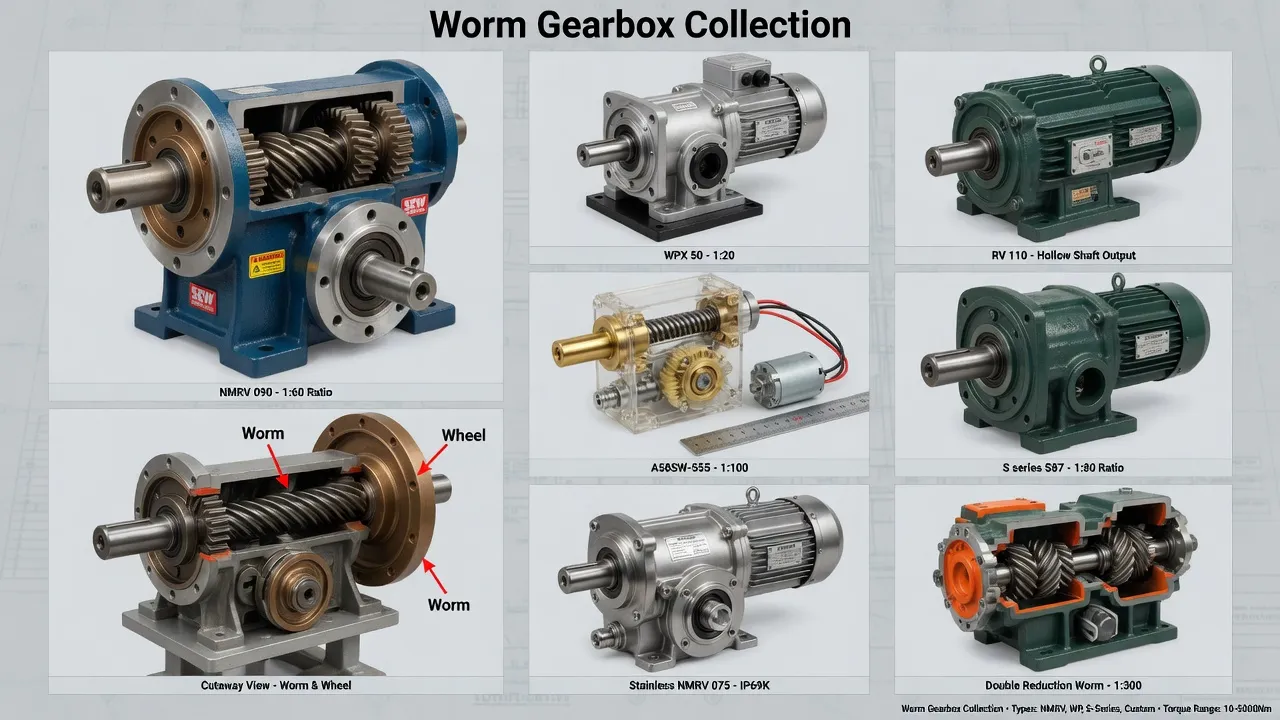
Seal Material Selection Guide
| Material | Temp Range | Lubricant Compatibility | Best Application |
|---|---|---|---|
| NBR (Nitrile) | −40°C to +100°C | Mineral oil, PAO. NOT PAG | Older units; light-duty mineral oil only |
| FKM (Viton) | −20°C to +150°C | Mineral oil, PAO, PAG, most synthetics | Default standard for all modern units |
| PTFE lip seal | −60°C to +200°C | Universal chemical resistance | Chemical environments, extreme temperatures |
| EPDM | −50°C to +120°C | Water, steam, some PAG. NOT mineral oil | Water-using environments only (car wash drives) |
For food, beverage, and pharmaceutical applications requiring IP69K washdown resistance and NSF-H1 lubricant compatibility, our stainless steel worm gearbox for food and pharma ships with PTFE double-lip seals, FKM static O-rings, and NSF-H1 PAG lubricant as standard — all qualified for direct product-contact zone installations. For car wash and water-spray environments, our waterproof worm gearbox for car washers uses a specially configured dual-seal arrangement with drain-back feature that prevents water ingress even under continuous pressure spray. For the full engineering reference on worm gearbox sealing systems and IP rating methodology, see the worm gearbox seal and sealing system technical guide.
5 Actions to Extend Worm Gearbox Seal Life
- Check and clear the breather vent every 3 months: A free-venting breather prevents the internal pressure buildup that is the second most common cause of seal blowout. Take 30 seconds at every quarterly inspection to check the breather — blow through it and confirm it vents freely. Replace blocked breathers immediately. This single action prevents the majority of premature seal failures from pressure-related blowout.
- Verify oil fill level for the actual mounting position: At commissioning and after any repositioning, confirm oil fill volume matches the catalog specification for the installed mounting position. Overfilling increases oil-side seal pressure; incorrect vertical-mount fill levels cause chronic low-side seal leakage. Use the mounting-position-specific fill mark or drain volume from the catalog.
- Upgrade NBR to FKM seals at first service: If your existing units have NBR seals (typically identifiable by black seal color, common in units manufactured before ~2015), replace with FKM (brown or green seals) at the next planned oil change service. FKM seal kits cost €5–25 depending on frame size and add minimal labor to an oil change service. The upgrade extends seal service life from 2–3 years (NBR in moderate duty) to 4–6 years (FKM) and eliminates the risk of PAG lubricant compatibility failure.
- Protect the shaft running surface: Apply a light coat of corrosion inhibitor to exposed shaft sections in storage and during installation commissioning. Never use a steel hammer directly on a shaft end — use copper or aluminium drift punches. If the shaft running surface shows pitting or fretting, install a hardened shaft sleeve over the damaged section before fitting the new seal. Shaft sleeve repair kits are available for all standard NMRV shaft diameters.
- Use a seal driver for installation: Lip seals tapped in asymmetrically with a screwdriver and hammer are the single leading cause of apparent “new seal failure” within weeks of installation. A seal driver of the correct bore diameter distributes installation force evenly around the seal OD, preventing lip distortion and casing damage. For field repair without the correct driver, a correctly sized socket extension used with a rubber mallet is an acceptable substitute.
Frequently Asked Questions
Why is my gearbox leaking only when stationary (overnight), but not when running?
This is the classic signature of a blocked breather. When the gearbox cools after stopping, the air inside contracts — creating slight negative pressure that allows oil to seep slowly past a marginally-sealing lip seal during the cool-down period. The same seal when running (and under positive slight pressure from oil centrifugal force and thermal expansion) seals adequately. Check and clear the breather vent first before condemning the seal.
How do I know if it’s the shaft seal or the housing cover gasket that’s leaking?
Clean the entire exterior of the gearbox with degreaser and dry completely. Run the unit at operating temperature for 30 minutes, then stop and immediately inspect with a bright light for fresh oil. Shaft seal leakage appears as a thin film around the shaft where it exits the housing. Housing cover gasket leakage appears as oil seepage along the cover joint line or around cover bolts. These locations are usually clearly distinguishable with careful inspection after a clean exterior baseline.
Can I use liquid gasket (RTV sealant) instead of a replacement O-ring on housing covers?
Yes — anaerobic flange sealants (Loctite 510, Loctite 5188, or equivalent oil-resistant RTV) are the standard field alternative when replacement O-rings are not immediately available. Use the minimum bead diameter needed for coverage (typically 1.5–2 mm), assemble within 15 minutes of application before skinning begins, and allow 2–4 hours cure time at ambient temperature before filling with oil. Do not use silicone RTV sealants (general-purpose silicone) — they are not oil-resistant and will fail within weeks in an oil-wetted joint.
My new gearbox leaks from day one — is it defective?
Day-one leakage from a new unit is almost always an installation issue rather than a manufacturing defect. The three most common causes: (1) shipping plug not removed and replaced with operating breather — positive pressure builds up from the first heat cycle and blows past the seal; (2) oil fill performed in the wrong mounting orientation relative to the installed position; (3) seal lip damaged during shaft connection — a coupling forced on with a steel hammer can push the shaft inward far enough to damage the seal lip. Check all three before initiating a warranty claim.
Need FKM Seal Kits or Technical Support for a Leaking Worm Gearbox?
Send us your gearbox model, shaft sizes, lubricant type, and description of the leakage pattern — we’ll identify the root cause and supply the correct FKM seal kit or shaft sleeve repair parts within one business day.
How to Extend Seal Life — Seven Proven Interventions
Seal life is primarily governed by three factors: temperature, shaft speed, and lubricant condition. Each of the following interventions addresses at least one of these:
- Switch to PAO synthetic lubricant: PAO runs 3–8°C cooler than mineral oil at equivalent load — directly reducing the thermal stress on the seal lip elastomer. The improvement in seal life is proportional to the temperature reduction: halving the temperature rise above ambient roughly doubles elastomer life according to Arrhenius degradation kinetics. PAO also has better additive compatibility with FKM (Viton) seal materials than some mineral oil additive packages.
- Verify correct mounting orientation and oil level: A gearbox mounted in a non-catalog orientation with the oil level incorrectly set can flood the shaft seal with oil at higher-than-design pressure. The seal is designed to contain oil at atmospheric pressure differential — flooding increases the effective differential pressure and accelerates lip wear. Follow the mounting-position oil-volume table in the gearbox catalog for every non-standard orientation.
- Install a shaft seal guard: In dusty or abrasive environments (cement, aggregate, grain), abrasive particles ingested at the seal lip score both the lip and the shaft — the primary failure mode in dusty installations. A simple pressed-metal shield or labyrinth guard around the shaft seal entrance reduces abrasive ingress by 60–80% and extends seal life from 1–2 years to 4–6 years in abrasive environments.
- Upgrade to FKM (Viton) seals: Standard NBR seals are rated to approximately 100°C continuous and are not compatible with PAG lubricants. FKM (Viton) seals are rated to 200°C continuous and are compatible with all lubricant types including PAG. For any gearbox running above 80°C oil temperature, specifying FKM seals at installation or at the first seal replacement is the highest-ROI seal upgrade available.
- Schedule proactive seal replacement: Rather than waiting for visible leakage, replace shaft seals proactively at 3–4 year intervals in continuous-duty service. A seal replacement costs €8–€25 in parts plus 30–60 minutes labor — far less than the cleanup, investigation, and reputation cost of a lubrication failure caused by a seal that ran to destruction.
- Monitor shaft runout: Shaft runout above 0.05 mm at the seal contact point causes the seal lip to flex cyclically with every revolution — fatigue-degrading the elastomer regardless of temperature. At commissioning and at each annual inspection, check shaft runout with a dial indicator at the seal contact diameter. Excessive runout indicates bearing wear or shaft damage requiring correction before seal replacement.
- Install a breather vent on sealed housings: Temperature cycling in outdoor installations creates pressure pulsations inside the gearbox housing as the gearbox heats up during operation and cools down overnight. Over months, these pulsations fatigue the seal lip and eventually pump oil past it. A simple pressure-equalizing breather filter (€5–€15) fitted to the housing vent port eliminates these pressure cycles and can double seal life in outdoor installations.
The most cost-effective package for most continuous-duty outdoor applications is interventions 1, 4, and 5 combined: PAO synthetic lubricant + FKM seal upgrade + proactive 3-year seal replacement schedule. This package typically delivers 6–8 year seal life vs 1–2 year seal life for the worst-case combination of mineral oil + NBR seal + reactive-only maintenance.