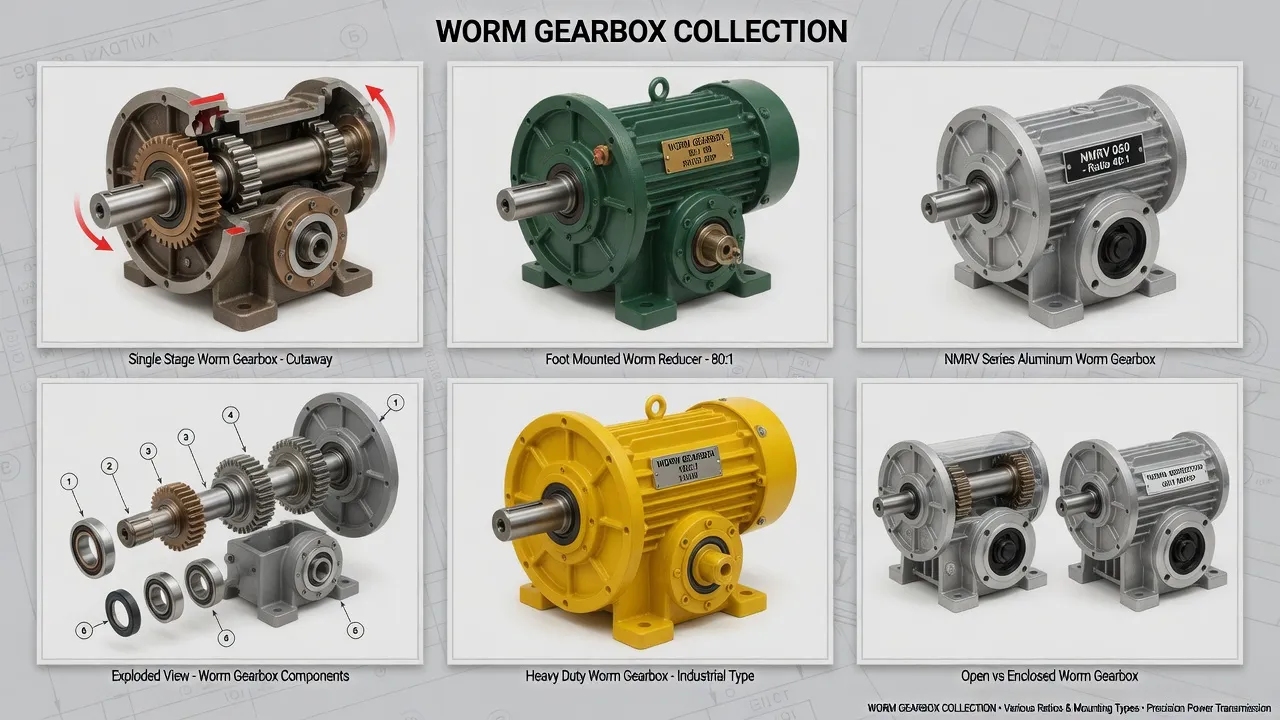
Worm gearboxes installed in food processing, beverage production, dairy, bakery, and pharmaceutical environments face requirements that are fundamentally different from standard industrial applications. A single lubricant leak onto a product line can trigger a product recall, regulatory action, and reputational damage that costs orders of magnitude more than the most expensive compliant gearbox. A housing surface that cannot be fully cleaned creates a microbial harborage that fails HACCP audit. Understanding the four regulatory and specification frameworks — IP69K, NSF-H1, stainless steel housing, and EHEDG — and knowing which one applies to your specific application zone is the critical first step in food-industry worm gearbox specification. This guide explains each requirement, when it applies, and how to specify the correct food-grade worm gearbox for your installation context.
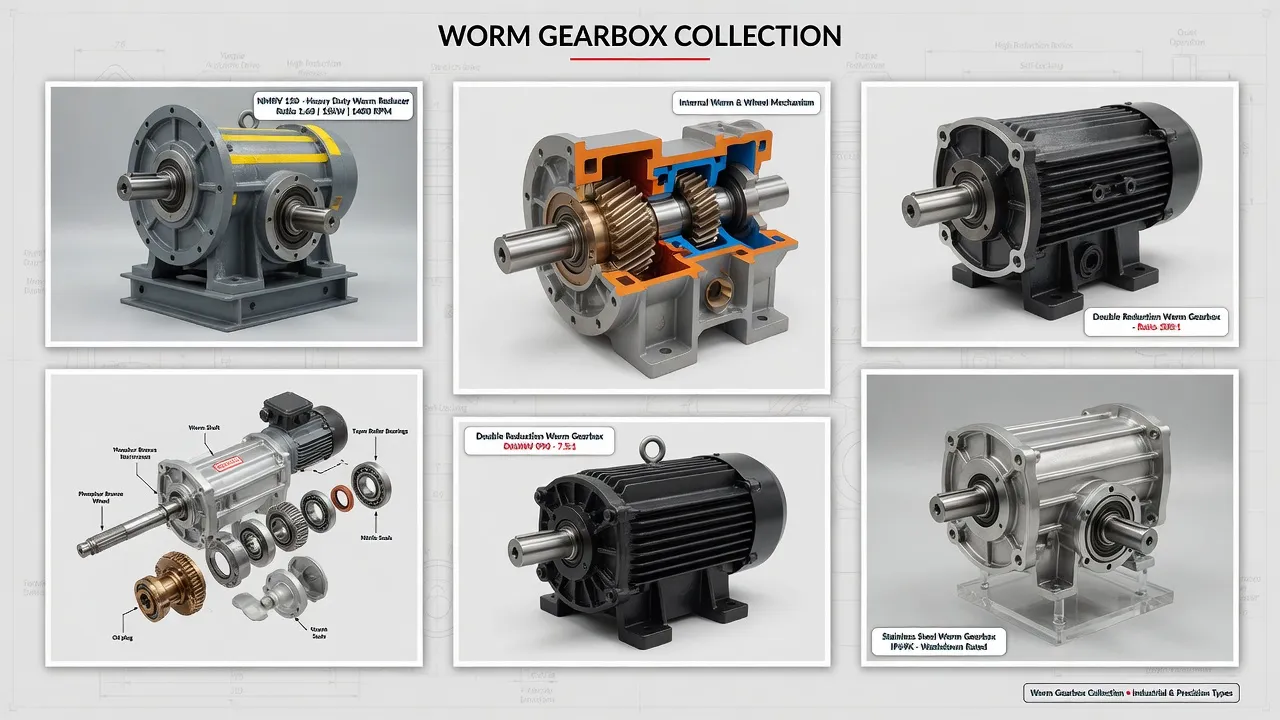
The Four Compliance Frameworks — What Each Covers
| Standard | Issued by | What It Governs | When Required |
|---|---|---|---|
| IP69K | IEC 60529 | Ingress protection against high-pressure, high-temperature water spray (80°C, 100 bar, 14–16 L/min, 0.1–0.15 m nozzle distance) | Any zone subject to CIP (clean-in-place) or pressure-washdown sanitation — mandatory in wet food processing zones |
| NSF/ANSI H1 | NSF International (US), adopted globally | Lubricant formulation safety — certifies that incidental food contact with the lubricant does not create an unacceptable health risk | Any gearbox where lubricant could contact food — direct zone or splash zone. Mandatory under FDA 21 CFR for US food production; widely adopted globally |
| EHEDG | European Hygienic Engineering and Design Group | Hygienic design of food equipment — governs surface finish, radius requirements, absence of crevices, drainability, and cleanability of equipment in food contact zones | EHEDG certification required for equipment in Category 1 and 2 food contact zones under EU Food Hygiene Regulations (EC 852/2004) |
| 316L Stainless Steel | Material specification (EN 10088, ASTM A276) | Housing material corrosion resistance in food, dairy, and pharmaceutical environments — resists chloride cleaning agents, CIP chemicals, and product acids | Any zone where chlorinated cleaning agents (bleach-based) or product acids are used — standard aluminum corrodes in these environments |
IP69K in Detail — What the Test Actually Involves
IP69K is frequently misunderstood. It tests resistance to high-pressure hot water spray — not just water jets. The test conditions per IEC 60529 Appendix K:
- Water temperature: 80°C (±5°C)
- Water pressure: 80–100 bar at the nozzle outlet
- Flow rate: 14–16 L/min
- Nozzle distance from equipment: 0.10–0.15 m
- Test duration: 30 seconds per 90° quadrant (4 × 30 seconds = 2 minutes total per test object position)
- Object rotation: The test object rotates at 5 rpm during the test to expose all surfaces
What this means in practice: the standard food-plant CIP wash uses 60–80°C caustic or acid solution at pressures up to 100 bar for equipment clean-down. IP69K directly replicates this. A gearbox carrying only IP65 (which tests at <1 bar water jet) will fail when subjected to CIP washdown — water penetrates the shaft seals and housing joints.
Important: IP69K does not include IP68 (sustained immersion protection). The two ratings are independent. A gearbox can be IP69K certified without being IP68 rated — they test different failure modes. In most food processing environments, IP69K is the relevant rating. If the gearbox is at risk of immersion (flood drains, underwater conveyor sections), specify a unit with both IP68 and IP69K ratings.
NSF-H1 Lubricant — Why the Lubricant Specification Matters
NSF/ANSI Standard H1 certifies lubricant formulations as safe for incidental food contact. “Incidental” means accidental contact during normal equipment operation — not intentional use as a food additive. H1 lubricants are formulated from white mineral oils or PAO base oils with food-approved additive packages (per FDA 21 CFR 178.3570), and may not contain heavy-metal-based additives, carcinogenic compounds, or active-sulfur EP additives that are standard in industrial gear oils.
The H1 lubricant directly affects worm gearbox performance because:
- No active-sulfur EP additives permitted: Active sulfur EP additives are restricted in H1 formulations. This means H1 worm gearbox lubricants rely on PAO base oil film strength alone (without the metal-conditioning effect of sulfur EP), making the PAO base oil quality and viscosity grade selection particularly important for worm-wheel service life.
- PAG H1 lubricants available: PAG-based H1 lubricants provide better film strength than white mineral oil H1 and are preferred for high-ratio, high-temperature food-industry applications. Confirm PAG compatibility with housing paint and seals before specifying.
- H1 certification must be current: NSF H1 certification is renewed annually. Always verify the current certification status of the lubricant batch on the NSF White Book (whitebook.nsf.org) before accepting a delivery claiming H1 certification — expired certifications have occasionally been found on supplier deliveries.
Stainless Steel vs Aluminum — Which Housing for Which Zone?
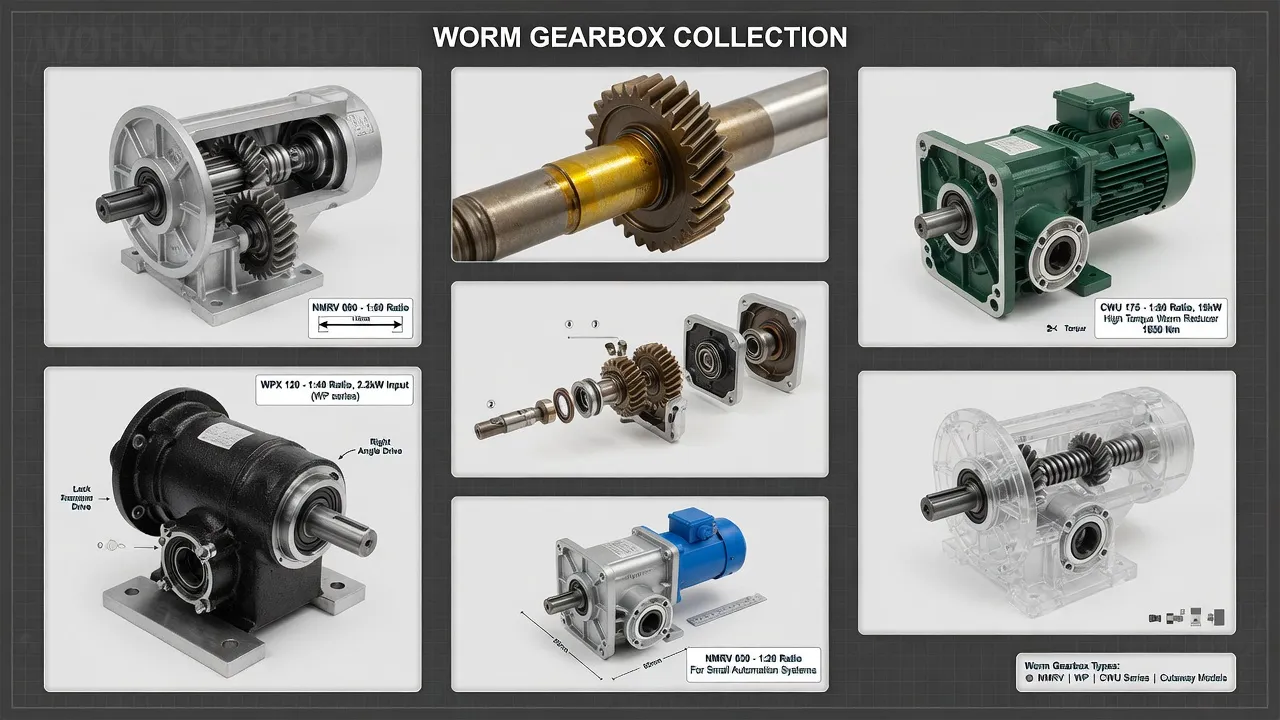
Not every food-industry installation requires stainless steel housing. The decision depends on the zone classification and cleaning chemical regime:
| Installation Context | Housing Spec | Reason |
|---|---|---|
| Dry food zone (biscuit, snack, bakery, confectionery) | Aluminum + food-grade paint, IP65 | Dry cleaning only; no CIP chemicals; aluminum adequate |
| Wet food zone (meat, dairy, seafood) — splash zone | Aluminum, IP66, NSF-H1 lubricant | Regular water hose; food-grade lubricant for incidental splash |
| Direct CIP washdown zone (meat, poultry, dairy) | 316L Stainless, IP69K, NSF-H1 | Chlorine CIP corrodes aluminum; 100-bar hot wash requires IP69K |
| Food contact zone (filling, portioning, dosing) | 316L Stainless, IP69K, NSF-H1, EHEDG | Direct food contact risk; full compliance package required |
| Pharmaceutical / clean room | 316L Stainless, IP69K, NSF-H1, FDA documentation | FDA 21 CFR Part 211 GMP; material traceability certificates mandatory |
Our complete food and pharmaceutical gearbox range — stainless steel worm gearbox for food and pharma — covers the full IP69K, NSF-H1, EHEDG specification requirement across frame sizes from HSRV030 to HSRV150. For lighter-duty food applications in dry zones or splash-only environments, our HSRV stainless steel worm gearbox base range provides the stainless housing without the full EHEDG-certified geometry premium. For a broader comparison of industrial worm reducer food-grade configurations, see the food industry worm reducer specifications and compliance guide.
EHEDG Hygienic Design Requirements — What the Gearbox Must Look Like
EHEDG Class I (cleanable in place) and Class II (cleanable out of place) certification requires that the gearbox external geometry meets specific hygienic design rules:
- External surface finish: Ra ≤ 0.8 µm on all surfaces that may contact food or cleaning fluids. Sharp edges and crevices where micro-organisms can hide are not permitted.
- Minimum internal and external radii: All corners and transitions must have a minimum radius of 3 mm (EHEDG Class I) to prevent bacterial retention at sharp internal corners.
- Self-draining geometry: Horizontal surfaces that collect water or food residue during cleaning must be angled ≥3° to ensure complete drainage. Flat horizontal housing faces that pool liquid are not acceptable in Category 1 food zones.
- No blind holes or hidden crevices: Fastener holes, vent ports, and housing joining features must be accessible for cleaning verification. Blind-hole fastener pockets that trap cleaning fluid are not EHEDG compliant.
- Shaft seal geometry: The shaft-to-housing interface must be designed to prevent food product from being drawn along the shaft into the seal by capillary action. Double-lip seals with a flushed intermediate cavity are standard for EHEDG-compliant gearbox shaft entries.
Frequently Asked Questions
Can I use a standard aluminum NMRV in a food plant if I fit NSF-H1 lubricant?
In dry food zones (bakery, confectionery, dry ingredient handling) where no CIP washdown occurs, an aluminum NMRV with food-grade paint, IP65 sealing, and NSF-H1 lubricant may be acceptable under your HACCP plan — subject to your food safety auditor’s approval. In wet food zones, dairy, meat, or poultry environments where CIP is standard practice: standard aluminum housing will corrode and fail to meet IP69K requirements. For these environments, stainless steel with IP69K is the minimum specification.
How often should the NSF-H1 lubricant be changed in a food-industry worm gearbox?
H1-certified PAO synthetic lubricant: 8,000-hour interval for continuous-duty applications. For food-industry applications with frequent CIP washdown cycles (where there is any risk of small water ingress despite IP69K sealing), inspect oil condition at 4,000 hours by taking an oil sample and checking for water content (limit: <0.1% water by mass) and acid number. H1-certified white mineral oil: 4,000-hour interval — white mineral oil has lower oxidation stability than PAO and degrades faster in high-temperature food processing environments. Specify H1-certified PAO for continuous-duty food applications; reserve H1 white mineral oil for light-duty intermittent applications only.
Is 316L stainless steel always better than 304 for food applications?
316L is the preferred specification for food and pharma environments. Grade 316 contains molybdenum (2–3%) which significantly improves chloride pitting resistance compared to 304 — critical because hypochlorite-based CIP cleaning agents are the most common sanitizer in food plants globally. In environments using only mild citric acid or peracetic acid sanitizers without hypochlorite, 304 stainless may be adequate. However, specifying 316L as standard across all food applications eliminates the risk of misspecification when cleaning regimes change — which is common in food plants over their operating lifetime.
Does my food-industry gearbox need both IP69K and EHEDG certification?
They address different requirements. IP69K is a water ingress protection test — it certifies that high-pressure hot water does not penetrate the housing. EHEDG certification addresses the hygienic design of the external surfaces — ensuring they can be fully cleaned and do not harbor micro-organisms. In direct food-contact zones, both are typically required under EU Food Hygiene Regulations. In splash zones with CIP washdown but no direct product contact, IP69K alone may be sufficient under your HACCP risk assessment. Confirm with your food safety auditor which certifications your specific installation zone requires before ordering.
Need a Food-Grade Worm Gearbox With Full Compliance Documentation?
Tell our food-industry specialists your hygiene zone, cleaning regime (CIP/dry/spray), required certifications (IP69K/NSF-H1/EHEDG/FDA), torque and speed requirements, and annual volume — we’ll specify the correct stainless configuration and provide all compliance documentation within one business day.
Common Food-Industry Worm Gearbox Applications and Specifications
- Meat processing conveyor drives (slaughterhouse, cutting room): HSRV090–110, IP69K, 316L stainless, NSF-H1 PAO, 30:1–50:1. Extreme CIP frequency (multiple per shift), blood acid pH 4–5 requires full stainless specification.
- Dairy homogeniser and mixer drives: HSRV063–090, IP69K, stainless, NSF-H1, 20:1–40:1. Continuous-duty agitation, CIP with caustic and acid phases alternating.
- Bakery conveyor and oven chain drives: NMRV075–110, IP65, aluminum, NSF-H1, 20:1–50:1. Dry zone, no CIP; aluminum adequate; high-temperature lubricant for oven-adjacent installations above 60°C ambient.
- Pharmaceutical tablet press auxiliaries: HSRV040–063, IP69K, 316L stainless, NSF-H1, FDA material certificates, 30:1–60:1. GMP documentation, material traceability certificates mandatory.
- Beverage bottling line drives: NMRV063–090 or HSRV (if washdown), IP65–IP69K, NSF-H1, 20:1–40:1. CO₂ and citric acid splash environment; acid-resistant housing paint or stainless depending on zone.