
A 75,000 dwt bulk carrier moored at a deep-water terminal during a North Atlantic gale faces wind loading reaching 90 knots gust velocity plus tidal current loading and surge wave action that produce mooring line tension peaks of 60-85 tonnes per line across the 12-16 line typical mooring arrangement. Each mooring winch must hold the assigned line tension absolutely throughout the storm event — line slippage allows vessel drift that loads other lines beyond their break strength, potentially producing cascading line failures that release the vessel from the dock. The winch drive operates a brake mechanism that holds the drum against the line tension, with the drive itself providing tension-paying capability during normal mooring operations and auto-tensioning capability during loading/discharging cycles when vessel draft changes affect line geometry. Drive failure during mooring operations strands the vessel — either preventing departure from the dock or allowing inadvertent vessel drift during cargo operations — with consequences ranging from missed sailing schedules (USD 25,000-80,000 per day for typical bulk carriers) through dock damage (USD 500,000-2,000,000 for serious incidents). Properly specified mooring winch worm gearbox equipment — engineered around storm-grade torque capacity, marine corrosion resistance, and absolute holding capability — eliminates the unscheduled outage events that disrupt vessel mooring operations and port turnaround schedules.
This guide covers the unique drive duty profile of mooring winches on commercial vessels and offshore installations, addresses the marine corrosion environment and storm loading service requirements, walks through selection criteria balancing torque capacity with corrosion durability, and provides a maintenance roadmap suitable for vessel operations and shipyard maintenance practices. Audience: marine winch OEMs, vessel operations engineers, shipyard outfitters, classification society surveyors, and consulting engineers specifying drive equipment for new vessel construction and conversion projects.
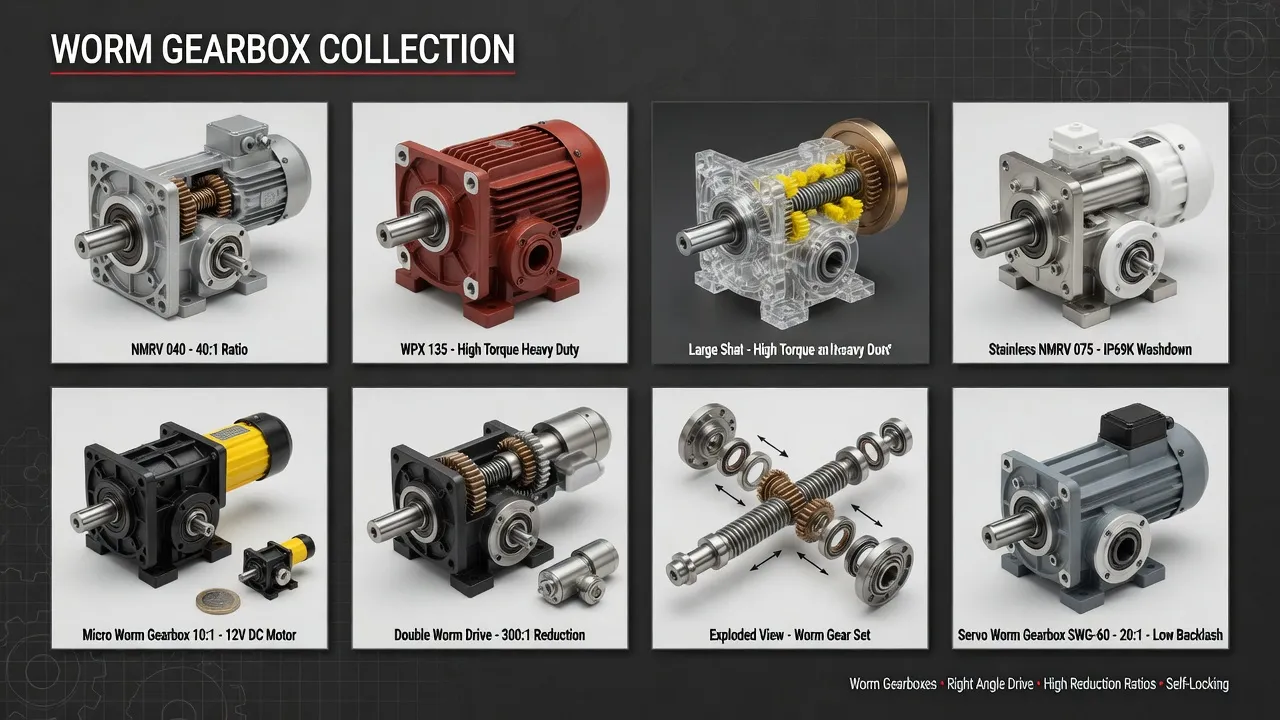
What Drive Demands Distinguish Mooring Winches from General Marine Service?
Mooring winch drives combine four operational characteristics that distinguish them from any non-mooring marine application. The first is the storm-grade torque capacity requirement: design line tension capability typically 80-150% of the certified line break load, with peak shock loading from wave surge events reaching 4-6× steady-state mooring tension. Output torque requirements range 8,500-65,000 Nm depending on vessel size and mooring arrangement, with safety factors per classification society rules (DNV, ABS, Lloyd’s Register, Bureau Veritas, ClassNK) requiring substantial drive overdesign relative to nominal mooring loads. The second characteristic is the absolute holding requirement: mooring winch drives must hold the assigned line tension absolutely without dependence on hydraulic pressure or electrical power across the full vessel mooring duration — typically 6-72 hours per port call across cumulative annual port days reaching 200-280 days for active commercial vessels.
The third characteristic is the marine corrosion environment: mooring winches operate exposed to salt spray, salt fog, marine atmosphere chloride concentrations 5-15× higher than typical industrial environments, plus periodic complete saltwater immersion during heavy weather events. Drive specifications include marine-grade corrosion-resistant construction throughout, with painted carbon steel inadequate for the multi-decade vessel service life expected from mooring equipment. The fourth is the classification society approval and survey requirement: commercial vessel mooring equipment requires classification society approval and periodic survey throughout the vessel service life. Drive specifications include type approval documentation supporting the classification society review process plus material certifications and factory test documentation supporting periodic survey requirements. The right marine mooring gearbox selection addresses storm-grade torque capacity, absolute holding, marine corrosion resistance, and classification society approval simultaneously per marine drive technical references.
How Do Heavy-Duty Marine Worm Drives Address Mooring Winch Failure Modes?
Self-Locking Architecture Provides Inherent Holding Capability
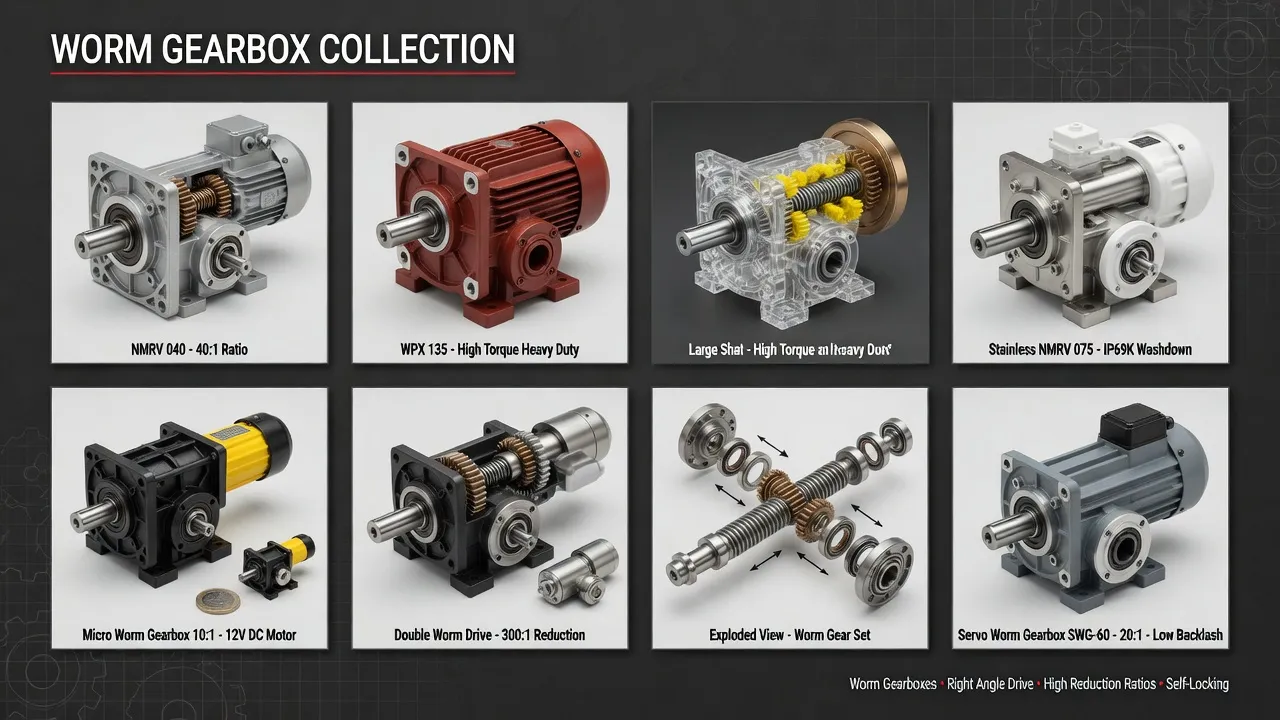
Self-locking worm gear architecture at high reduction ratios (typically 60:1 to 120:1) holds the loaded mooring drum absolutely against line tension regardless of hydraulic pressure or electrical power state. The mechanical self-locking property maintains drum position even during extended power-off periods, providing the holding capability that mooring service requires across multi-day port calls and overnight anchored conditions. This passive holding behavior also provides safety redundancy — even if the active brake system fails, the loaded drum cannot back-drive the worm under any combination of line tension and shock loading, preventing the cascading line failure scenarios that could release the vessel from mooring.
Heavy-Duty Marine-Grade Construction Resists Storm Loading
Heavy-duty bronze worm wheels (centrifugally cast tin bronze ZCuSn10P1 per ISO 1338 with thick wheel sections) provide both line tension transmission capability and shock loading absorption across the storm-grade service profile. The bronze material yields slightly under extreme shock loading rather than fracturing, absorbing wave surge impact energy through localized plastic deformation. The case-hardened steel worm shaft (typical 18CrNiMo7-6 for heavy marine duty, hardened to HRC 58-62 surface) provides matching tooth fatigue capacity to support cumulative cycle loading from continuous mooring tension variation across vessel service life. The combined gear set design supports the 25-30 year vessel service life expected from premium marine equipment specifications.
Technical Parameters: Mooring Winch Drive Specification Window
The table below summarizes specifications distinguishing mooring winch drives from generic industrial worm gearbox alternatives. Values reflect AGMA 6034-B92 worm gear power rating combined with classification society marine equipment requirements.
| Parameter | Mooring Winch Spec | Generic Industrial |
|---|---|---|
| Self-locking requirement | Mandatory class society | Optional |
| Reduction ratio | 60:1 – 120:1 self-locking | 5:1 – 100:1 |
| Output torque (rated) | 8,500 – 65,000 Nm | 200 – 4,000 Nm |
| Peak shock capacity | 6× rated, wave surge | 2× rated typical |
| Corrosion protection | Marine paint scheme C5-M | Standard industrial paint |
| Class society approval | DNV, ABS, LR, BV type approval | Not approved |
| Service factor | 3.0 minimum heavy mooring | 1.0 – 1.25 typical |
| Design service life | 25-30 years vessel life | 5-10 years |
The single specification most often miscalculated on mooring winch projects is the corrosion protection scheme. Generic industrial paint schemes (single-coat epoxy, standard polyurethane topcoat) provide only 5-8 year corrosion protection in marine atmospheric exposure (corrosivity category C5-M per ISO 12944) — completely inadequate for mooring winch service where the drive must support 25-30 year vessel service life without housing corrosion compromising drive sealing or external appearance. Marine-grade corrosion protection (C5-M paint scheme per ISO 12944-5: zinc-rich primer + epoxy intermediate + polyurethane topcoat at total dry film thickness 320+ micrometers) provides the multi-decade corrosion protection that classification society survey requirements demand.
Application Matrix: Where Mooring Winch Drives Operate
Bulk Carrier and Tanker Mooring Winches
Bulk carriers (50,000-200,000 dwt) and crude oil tankers (100,000-300,000 dwt VLCC class) deploy 12-20 mooring winches per vessel arranged at fore and aft mooring stations. Output torque requirements range 25,000-65,000 Nm per winch depending on vessel size and certified line break load (typically 64-110 tonnes per line). The high-tonnage vessel mooring service produces continuous tension variation from tide changes (4-12 hour cycles) plus wind and wave loading variation. Major shipbuilding markets including Korea, China, and Japan deploy these winches across thousands of new-build vessel projects annually, with classification society type approval supporting the global vessel registration process.
Container Vessel Mooring Winches
Container vessels (3,000-24,000 TEU capacity) deploy 14-22 mooring winches per vessel reflecting the longer hull lengths and elevated mooring loads of large container vessels. Output torque requirements range 18,000-50,000 Nm per winch with the typical container vessel certified line break load 80-95 tonnes per line. Container vessel mooring service includes more frequent port calls (typically 4-8 day rotation across major routes) than bulk carrier service, producing elevated cumulative cycle counts on the mooring equipment. The compact port turnaround schedules also drive elevated reliability requirements — drive failure during port operations cascades through the vessel rotation schedule with substantial commercial impact.
Offshore Installation Mooring Winches
Offshore installations including FPSOs (floating production storage and offloading), drilling rigs, and accommodation vessels deploy heavy-duty mooring winches matching the elevated station-keeping loads of offshore service. Output torque requirements reach 65,000+ Nm per winch with mooring line break loads 200-450 tonnes per line for deep-water installations. The offshore service environment includes elevated wave loading exposure (significant wave heights 4-12 meters in operational areas) plus the long-term service requirements of installations rated for 20-25 year on-station deployment. Offshore equipment specifications include enhanced corrosion protection beyond commercial vessel specifications.
Tug, Workboat, and Specialty Vessel Winches
Harbor tugs, anchor handling tugs, supply vessels, fishing vessels, and specialty service vessels deploy mooring and towing winches scaled appropriately to the smaller vessel size. Output torque requirements range 8,500-22,000 Nm per winch reflecting the compact mooring requirements of smaller commercial vessels. The smaller envelope suits compact mounting arrangements typical of working vessel deck space constraints. Reference heavy-duty marine drive specifications for working vessel winch sizing.
Selection Roadmap: Step-by-Step Workflow
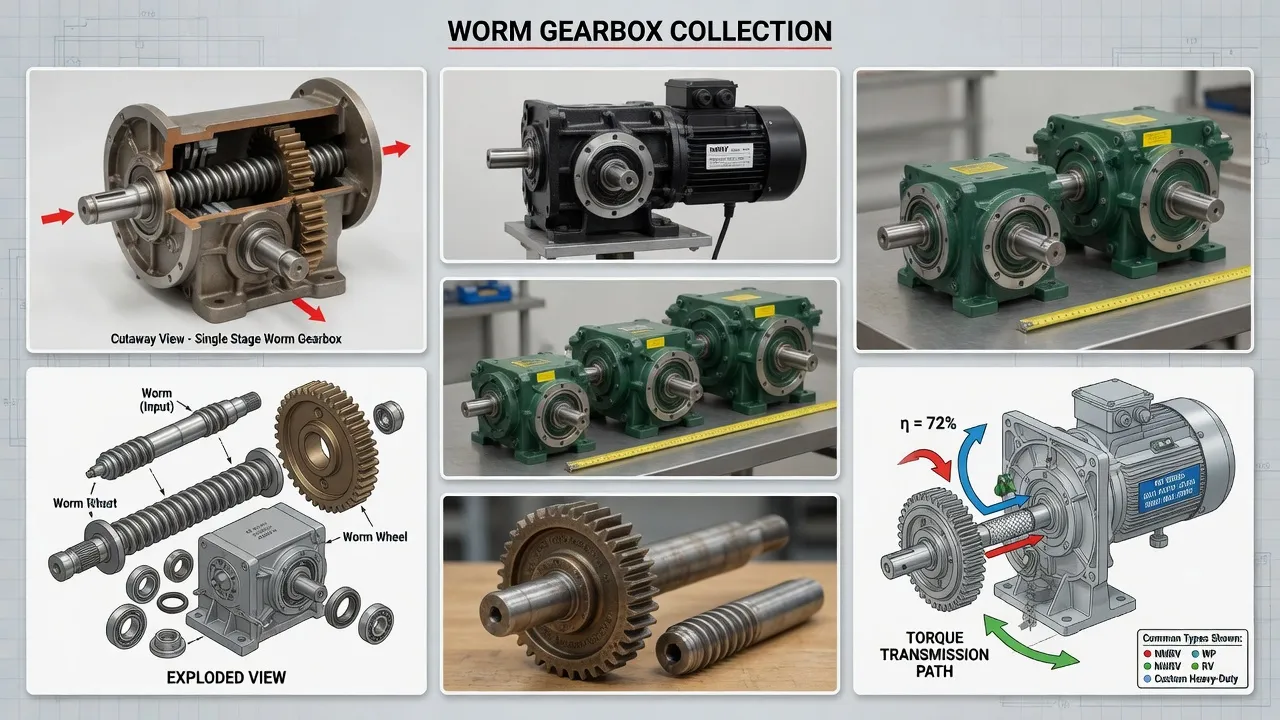
The four-step procedure below covers mooring winch drive selection from initial requirements documentation through commissioning verification.
Determine Line Break Load and Class Society Requirements
Document certified line break load (CBL) per vessel mooring system specifications and applicable classification society rules (DNV, ABS, Lloyd’s Register, Bureau Veritas, ClassNK). Identify the specific class society approval pathway including type approval certificate requirements, factory survey requirements, and material certification requirements. Verify drive manufacturer holds current type approval certificates from the relevant class societies for the vessel project.
Calculate Drive Output Torque from Mooring System Geometry
Determine drive output torque from drum diameter × CBL × drive-to-drum mechanical advantage. Apply 3.0 service factor minimum for heavy mooring service, with 3.5 service factor for offshore installation applications. Verify reduction ratio above 60:1 for inherent self-locking holding capability per class society requirements. Document peak shock loading 6× rated output for wave surge events during heavy weather mooring conditions.
Specify Marine-Grade Corrosion Protection per ISO 12944-5 C5-M
Order marine paint scheme per ISO 12944-5 corrosivity category C5-M (very high corrosivity, marine atmospheric exposure): zinc-rich primer (60-80 micrometers) + epoxy intermediate coat (120-150 micrometers) + polyurethane topcoat (60-80 micrometers) totaling 240-310 micrometers dry film thickness. Specify stainless steel A4 grade external fasteners (AISI 316 equivalent) eliminating galvanic corrosion at fastener interfaces. Verify seal materials use Viton fluoroelastomer compatible with marine environment exposure.
Coordinate Class Society Survey and Type Approval Documentation
Verify documentation package includes type approval certificates from applicable class societies (DNV, ABS, LR, BV, ClassNK), factory inspection report (FIR) under class society survey, material certification with EN 10204 3.1 mill test reports for all major components, factory test report including measured backlash and dimensional verification, and corrosion protection certification per ISO 12944. Coordinate factory survey schedule with class society surveyor availability for vessel project timeline.
Spare Parts Integration: Vessel Operations Asset Management
Vessel operations and shipyard maintenance organizations prioritize spare drive inventory matching the consequences of mooring winch outage on vessel commercial operations — typically every active commercial vessel carries one complete spare drive matched to each winch class deployed across the mooring arrangement. The case-hardened steel worm shaft meshing with bronze worm wheel reaches 25,000+ operating hours under proper synthetic lubrication and marine corrosion protection — typically translating to 25-30 year vessel service life under commercial mooring service patterns matching the typical commercial vessel economic life.
Premium-grade SKF or NSK heavy-duty tapered roller bearings throughout the drive handle the combined radial and thrust loads typical of heavy mooring service with L10 fatigue life exceeding 25,000 hours under rated load. Viton fluoroelastomer seal lips with stainless garter springs maintain ingress protection across the marine atmospheric exposure period typical of commercial vessel service environments. Reference heavy-duty marine drive component specifications for component-level technical details.
Spare parts kits combining worm shaft, worm wheel, complete bearing set, all shaft seals, gasket and o-ring kit, breather valve, and synthetic lubricant fill provide complete rebuild capability during scheduled vessel dry-docking events (typically every 5 years per IACS Common Structural Rules). Akgnx Co., Ltd ships kits with class society material certifications supporting the dry-dock survey documentation requirements, with all wear components sourced from the same factory production runs to ensure dimensional consistency and class society type approval reproducibility across rebuild cycles spanning multi-decade vessel service lives.

Cost & Sustainability: Total Ownership Across 28-Year Vessel Life
Vessel operators and shipbuilders evaluate mooring winch drive investments across the vessel economic life — typically 25-30 years matching depreciation schedules for major commercial vessel capital investments. The table compares total cost of ownership for marine-grade mooring winch drives against generic heavy-duty industrial alternatives across this horizon.
| Cost Component | Marine-Grade KM | Generic Heavy-Duty |
|---|---|---|
| Initial unit price (FOB) | USD 8,500 – 45,000 | USD 3,200 – 18,500 |
| Service life vessel duty | 25-30 years | 5-10 years |
| Replacement frequency | 1× over 28 years | 3-5× over 28 years |
| Class society compliance | Full type approval | Not approved |
| Mooring outage cost | Negligible | USD 25,000-80,000 per day |
| 28-year cumulative TCO | ~ 1.4× installed cost | ~ 8.5× installed cost |
Sustainability and compliance documentation accompanies every marine-grade mooring winch drive shipment. The housing carries CE marking per EU Machinery Directive 2006/42/EC and complies with RoHS Directive 2011/65/EU. Manufacturing follows ISO 9001:2015 quality management procedures with full material traceability per EN 10204 3.1 mill test reports for major components. Worm gear tooth geometry follows DIN 3974 quality grade Q7 with load capacity per AGMA 6034-B92 worm gear power rating methodology adjusted for marine heavy mooring service factor. Documentation supports class society type approval per the relevant DNV, ABS, Lloyd’s Register, Bureau Veritas, and ClassNK rules for marine equipment.
Synthetic polyalphaolefin (PAO) lubricant fills support 8,000-hour drain intervals (approximately 2-3 years of vessel service) producing significantly less waste oil compared to mineral oil alternatives requiring more frequent change intervals. The 25-30 year vessel service life eliminates 2-4 replacement cycles compared to generic heavy-duty industrial alternatives, substantially reducing the equipment lifecycle environmental footprint. The marine-grade corrosion protection scheme reduces hull steel corrosion treatment requirements at the winch mounting interface across the vessel service life. Akgnx Co., Ltd manufactures marine-grade mooring winch drives through a dedicated marine equipment drive program serving marine winch OEMs, shipbuilders, vessel operators, and offshore installation contractors globally.
Customer Testimonials from Marine Operations
“Our shipping company operates a fleet of 28 bulk carriers and 14 tankers across global trade routes. We standardized on KM-based mooring winch drives in 2019 across new-build vessel projects and major dry-dock retrofits. Six years into the standardization, we’ve maintained zero mooring winch drive-related port delay incidents across the fleet. The class society type approval documentation supports our vessel registration processes across multiple flag states.”
— Director of Fleet Engineering, International Shipping, Singapore
“As a marine winch OEM serving major Korean and Chinese shipbuilding markets, we evaluated multiple alternative mooring winch drive suppliers for our standard product line. Akgnx KM heavy-duty drives passed our DNV and ABS type approval testing including 6× shock loading verification, 25,000+ hour accelerated life test, and ISO 12944 C5-M corrosion protection verification. The class society type approval certificates streamline our shipbuilding customer commissioning processes.”
— Director of Engineering, Marine Winch OEM, Korea
“We retrofitted mooring winch drives across 8 container vessels in our fleet during scheduled 5-year dry-docking events. The KM replacement drives mounted to existing winch frames with class society survey approval. Three years into the retrofit program, we’ve eliminated the chronic mooring winch drive failures that previously affected our port turnaround schedules across the affected vessels, supporting our customer service performance commitments.”
— Technical Director, Container Shipping Operations, Germany
“Our offshore FPSO operations require continuous station-keeping over 25-year deployment cycles in challenging North Sea environmental conditions. The KM marine drives we deployed across 12 mooring winch positions during our FPSO conversion project have completed approximately 8 years of continuous service so far with zero drive-related mooring incidents. The 3.5 service factor specification and ISO 12944 C5-M paint scheme support the long-term station-keeping reliability our offshore production operations require.”
— Operations Director, Offshore FPSO Operations, Norway
Recommended Drive: KM Heavy-Duty for Marine Mooring Winch Service
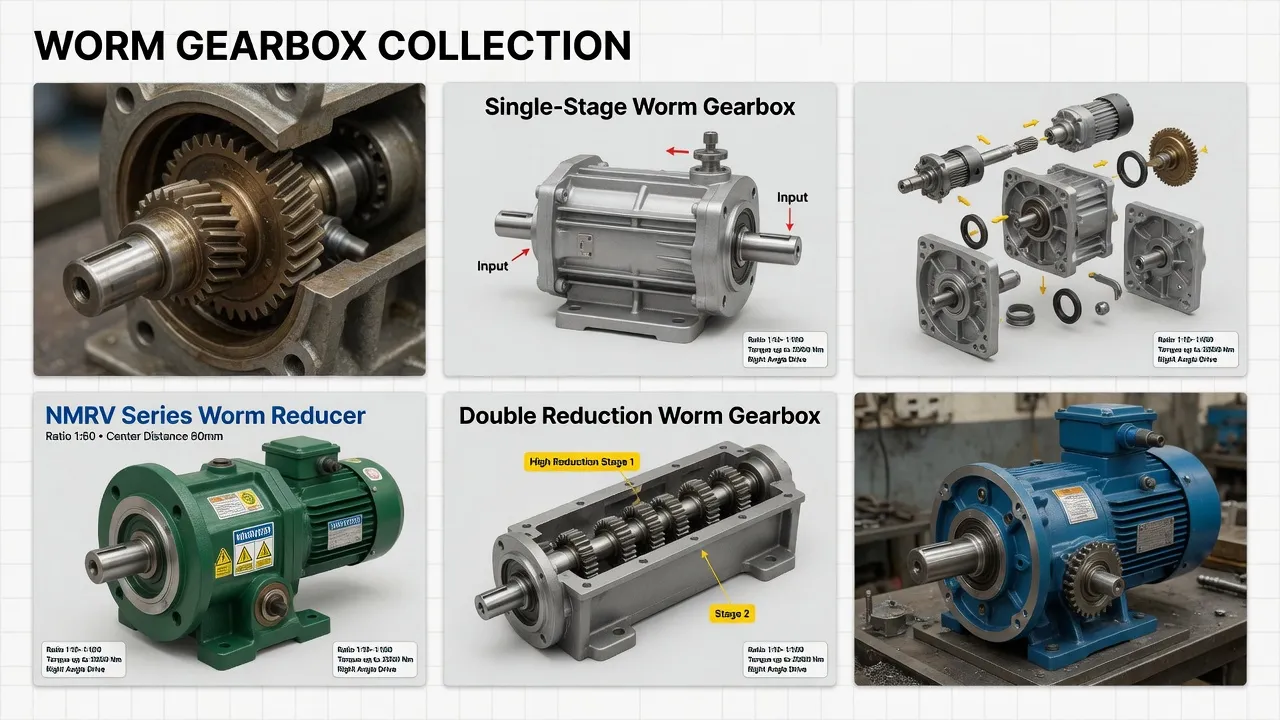
For bulk carrier and tanker mooring winches, container vessel mooring winches, offshore installation mooring winches, and tug, workboat, and specialty vessel winches, the KM Helical Hypoid Gearbox in heavy-duty marine mooring winch specification targets the 25-30-year-vessel-service, class-society-approved, storm-grade service class with engineering features specifically chosen to address the failure modes that retire generic heavy-duty industrial alternatives within 5-10 years of marine service.
Specifications include heavy cast iron housing with marine-grade ISO 12944-5 C5-M corrosion protection scheme rated for 25+ year marine atmospheric service (zinc-rich primer + epoxy intermediate + polyurethane topcoat at 240-310 micrometers total dry film thickness), single-stage or double-reduction worm-and-wheel architecture with heavy-duty bronze worm wheels (centrifugally cast tin bronze ZCuSn10P1 per ISO 1338 with thick wheel sections) meshing with case-hardened 18CrNiMo7-6 steel worm shafts hardened to HRC 58-62 surface, reduction ratios from 60:1 through 120:1 ensuring inherent self-locking holding capability, premium-grade SKF or NSK heavy-duty tapered roller bearings rated for 25,000+ hour L10 fatigue life under rated load, fluoroelastomer (Viton) double-lip seals with stainless garter springs at all shaft penetrations, IP66 marine-grade ingress protection plus marine breather configuration, synthetic polyalphaolefin (PAO) lubricant fill rated for 8,000-hour drain intervals, motor flange compatibility with three-phase AC motors and matched electromagnetic brake assemblies for class society approval, and AISI 316 stainless steel A4 grade external mounting hardware throughout. Output torque ratings reach 65,000 Nm continuous with peak shock capacity 6× rated output for wave surge events. Class society type approval documentation from DNV, ABS, Lloyd’s Register, Bureau Veritas, and ClassNK ships with every unit along with EN 10204 3.1 material certifications, CE marking per EU Machinery Directive 2006/42/EC, RoHS compliance, and ISO 9001:2015 quality system certification.
Beyond the KM marine frame, complete mooring winch drive packages typically pair the gearbox with marine-grade three-phase AC motors with marine electromagnetic brake assemblies and IP66 motor housings, marine-grade encoder feedback for winch control system integration, weatherproof control connection junction box rated for marine deck environment, and full A4 grade stainless steel mounting hardware throughout. Akgnx Co., Ltd supplies matched drive packages for marine winch OEMs and provides aftermarket replacement units for installed commercial vessel and offshore installation fleets across major shipbuilding and marine operations markets globally.
Specifying Drives for Marine Mooring Winches?
Send vessel class, certified line break load, mooring arrangement, and class society pathway. We supply KM heavy-duty marine drives engineered for 25+ year vessel service with DNV/ABS/LR/BV type approval and ISO 12944 C5-M corrosion protection.
Frequently Asked Questions
© Akgnx Co., Ltd · About Us · Contact Us · [email protected]