
Correct alignment between a worm gearbox and its driving motor is the single most controllable factor in drive-train longevity — and the most frequently shortcut in field installation. A misaligned coupling generates cyclic radial forces on the input shaft bearing with every motor revolution. At 1,400 rpm, a bearing experiencing 0.3 mm parallel misalignment sees over two million load cycles per day — predictably producing bearing fatigue failure in 500–3,000 hours rather than the 20,000+ hour design life. This guide covers every alignment scenario for worm gearbox-motor assemblies: direct B5 flange-mount (the easiest, most common), separately-mounted motor with flexible coupling, belt and chain input drives, and the specific IEC flange compatibility dimensions that must be verified before ordering to ensure physical fitment.
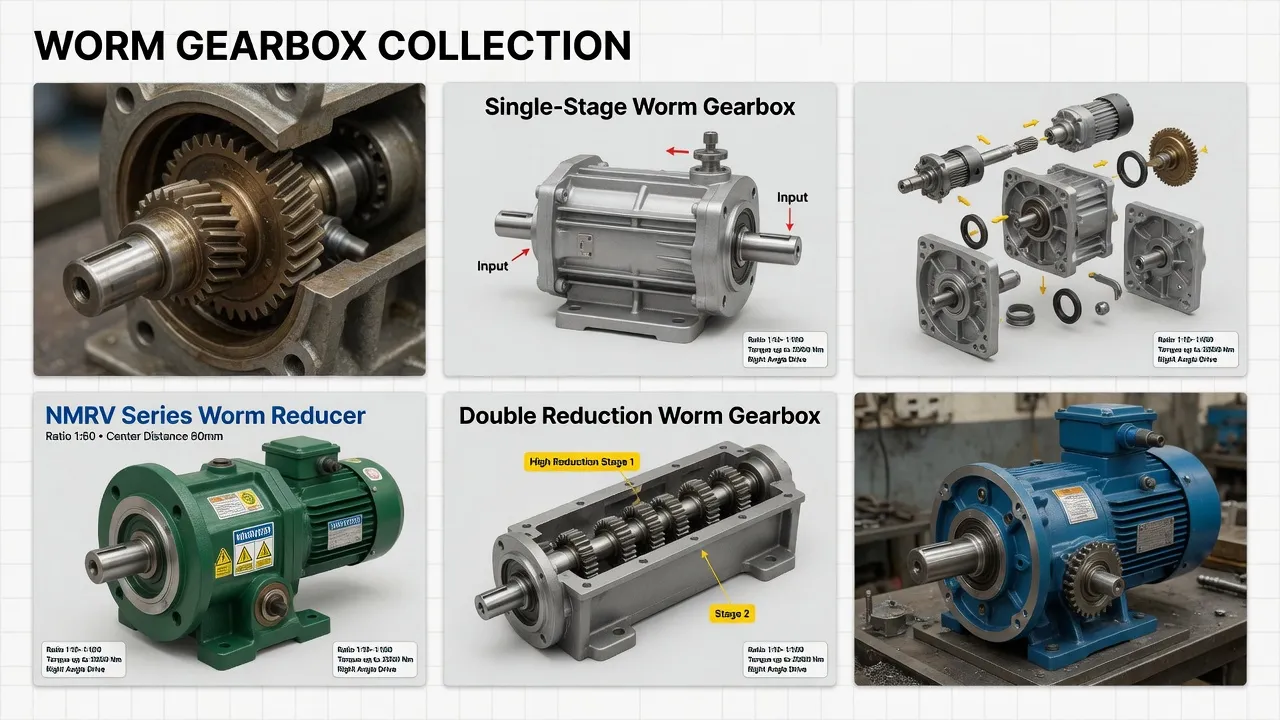
IEC Flange Compatibility — What to Check Before Ordering
The most common misalignment source is not field installation error — it is ordering a gearbox with an incompatible flange for the motor. IEC electric motors and worm gearbox input flanges use a standardised pilot bore and bolt circle, but two incompatibilities are common:
| IEC Motor Frame | B5 Pilot Bore Ø | B5 Bolt Circle Ø | Motor Shaft Ø | Compatible NMRV |
|---|---|---|---|---|
| IEC 56 / 63 | 80 mm | 100 mm | 9 / 11 mm | NMRV030, NMRV040 |
| IEC 71 | 105 mm | 130 mm | 14 mm | NMRV040, NMRV050 |
| IEC 80 | 130 mm | 165 mm | 19 mm | NMRV050, NMRV063 |
| IEC 90 | 130 mm | 165 mm | 24 mm | NMRV063, NMRV075 |
| IEC 100 / 112 | 180 mm | 215 mm | 28 mm | NMRV075, NMRV090 |
| IEC 132 | 230 mm | 265 mm | 38 mm | NMRV090, NMRV110 |
| IEC 160 | 250 mm | 300 mm | 42 mm | NMRV110, NMRV130 |
| IEC 180 | 300 mm | 350 mm | 48 mm | NMRV130, NMRV150 |
Key compatibility check: Verify two dimensions independently — (1) the B5 pilot bore on the gearbox input flange matches the B5 pilot register on the motor flange face; (2) the input coupling bore inside the gearbox matches the motor shaft diameter. The pilot bore governs angular alignment; the coupling bore governs shaft fit. A pilot bore mismatch prevents the motor from seating; a coupling bore mismatch requires a different coupling insert or a motor shaft adapter sleeve.
Direct B5 Flange-Mount — The Zero-Alignment Configuration
When the motor mounts directly to the gearbox B5 input flange, the IEC pilot bore register controls alignment automatically — no separate alignment procedure is required. The pilot bore (female register on the gearbox flange) mates with the pilot register (male spigot on the motor flange), locating the motor shaft coaxial with the gearbox input coupling to within 0.02–0.05 mm at the flange faces.
The only alignment requirement for B5 direct mount: ensure the two flange faces are flush with no angular gap. Flush means zero visible light gap around the entire circumference at the flange mating faces after bolts are tightened. Any angular gap indicates:
- Paint or debris on one or both mating faces: Clean both faces completely and retry.
- Burr on the pilot bore register: Inspect the pilot register diameter on both parts for raised material; dress with a fine file and retry.
- Dimensional non-compliance on the pilot bore: Measure both pilot diameters — if not within tolerance (typically H7 on the gearbox, j6 on the motor), contact the supplier.
Do not tighten the flange bolts against a gap — forced tightening distorts the motor bearing housing and creates angular misalignment that loads the input shaft bearing cyclically with every revolution. The NMRV worm gearbox range covers the full standard IEC motor frame compatibility for direct B5 mount. For special input arrangements such as hypoid or right-angle input from helical drives, our KM hypoid gearbox provides a compact right-angle input option with integral motor flange.
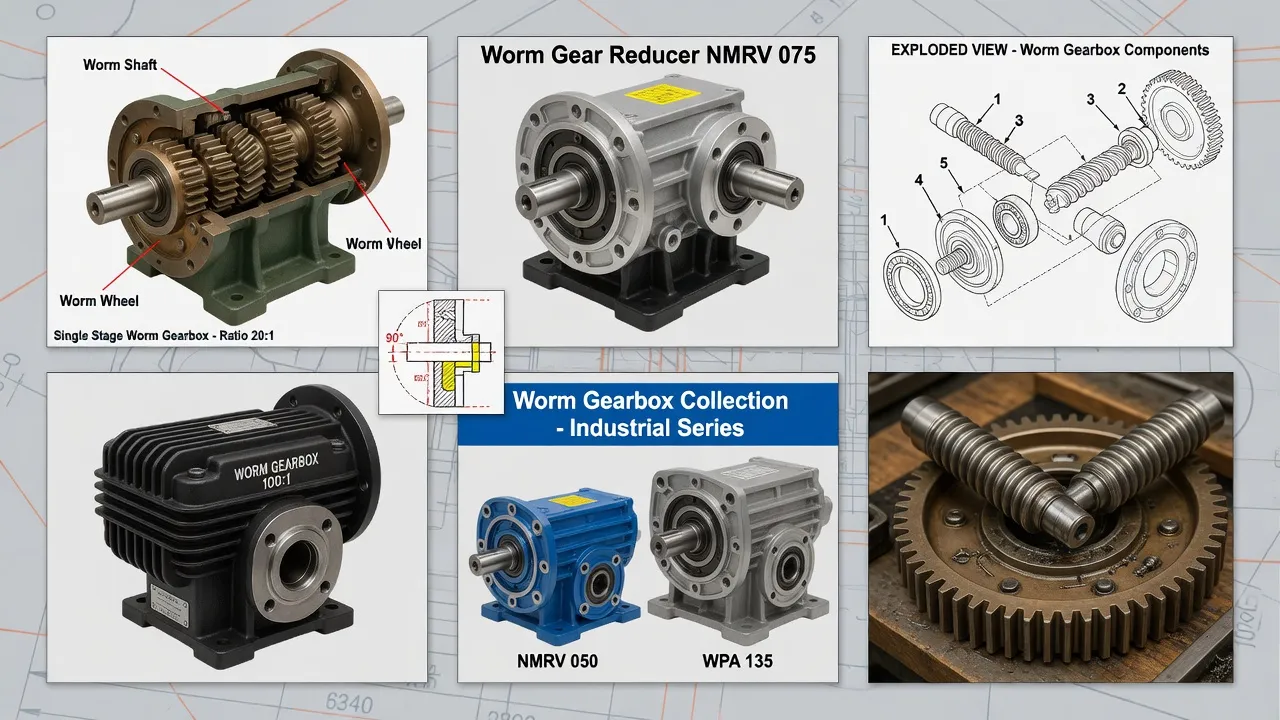
Flexible Coupling Alignment — When Motors Are Separately Mounted
When the motor is separately mounted (not directly on the gearbox flange) and connected via a flexible coupling, laser alignment or dial indicator alignment is required. Alignment targets:
- Parallel (radial) offset: ≤0.05 mm for standard flexible coupling; ≤0.02 mm for rigid coupling.
- Angular misalignment: ≤0.05°/100 mm for standard flexible coupling.
- Axial gap: Per coupling manufacturer’s specification — typically 2–5 mm for the coupling’s designed float.
Laser alignment procedure (recommended for NMRV090 and above):
- Mount laser alignment heads on motor shaft and gearbox input shaft coupling hubs.
- Rotate to the 12 o’clock position, zero both sensors.
- Rotate to 3, 6, and 9 o’clock positions, recording all readings.
- The laser system software calculates required shim adjustments and foot corrections. Apply corrections in two iterations — the “soft foot” correction first, then the alignment correction.
- Verify final alignment is within the tolerance targets listed above.
Belt and Chain Input Drives — Radial Load Alignment
When the gearbox input is driven by a belt or chain from a separately mounted motor, three alignment requirements apply:
- Sprocket/pulley parallelism: The driving and driven sprockets or pulleys must be coplanar — parallel planes, aligned faces. Misalignment causes lateral chain wear and vibration that transmits to the gearbox input bearing. Align using a straightedge across both sprocket/pulley faces.
- Belt/chain tension: Over-tensioned belts and chains generate excessive radial loads on the input shaft bearing. Verify the radial load from belt/chain tension does not exceed the catalog Fr1 (input shaft radial load) limit for the selected NMRV frame. Correct tension produces the manufacturer’s specified belt sag or chain slack — typically 1–2% of span length.
- Sprocket position on input shaft: Mount the sprocket/pulley as close to the gearbox housing as possible — minimise the overhang. The Fr1 radial load limit in the catalog is specified at the mid-shaft position; longer overhang increases the bending moment at the bearing significantly.
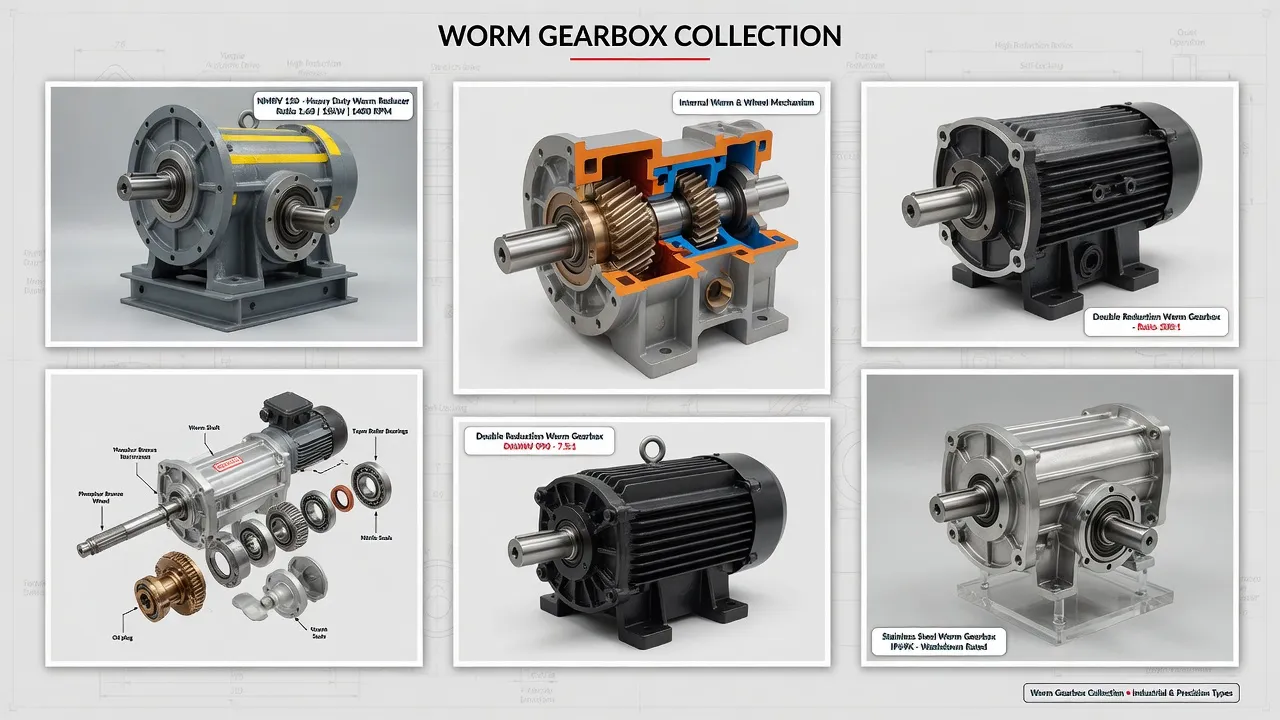
Common Alignment Mistakes — And How to Avoid Them
| Mistake | Consequence | Prevention |
|---|---|---|
| Forcing flange bolts against a visible gap | Angular misalignment, input bearing fatigue | Clean faces fully; never torque against a gap |
| Wrong IEC flange size ordered | Physical incompatibility at installation | Verify pilot bore and shaft diameter before order |
| Coupling alignment skipped (“it feels right”) | Bearing failure at 500–3,000 hours | Laser align NMRV090 and above; dial-indicator for smaller frames |
| Soft foot not corrected before alignment | Alignment shifts when bolts are tightened | Check and correct soft foot before alignment procedure |
| Over-tensioned belt | Exceeds Fr1 limit, premature input bearing failure | Calculate radial load from belt tension; verify against catalog Fr1 |
| Alignment not re-checked after first thermal cycle | Thermal growth shifts alignment; drift accelerates wear | Re-check coupling alignment after first 4-hour run at operating temperature |
For detailed gear reducer installation and alignment methodology covering the full worm and helical gearbox product range, see the gear reducer installation and alignment guide. For the full NMRV flange compatibility data and coupling bore options, contact our NMRV worm gearbox technical team.
Frequently Asked Questions
My motor is IEC 90 but the NMRV075 catalog shows IEC 90 as compatible — why won’t it fit?
IEC 90 motors come in two sub-variants: IEC 90S (short frame) and IEC 90L (long frame) — both with the same B5 flange dimensions (130 mm pilot bore), but different shaft lengths and sometimes different shaft diameters (24 mm vs 28 mm depending on the specific motor manufacturer). Verify both the IEC frame designation (90S vs 90L) and the shaft diameter (Ø24 vs Ø28) against the gearbox input coupling bore before ordering. A 24 mm coupling bore won’t accept a 28 mm shaft regardless of the IEC90 compatibility claim.
How do I align a wall-mounted flange gearbox (B5) where I can’t add shims?
For B5 flange-mounted gearboxes fixed to a wall or machine frame, alignment is controlled by the flatness and squareness of the mounting face and the IEC pilot bore. If the mounted gearbox is misaligned relative to the motor, the correction is made on the motor side — adjusting the motor mounting position on adjustable motor rails (if fitted) or by shimming the motor flange adaptor plate. For B5-to-B5 direct motor-gearbox assemblies, IEC pilot bore controls alignment without any shim adjustment required.
Is laser alignment overkill for small NMRV gearboxes?
For NMRV030–063 with direct B5 flange motor mount, laser alignment is not required — the pilot bore controls alignment. For separately mounted motor-gearbox assemblies at NMRV030–063: a dial indicator set is adequate and preferred over laser for these small shaft sizes where laser target mounting is awkward. Laser alignment becomes the recommended method for NMRV075 and above on separately mounted motor assemblies, where the shaft distances are large enough for convenient laser target mounting and the bearing replacement cost justifies the alignment investment.
What is “soft foot” and why does it matter?
Soft foot occurs when one of the four mounting feet of the motor or gearbox does not make full contact with the base plate — it “rocks” slightly when alternating diagonal bolts are tightened. When all four bolts are tightened against a soft foot, the housing is mechanically distorted — bearing seats shift, changing the effective shaft alignment regardless of how carefully the shaft centres were aligned. Correct soft foot before alignment: loosen all bolts, identify which foot rocks with a feeler gauge, add precision shim stock under that foot until all four feet make solid contact with the base plate, then perform the shaft alignment.
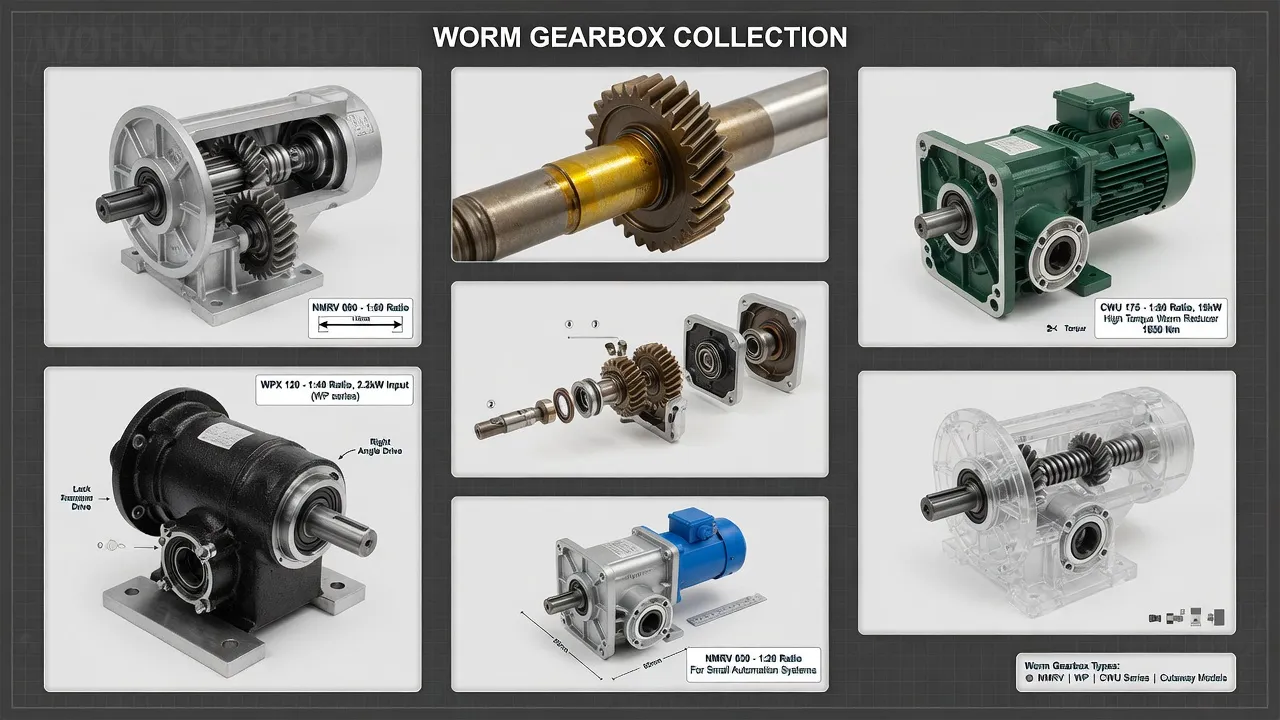
Need a Pre-Configured Worm Gearbox + Motor Assembly?
We supply pre-mated motor + gearbox assemblies (IEC motor + NMRV gearbox, factory-aligned and tested) — eliminating the field alignment step entirely. Send us your torque, speed, motor voltage, and mounting position for a gearmotor quote.
Recognising Misalignment in Service — Symptoms and Diagnosis
If a gearbox was installed with misalignment and has been running for some time, the following field symptoms indicate the misalignment is causing progressive damage:
- Elevated vibration at 2× running speed: The characteristic signature of angular misalignment in a flexible coupling. Measure with a handheld vibration meter; compare to the baseline reading taken at commissioning. A 2× running speed component appearing or growing since commissioning is the primary misalignment indicator.
- Uneven wear on the input shaft coupling insert: Spider (rubber insert) wear that is uneven circumferentially — worn on one side — indicates consistent misalignment load in one direction. Inspect the coupling insert at annual maintenance; replace if uneven wear is observed and re-check alignment.
- Input bearing temperature above housing temperature: A bearing running hot relative to the housing indicates abnormal loading — either overload or misalignment-induced radial force. An infrared thermometer pointed at the input bearing location should show a similar temperature to the housing. More than 15°C above housing surface temperature at the input bearing suggests abnormal loading.
- Oil seeping from the input shaft seal within the first 1,000 hours: Cyclic radial misalignment load fatigues the seal lip by flexing it with every motor revolution. New seal failure within 12 months of installation is one of the most reliable indicators of input shaft misalignment in the field.
When any of these symptoms are present on a unit that was running correctly at commissioning, first re-check the coupling alignment — thermal growth of the machine base during warm-up cycles can shift the alignment from the cold-commissioned position. Re-align at operating temperature if the shift is consistent. For a complete reference on gear reducer alignment and maintenance procedures across the full gearbox product range, see the gear reducer installation and alignment guide.