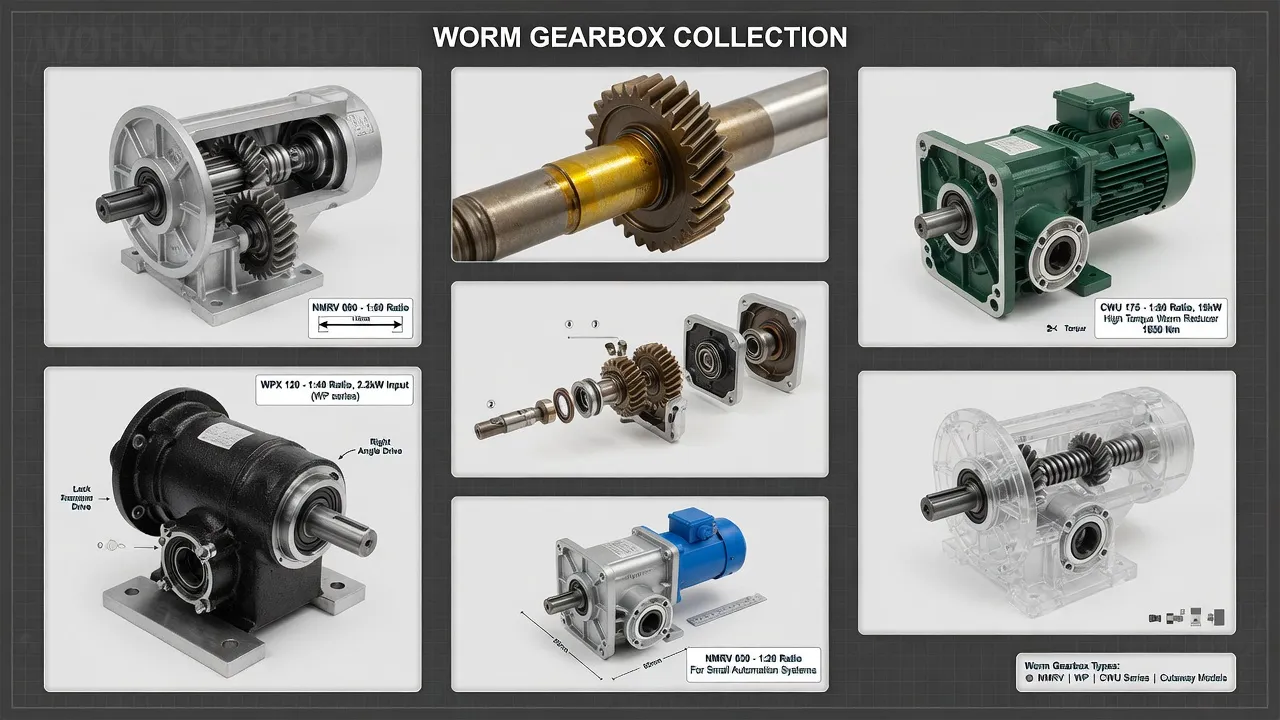
Worm gearbox prices span an enormous range — from under $15 for a compact NMRV030 in a gate opener to over $3,000 for a heavy-duty stainless steel food-grade unit with custom shaft specifications. Understanding what drives price lets you immediately identify whether a quote is reasonable, structure your OEM volume inquiry to get the best terms, and make informed trade-off decisions between standard and engineered configurations. This guide covers every cost factor, provides indicative price bands by frame size and specification, and explains exactly how OEM volume pricing works and what levers you have to negotiate it.
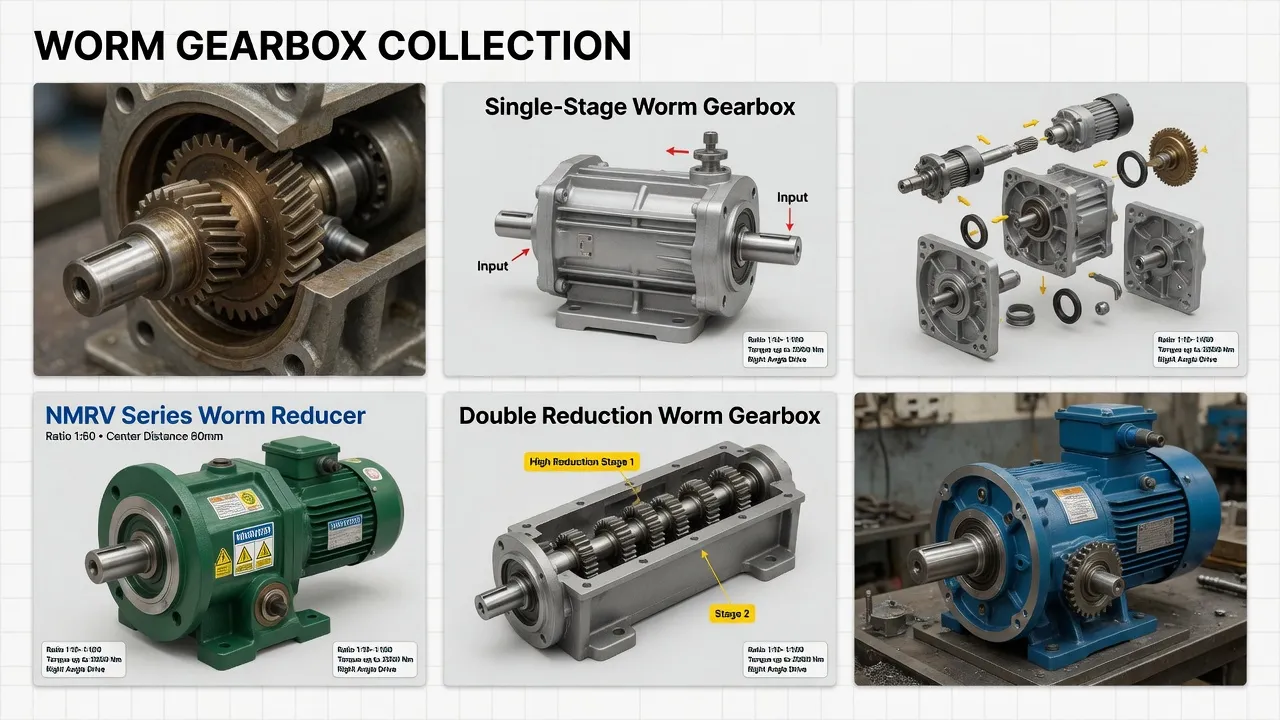
Indicative Price Bands by Frame Size — Standard NMRV Aluminum
Standard NMRV aluminum housing worm gearboxes at typical spot-buy pricing (single unit, standard ratio, B5 motor flange, IP55, PAO lubricant fill). Prices are indicative in USD at mid-2025 market conditions — actual quotes vary by order volume, geographic market, and supplier:
| Frame | Torque Range | Spot Buy (1 unit) | Small OEM (50 units/yr) | Volume OEM (500 units/yr) |
|---|---|---|---|---|
| NMRV030 | up to 20 Nm | $12–$22 | $8–$14 | $5–$10 |
| NMRV040 | up to 48 Nm | $18–$34 | $12–$22 | $8–$15 |
| NMRV050 | up to 100 Nm | $32–$58 | $22–$40 | $15–$28 |
| NMRV063 | up to 230 Nm | $55–$95 | $38–$65 | $26–$45 |
| NMRV075 | up to 420 Nm | $85–$145 | $60–$100 | $40–$70 |
| NMRV090 | up to 680 Nm | $135–$220 | $92–$150 | $64–$105 |
| NMRV110 | up to 970 Nm | $200–$340 | $140–$230 | $98–$162 |
| NMRV130 | up to 1,600 Nm | $310–$520 | $215–$360 | $150–$252 |
| NMRV150 | up to 2,550 Nm | $480–$780 | $335–$545 | $235–$380 |
Indicative prices in USD for standard NMRV aluminum, standard ratio, B5 flange, B3 foot mount, IP55, PAO lubricant. Actual prices depend on order volume, market, delivery terms, and specific configuration. Contact us for a firm quotation. Stainless steel, IP69K, and precision-class variants carry 2.5–4× premium over standard.
8 Factors That Drive Worm Gearbox Price
- Frame size (center distance): The dominant price driver — larger frame means more bronze (the expensive material in a worm gearbox), larger aluminum housing, larger bearings, and more machining time. NMRV150 uses approximately 12× the bronze material of an NMRV030, explaining the 30–40× price difference between smallest and largest standard frame.
- Bronze worm wheel grade: The worm wheel material is the single most expensive component in most NMRV frames. CuSn12Ni2 phosphor bronze (standard specification) costs 3–4× standard C93200 bearing bronze per kg. Lower-specification suppliers sometimes use cheaper bronze alloys — producing a lower purchase price but accelerated wear and shorter service life, particularly at high ratios and elevated temperatures.
- Housing material — aluminum vs cast iron vs stainless: Standard aluminum die-cast (ADC12) is the lowest-cost housing. Cast-iron housing adds 30–60% to unit cost for improved rigidity and thermal mass. Stainless steel (316L) for food-grade, pharmaceutical, or corrosive environments costs 2.5–3.5× the equivalent aluminum unit — reflecting both material cost and the more complex machining required for stainless. Our stainless steel worm gearbox covers food-industry and corrosive-service applications where this premium is operationally justified.
- IP protection rating: IP55 (standard industrial) is included in base price. IP65 typically adds 8–15%. IP66 adds 15–25%. IP69K (high-pressure high-temperature washdown, food industry standard) adds 35–60% — the additional cost covers double-lip FKM seals, sealed bearing arrangements, and housing surface treatment.
- Output configuration: Solid shaft (standard, lowest cost). Hollow shaft adds 15–25% for the machining of the hollow bore and the shrink-disc or key retention. Hollow shaft with shrink disc adds 25–40%. Custom shaft dimensions (non-standard bore, non-standard keyway, special shaft length) add tooling and setup cost — typically $50–$200 per order rather than per unit at volume.
- Precision grade (backlash specification): Standard catalog backlash is 12–25 arcmin and is included in base price. Precision grade (<8 arcmin, matched-pair selected) adds 25–40%. High-precision grade (<4 arcmin, Class P4 bearings, CBN-ground worm) adds 80–150% over standard — this is the specification relevant to servo-positioning and cobot applications. See our range of NMRV worm gearbox configurations for precision-grade availability.
- Lubricant specification: Mineral oil fill is the default lowest-cost option. PAO synthetic fill adds $2–$8 per unit depending on frame size — almost always worthwhile for the efficiency and service-life benefits at continuous-duty applications. PAG synthetic adds $5–$15 per unit and requires confirmation of housing paint and seal compatibility.
- Lead time and logistics: Standard catalog units in stock ship within 3–7 business days. Non-standard configurations (custom ratios, special shaft sizes, non-standard IP) require 4–12 weeks and typically carry a first-order setup cost that is amortised across the order quantity. Emergency delivery from stock at shorter lead time than standard may carry a small expediting premium.
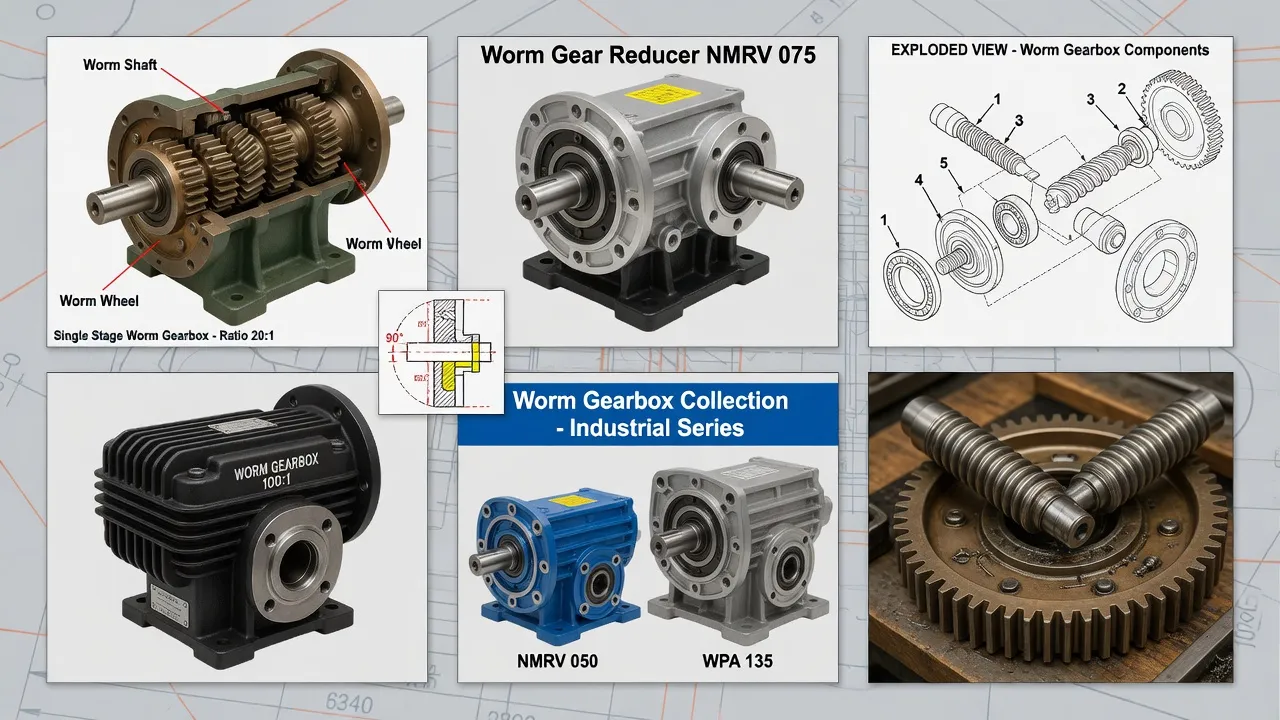
How OEM Volume Pricing Works — and How to Get the Best Terms
OEM volume pricing for worm gearboxes operates on three distinct mechanisms:
- Annual volume tiers: The single most powerful price lever. Most suppliers have pricing tiers at 50, 250, 1,000, and 5,000 units per year. Moving from spot-buy to 50 units/year typically saves 30–40%. Moving from 50 to 250 units/year saves an additional 20–30%. At 1,000 units/year, you are accessing near-production-cost pricing with 40–55% savings vs spot-buy. The key: always specify your annual volume in the RFQ — suppliers will not volunteer the volume discount without it.
- Configuration standardisation: Every non-standard configuration option (custom shaft, non-standard ratio, non-standard color, special packaging) adds a per-order setup cost that is amortised across the order. At 10 units, a $200 setup cost adds $20/unit. At 500 units, it adds $0.40/unit — negligible. Standardise on catalog configurations where possible and defer customisation to the machine level (adaptors, couplings) rather than the gearbox level — this keeps gearbox pricing in the standard tier.
- Consolidated ordering and forecast commitment: Placing consolidated orders across multiple product lines (rather than individual line-items for each frame size and ratio) and providing a 12-month rolling forecast qualifies for preferred-supplier terms at most manufacturers. A supplier receiving a confirmed annual forecast for 400 units across three frame sizes will offer better pricing than the same 400 units arriving as 33 separate orders of 12 units each — the production planning benefit to the supplier translates to price savings.
For general specifications and pricing guidance across industrial worm reducer configurations, the industrial worm reducer specifications and pricing reference provides comparative market data. To obtain our volume pricing tiers directly for your OEM program, submit the RFQ template below.
The OEM RFQ Template — What to Include for Best-Price Response
An RFQ with these details in the first message eliminates back-and-forth and gets you to firm pricing in one round:
- Frame size(s) and ratio(s): e.g., NMRV063-50, NMRV075-30
- Annual quantity per line item: e.g., 240 units NMRV063-50 per year, 120 units NMRV075-30 per year
- Motor flange specification: IEC frame size, B5 or B14
- Mounting position: B3, B5, V1, etc.
- IP rating: IP55, IP65, IP66, IP69K
- Output configuration: Solid shaft, hollow shaft + shrink disc, etc.
- Lubricant type: PAO synthetic (recommended), PAG, or mineral oil
- Delivery terms preference: FOB factory, CIF port, DDP destination
- Target program start date and first order quantity
Frequently Asked Questions
Why is the price difference so large between NMRV030 and NMRV150?
The NMRV150 uses approximately 12× the bronze material, 8× the aluminum housing volume, and 5× the bearing mass of an NMRV030. Bronze is the most expensive material in the gearbox — at approximately $12–$18/kg for CuSn12Ni2 phosphor bronze, the worm wheel alone in an NMRV150 costs $35–$60 vs $3–$5 for an NMRV030 wheel. Machining, testing, and overhead multiply this material difference into the 30–40× overall price ratio between smallest and largest frames.
A competitor is quoting 40% less than your price for the same NMRV063-50. Should I be concerned?
A 40% lower price on what appears to be the same unit warrants three specific questions: (1) What bronze alloy is the worm wheel? Lower-grade CuSn6 or C93200 bronze is significantly cheaper than CuSn12Ni2 but wears 2–3× faster in continuous service. (2) What is the worm screw hardness and surface finish specification? Under-hardened or coarse-ground worms increase friction and reduce efficiency. (3) What warranty and after-sales support terms apply? A unit that needs replacement every 18 months instead of 7 years is not a cost saving. Request material certificates for the worm wheel and worm screw before accepting a very-low-cost quote.
What’s the minimum order to get OEM volume pricing?
Our volume pricing tiers start at 50 units/year — this covers most small-series OEM equipment makers building 50+ machines per year. At 50 units/year, typical savings vs spot-buy are 30–40%. At 250 units/year, savings are typically 45–55%. Consolidated orders across multiple frame sizes and ratios within the same year count toward the total. Contact our OEM sales team for a firm volume-pricing schedule for your specific configuration mix.
Should I factor in energy cost when comparing gearbox prices?
Yes — for continuous-duty applications above 2.2 kW and 4 hours/day, the energy cost over the gearbox service life is typically 3–8× the purchase price. A $45 NMRV050 running continuously at 2.2 kW absorbed for 5,000 hours/year at 70% efficiency costs $792/year in wasted energy — over a 7-year service life, that’s $5,544 in energy waste plus the $45 gearbox purchase. A precision-grade version with PAO synthetic at 76% efficiency costs $75 but saves $150/year in energy — paying back the premium in 4 months. Purchase price is the starting point for cost comparison, not the end point.
Ready to Get OEM Volume Pricing for Your Worm Gearbox Requirements?
Send us your frame size, ratio, annual quantity, IP rating, and motor flange specification — we’ll return firm volume pricing within one business day.
Total Cost of Ownership — Purchase Price Is Only the Starting Point
For procurement decisions on continuous-duty applications, purchase price is typically 15–30% of the 7-year total cost of ownership. The remaining 70–85% is energy cost. The table below illustrates 7-year TCO for a single worm gearbox at 5.5 kW absorbed power, 50:1 ratio, running 5,000 hours/year at €0.12/kWh:
| Configuration | Purchase Price | Efficiency | Annual Energy Waste | 7-Year TCO |
|---|---|---|---|---|
| NMRV090-50, mineral oil | $135 | 68% | €1,056 | €7,527 |
| NMRV090-50, PAO synthetic | $148 | 72% | €924 | €6,596 |
| NMRV090-30 PAO (lower ratio) | $148 | 77% | €792 | €5,692 |
The mineral-oil unit is $13 cheaper to purchase but €931 more expensive over 7 years — a 71:1 ratio of hidden cost to visible savings. Even the “same” gearbox with a lower ratio (30:1 vs 50:1, if the lower ratio is application-compatible) saves €900 over 7 years with zero purchase-price premium. Purchase price is the right optimization lever for procurement departments tracking per-unit BOM cost; TCO is the right lens for engineering decisions on continuous-duty applications.