
Every worm gearbox in industrial service worldwide contains the same fundamental pairing: a hardened steel worm screw meshing against a softer bronze worm wheel. The bronze wheel is the deliberately sacrificial component — designed to wear gradually over the service life while protecting the harder, more expensive worm screw. But why specifically bronze? Why not aluminium, stainless steel, engineering plastic, or a ceramic? The answer lies in a specific combination of tribological, thermal, and mechanical properties that bronze uniquely satisfies for the sliding-contact worm gear application — properties that were identified empirically over more than a century of worm gearbox development and have been confirmed by modern tribological science.
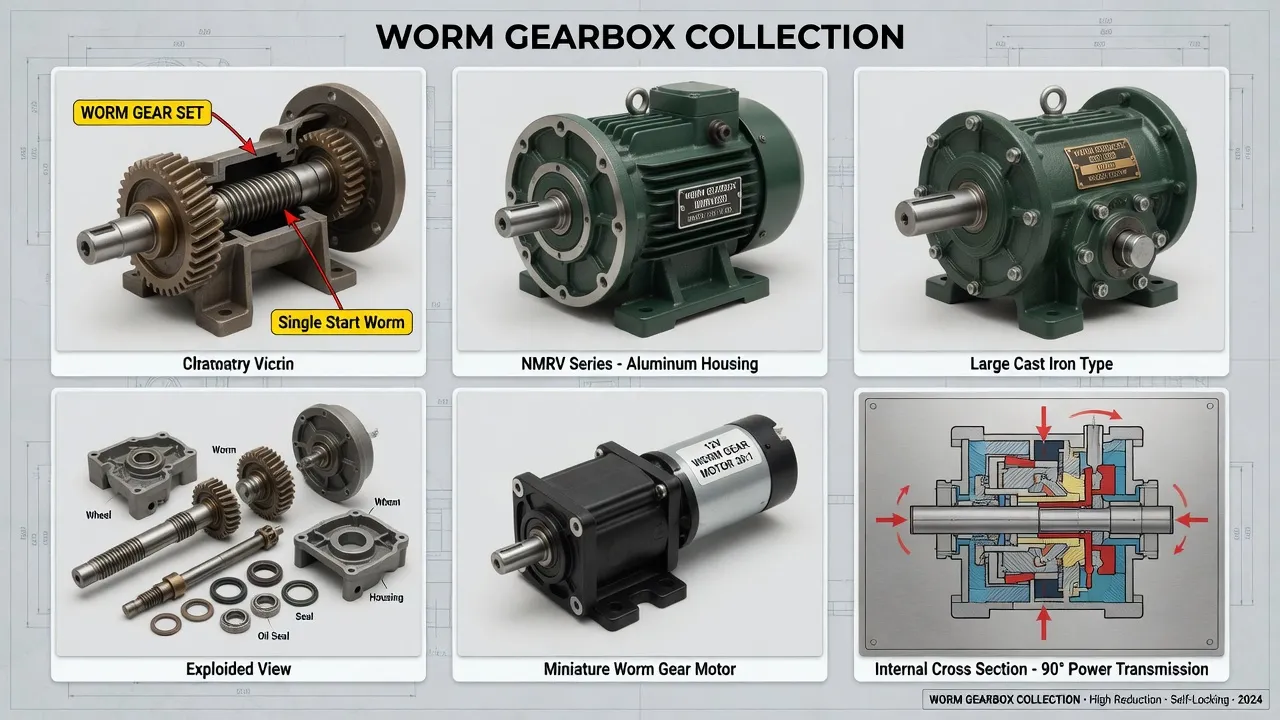
The Tribological Case for Bronze — Five Properties in Combination
No single property explains the choice of bronze for worm wheels — it is the combination of five properties simultaneously satisfied that makes bronze uniquely suited:
- Low mutual adhesion with hardened steel: Adhesive wear (galling) occurs when two surfaces of the same or similar material bond momentarily under contact pressure and tear apart. Bronze (a copper alloy) has fundamentally different surface energy and crystallographic structure from hardened steel (iron carbide martensite) — the two materials have very low mutual adhesion tendency. When bronze slides against steel under oil lubrication, boundary friction is governed by the lubricant film — not by adhesive bonding between the surfaces.
- High thermal conductivity: Bronze’s thermal conductivity is approximately 50 W/(m·K) — about 8× higher than steel’s 15–20 W/(m·K) at the contact zone, and 30× higher than cast iron. This means that the frictional heat generated at the worm-wheel tooth face (where the worm thread slides) is rapidly conducted away from the contact zone into the bulk bronze material and thence to the lubricant. Without this rapid heat conduction, the contact temperature at the tooth face would rise until the lubricant film breaks down — the primary failure mechanism in under-lubricated or over-loaded worm gears.
- Conformability — ability to run-in against the worm thread: Bronze is sufficiently soft (HB 100–130) that during the first 50–200 hours of operation (the run-in period), the bronze tooth face micro-conforms to the mating geometry of the worm thread. This conformance increases the effective contact area, reducing contact pressure and improving load distribution. Harder materials (cast iron, engineering ceramics) cannot conform in this way — they rely entirely on the manufactured geometry for contact distribution.
- Moderate hardness — wear by design: A worm wheel must wear gradually and predictably over the service life rather than failing catastrophically. Bronze at HB 100–130 wears at a controlled rate under boundary lubrication conditions — producing a gradual increase in backlash that serves as a field indicator of remaining service life. Materials that are either too hard (no wear, but risk of sudden pitting failure) or too soft (too-rapid wear) fail to provide this predictable service-life characteristic.
- EHL film compatibility at worm sliding velocities: Worm gear tooth-face sliding velocities range from 0.5 m/s (low-ratio, slow-speed units) to 8+ m/s (high-speed precision units). At these velocities, an elastohydrodynamic (EHL) lubricant film forms between the sliding surfaces. Bronze’s surface roughness Ra (typically 0.4–1.6 µm after machining) and its modulus of elasticity (110 GPa — elastic enough to slightly deform under EHL pressure) are both well-matched to the EHL film thickness range achievable with ISO VG220 lubricant at typical operating temperatures.
The Metallurgy of CuSn12Ni2 — Why Composition Matters
The standard industrial worm wheel bronze — CuSn12Ni2 (approximately 86% Cu, 12% Sn, 2% Ni) — is a phosphor-deoxidised tin bronze in which each alloying element contributes specific properties:
- Copper (86%): The base metal providing thermal conductivity, ductility, and the surface energy characteristics that prevent adhesion against steel. Copper’s face-centred-cubic crystal structure produces a material that deforms plastically rather than cracking under localised contact stress — enabling the conformability essential for worm-wheel run-in.
- Tin (12%): Dissolved in the copper matrix (solid solution) and as tin-rich intermetallic compounds (δ-phase Cu₃₁Sn₈). The solid solution strengthens the matrix, increasing hardness from HB 40 (pure copper) to HB 100–130. The δ-phase particles provide additional hard-phase wear resistance at the tooth contact surface.
- Nickel (2%): Refines the grain size of the bronze during solidification, producing a finer, more uniform microstructure. Finer grain size = smoother machined surface finish = better EHL film support = lower friction coefficient at the worm mesh. Nickel also improves corrosion resistance in the presence of acidic lubricant degradation products.
- Phosphorus (0.02–0.04%): Deoxidises the melt during casting, removing oxygen that would otherwise produce brittle Cu₂O inclusions in the microstructure. Phosphorus also slightly hardens the matrix and improves the fine-scale surface texture after machining.
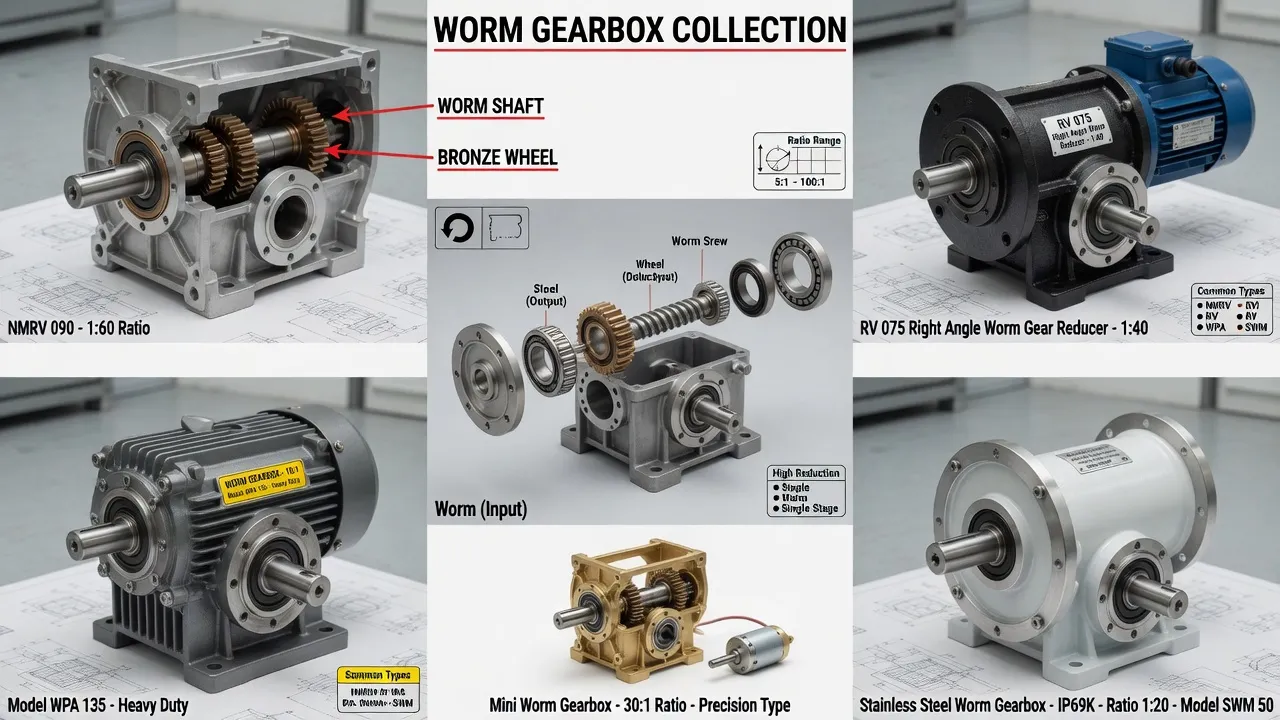
Centrifugal Casting vs Sand Casting — Why Manufacturing Method Matters
The same alloy specification can produce significantly different worm wheel performance depending on how the blank is cast:
- Centrifugal casting (standard for quality worm wheels): The molten bronze is poured into a rotating mould. Centrifugal force drives denser metal to the outer radius (the tooth face zone) and pushes porosity, slag, and low-density inclusions toward the inner bore area. The resulting blank has a dense, fine-grained outer layer precisely where the worm mesh contact occurs. Fatigue life and wear resistance at the tooth face are significantly better than sand-cast equivalents. All quality NMRV and industrial worm wheel blanks are centrifugally cast.
- Sand casting (lower cost, lower quality): Gravity-fed mould, no centrifugal densification of the tooth-face zone. Greater porosity in the tooth-face region, coarser grain structure, and less predictable mechanical properties. Sand-cast worm wheels are used in very low-cost OEM applications and low-duty gate operators — they are not suitable for industrial continuous-duty service.
All worm wheels in our NMRV worm gearbox range use centrifugally cast CuSn12Ni2 blanks — the correct specification for the service-life targets of industrial applications. For the metallurgical specifications of worm gear components, see the worm gear component metallurgy and specifications reference.
Why Alternatives to Bronze Fail in Worm Wheel Applications
Each alternative material fails one or more of the five tribological requirements that bronze satisfies:
| Alternative Material | Failure Mode vs Bronze | Limited Use Case |
|---|---|---|
| Aluminium | High adhesive wear with steel; low thermal capacity; poor EHL film support | Very light duty, short life only |
| Stainless steel | Same material family as worm → adhesive galling; no conformability | Not viable for worm wheel |
| Engineering plastic (PA/POM) | Thermal conductivity 200× lower than bronze → overheating at industrial loads; 20–50× lower load capacity | Light duty only (<5 Nm) |
| Ceramic (Al₂O₃, SiC) | Cannot conform during run-in; brittle under shock loads; prohibitive cost | Research only, not commercial |
| Cast iron | Adequate only at sliding velocity <1.5 m/s; brittle under shock; lower thermal conductivity than bronze | Very slow drives only |
| Carbon-graphite | Adequate dry; fails with oil lubrication (oil destroys graphite boundary film); low tensile strength | Dry/vacuum environments only |
For heavy-duty large-frame applications where maximum service life is critical — steel mills, foundry equipment, mining — our heavy-duty worm gearbox uses larger-cross-section CuSn12Ni2 centrifugally cast wheels, extending service life at high continuous torques beyond what standard NMRV frames can achieve.
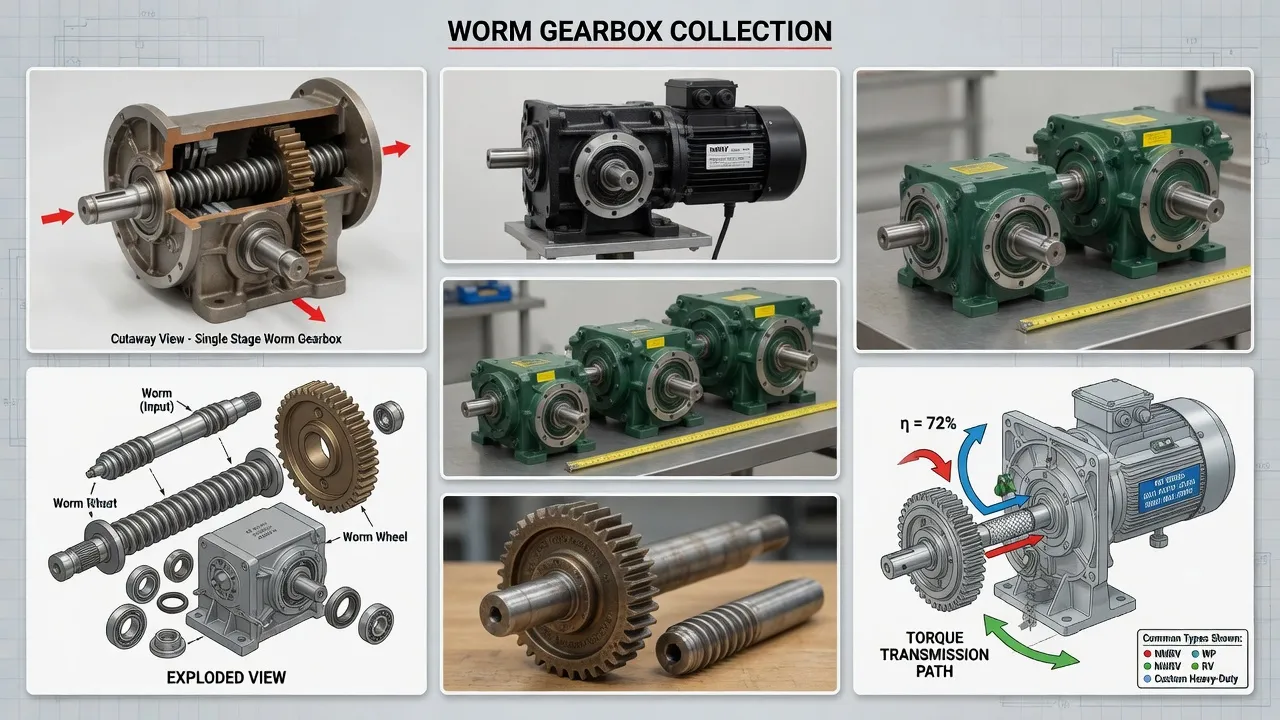
The Cost of Getting Bronze Specification Wrong
The purchase price difference between CuSn12Ni2 and CuSn6 bronze in an NMRV063 worm wheel is approximately $3–$8 per unit. The service-life difference under continuous industrial duty is a factor of 2–3×. Consider the full cost of a premature worm wheel failure for a conveyor drive running 16 h/day:
- Unplanned downtime: 4–8 hours at typical industrial throughput cost = $400–$2,000
- Emergency repair labour: $150–$400
- New worm wheel: $20–$60
- Total cost of one premature failure: $570–$2,460
The $3–$8 purchase price premium for CuSn12Ni2 vs CuSn6 to avoid this failure event delivers an ROI of 70:1 to 700:1. Material specification is not a place to economise on worm gearboxes — verify the bronze alloy with the supplier at purchase, and insist on EN 10204 material certificates for any application where service life and continuity of production matter.
Frequently Asked Questions
Is “phosphor bronze” the same as “CuSn12Ni2”?
Not exactly — “phosphor bronze” is a family name for copper-tin alloys deoxidised with phosphorus. CuSn12Ni2 is a specific member of this family with 12% tin and 2% nickel addition. Other alloys also marketed as “phosphor bronze” include CuSn6 (6% tin) and CuSn8 (8% tin) — with significantly lower wear resistance. When specifying a worm wheel, always specify the alloy designation (CuSn12Ni2 per EN 1982) rather than the generic term “phosphor bronze,” to avoid receiving a lower-specification alloy.
Why does the worm wheel wear faster than the worm screw?
This is by design. The worm screw is the more expensive, more difficult to replace component (it is integral to the gearbox housing in NMRV designs). The bronze wheel is designed to be the sacrificial element — softer, more conformable, and replaceable in a service rebuild. The hardness difference (HRC 58–62 for the worm vs HB 100–130 for the wheel) ensures controlled, directional wear: the wheel wears gradually while the worm remains serviceable for the full gearbox service life under normal operating conditions.
What does “leaded bronze” mean and should I avoid it?
Leaded bronze alloys (such as CuSn6Zn6Pb3, also known as C93200 or LG2) contain 2–5% lead, which improves machinability and bearing performance in boundary-lubrication applications. For general industrial non-food worm gearboxes, leaded bronze is technically acceptable but provides lower wear resistance than CuSn12Ni2. For food, beverage, pharmaceutical, and potable water applications, leaded bronze is specifically prohibited — lead compounds from wear particles can contaminate NSF-H1 lubricant and potentially reach the food product. Always specify lead-free CuSn12Ni2 for food-contact and pharmaceutical applications.
Can I use a different lubricant to compensate for a lower-grade bronze?
No — lubricant quality cannot substitute for bronze alloy quality. PAO synthetic vs mineral oil gives approximately 15–25% improvement in wear rate at equivalent contact conditions — but the alloy specification difference between CuSn6 and CuSn12Ni2 is a 200–300% improvement in intrinsic wear resistance. No lubricant can close this gap. Specify the correct alloy first; then optimise with PAO synthetic lubricant for additional service-life benefit.
Every Worm Gearbox We Supply Uses Certified CuSn12Ni2 Bronze
EN 10204 Type 3.1 material certificates available on request. Contact our team for specifications, certification documentation, and volume pricing.
How Bronze Worm Wheel Wear Progresses — The Three Stages
Understanding how bronze worm wheel wear develops helps maintenance engineers interpret what they see during inspections:
- Run-in (0–200 hours): Micro-asperities on the machined bronze tooth face are plastically deformed and smoothed by the sliding steel worm thread. The bronze surface becomes progressively more conformal to the worm geometry. Oil colour changes to bronze-tinged as fine particles enter the lubricant. Efficiency improves by 4–8% as the contact area increases and friction coefficient decreases. This is normal and desirable wear — it establishes the long-term contact pattern.
- Steady-state (200 h to 60–80% of design life): Wear rate is low and consistent. The bronze tooth face has a smooth, polished appearance. Backlash increases very slowly — typically 1–2 arcmin per 1,000 hours of operation at rated load. Oil samples show low copper and tin particle counts. The gearbox is in its most efficient operating state.
- Accelerated wear (approaching end of life): The δ-phase tin-rich hard particles that provided surface wear resistance are progressively consumed. The tooth contact area widens beyond the designed contact zone as the tooth profile wears. Backlash increases more rapidly. Oil samples show rising copper particle counts. Housing temperature rises 5–10°C above the steady-state baseline as efficiency drops from increased friction. This stage is the service-life indicator — schedule bronze wheel replacement at next planned shutdown.