
Lubrication is the single maintenance variable that most determines whether a worm gearbox achieves its rated service life or fails prematurely. Get it right and a well-sized worm gearbox runs 20,000–30,000 hours with minimal intervention. Get it wrong — wrong oil type, wrong viscosity grade, wrong change interval, or wrong fill level — and the bronze worm wheel degrades in 2,000–5,000 hours, often without visible external warning until catastrophic failure. This guide covers everything a maintenance engineer needs: oil type selection, viscosity grade matching by operating temperature, change intervals by duty class, fill level by mounting position, and the five most common lubrication mistakes that destroy gearboxes in the field.
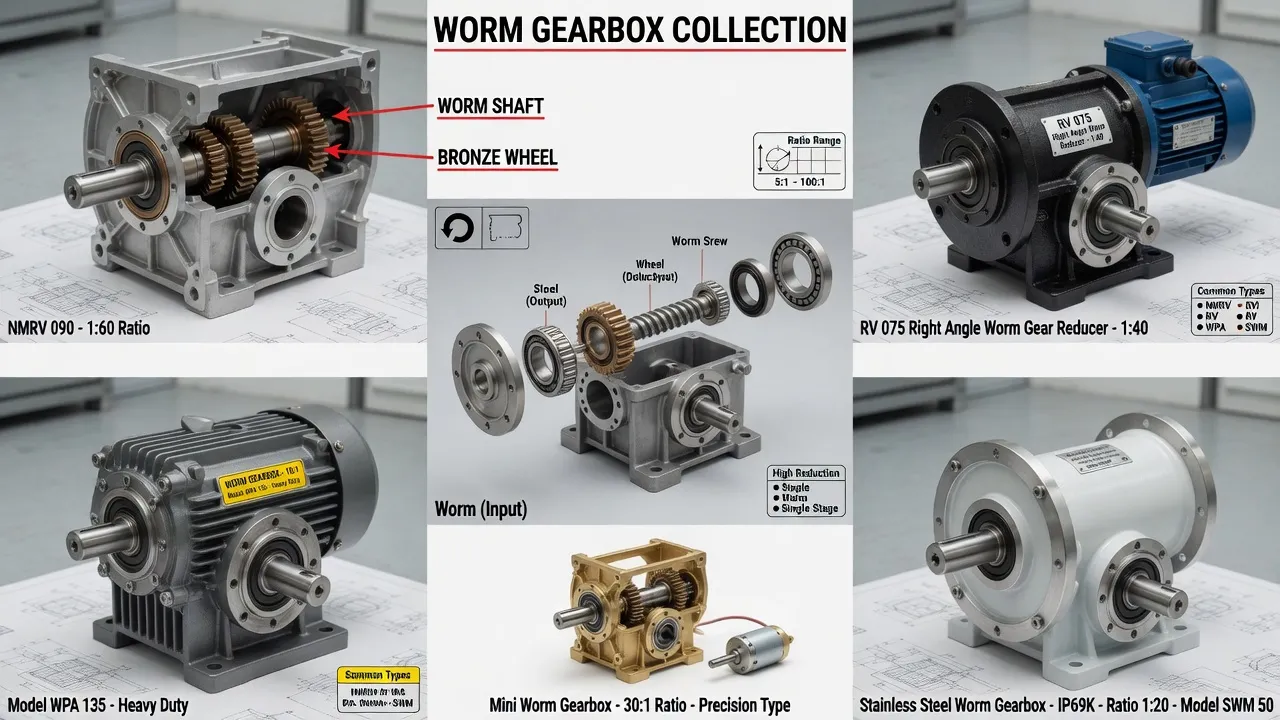
Why Worm Gearbox Lubrication Is Different From Other Gearboxes
Worm gearboxes operate under a fundamentally different lubrication regime than helical, bevel, or planetary gearboxes. The key difference is the gear mesh contact type: worm gears operate predominantly in sliding contact, not rolling contact. Every tooth mesh cycle slides the worm thread across the bronze wheel face rather than rolling across it. This creates three requirements unique to worm gearbox lubrication:
- High extreme-pressure (EP) additive content: The sliding contact generates high local contact stresses that would cause adhesive wear (galling) on the bronze wheel surface without robust EP additives forming a sacrificial boundary film. Standard circulating oils and R&O turbine oils lack sufficient EP protection for worm gear applications.
- Compatibility with bronze: Many EP additives effective on steel-on-steel gear meshes are corrosive to bronze — particularly sulfur-phosphorus (S-P) EP additives at high concentrations. Worm gear oils must use EP additive systems specifically qualified for copper-alloy compatibility. Always verify the lubricant is rated as “suitable for worm gears with bronze wheels” on the technical data sheet.
- High viscosity at operating temperature: The sliding contact tends to push lubricant out of the mesh zone rather than entrain it. Worm gear oils require higher viscosity than equivalent rolling-contact gear lubricants to maintain an adequate EHL film at the sliding mesh interface.
Oil Type Selection — Mineral, PAO, PAG: When to Use Each
Three lubricant base-oil types are used in worm gearboxes. The choice has a measurable impact on efficiency, change interval, and service life:
| Oil Type | Efficiency Benefit | Change Interval | Relative Cost | Best Application |
|---|---|---|---|---|
| Mineral EP (ISO VG 220/320) | Baseline | 4,000–6,000 h | 1× | Intermittent duty, low-cost OEM, ambient <30°C |
| PAO Synthetic (ISO VG 220) | +3–5% | 8,000–12,000 h | 3–4× | Continuous duty, energy-cost-sensitive, <100°C oil |
| PAG Synthetic (ISO VG 220/460) | +5–8% | 10,000–15,000 h | 5–8× | High-temp (>80°C oil), food-grade NSF-H1, max efficiency |
Important PAG compatibility warning: PAG lubricants are incompatible with most mineral oils and PAO synthetics — mixing PAG with any other oil type causes the mixture to gel, blocking oil passages and accelerating wear catastrophically. If switching to PAG from mineral oil or PAO, the gearbox housing must be thoroughly flushed with the new PAG oil before refilling. PAG is also hygroscopic (absorbs water from air) and incompatible with most standard seal elastomers — verify seal material compatibility before specifying PAG for an existing unit. For food-grade applications requiring NSF-H1 certification, our stainless steel worm gearbox range ships with NSF-H1 PAG lubricant and compatible FKM seals as standard.
Viscosity Grade Selection — Match to Operating Temperature
ISO viscosity grade selection for worm gearboxes is governed by the expected oil sump temperature in steady-state operation — not by ambient temperature alone. Use this table:
| Sump Oil Temp (°C) | Mineral Oil Grade | PAO Synthetic Grade | PAG Synthetic Grade |
|---|---|---|---|
| <30°C (cold climate / infrequent use) | VG 150 | VG 150 | VG 150 |
| 30–50°C (typical moderate duty) | VG 220 | VG 220 | VG 220 |
| 50–70°C (continuous moderate load) | VG 320 | VG 220 | VG 220 |
| 70–90°C (continuous high load / high ratio) | VG 460 | VG 320 | VG 320 |
| >90°C (near thermal limit, high ambient) | Not recommended | VG 460 | VG 460 |
PAO synthetics have a flatter viscosity-temperature curve than mineral oils — they thin out less at high temperatures and thicken less at low temperatures. This is why VG 220 PAO covers the 50–70°C range that requires VG 320 mineral oil, and why PAO is recommended for all applications with large ambient temperature swings or where the gearbox must start in cold conditions. For the complete viscosity and oil specification for our full NMRV worm gearbox series, refer to the product-specific lubrication specification sheet. For the technical background on worm gearbox lubrication regimes and additive requirements, see the worm gearbox lubrication technical reference.
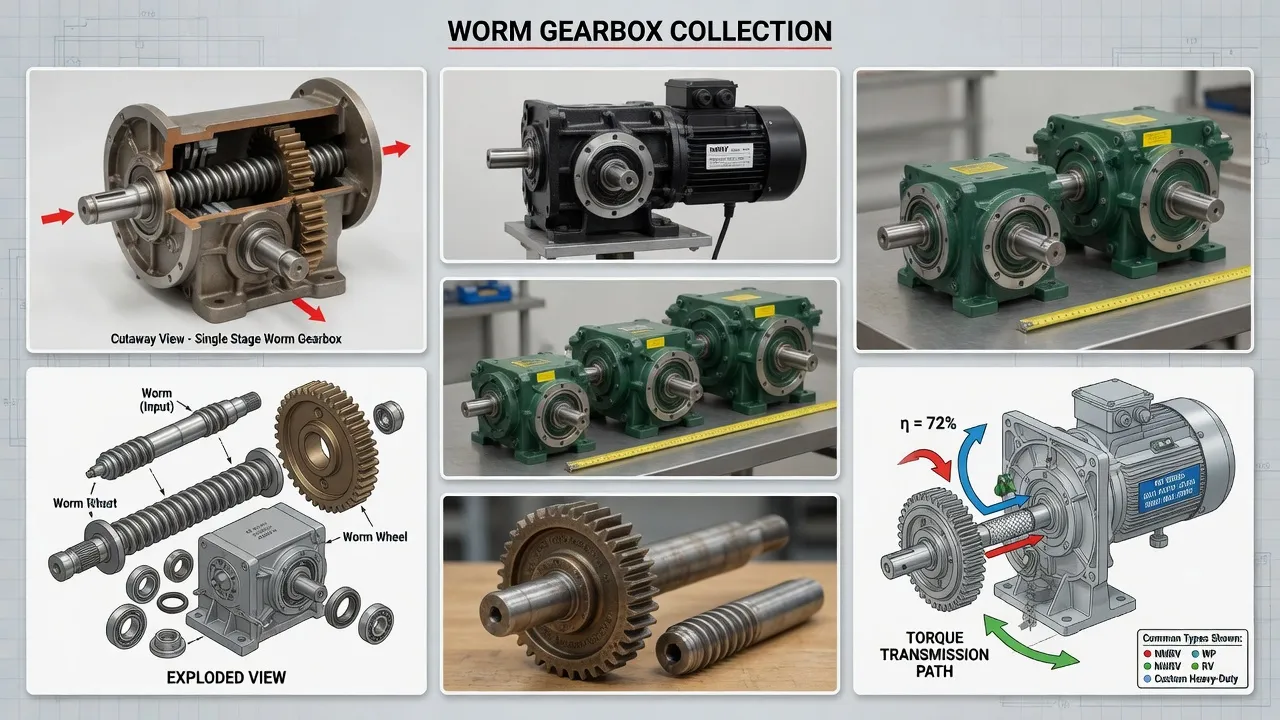
Oil Change Intervals — By Duty Class and Lubricant Type
Oil change intervals for worm gearboxes are governed by the rate of lubricant thermal degradation, oxidation, and contamination — which depend on operating temperature, duty cycle, and base-oil type. The table below gives recommended intervals per ISO 12925 (industrial gear lubricants) and major worm gearbox manufacturer maintenance schedules:
| Duty Class | Oil Sump Temp | Mineral Oil | PAO Synthetic | PAG Synthetic |
|---|---|---|---|---|
| First fill (new unit run-in) | Any | Change after 200–300 hours regardless of oil type | ||
| Intermittent (<4 h/day) | <50°C | 3 years or 6,000 h | 5 years (sealed-for-life) | 5+ years |
| Continuous (8 h/day) | 50–65°C | 4,000 h / 18 months | 8,000 h / 3 years | 10,000 h |
| Continuous (16–24 h/day) | 65–80°C | 2,000 h / 12 months | 5,000 h / 18 months | 8,000 h |
| High-temperature (>80°C oil) | >80°C | 1,000 h max | 3,000 h | 5,000 h |
The first-fill change at 200–300 hours is non-negotiable regardless of lubricant type. During run-in, the worm and bronze wheel surfaces micro-conform, releasing fine metallic wear particles into the oil. These particles act as abrasives in subsequent operation if not removed. Skipping the first-fill change is one of the most common mistakes that halves effective bronze-wheel service life in field installations.
Fill Level by Mounting Position
Worm gearbox oil fill level changes significantly with mounting position — because the oil must reach the worm-and-wheel mesh zone regardless of orientation. A gearbox filled to the correct level for B3 (horizontal foot mount) will be severely under-filled if then mounted vertically in V1 (input shaft up) orientation without adjusting the oil volume. The fill level must be set using the oil sight glass or drain/fill plug position specified for the actual installed mounting position — refer to the catalog mounting diagram for your specific unit. The general rules:
- Horizontal input shaft (B3/B5/B6/B7): Oil level at the center of the output shaft — splash lubrication carries oil to the worm mesh adequately. Overfilling above center increases churning losses and raises operating temperature.
- Vertical input shaft up (V1): Oil level raised to flood the worm mesh zone — typically 30–50% more oil volume than horizontal mounting. Check catalog for the specific fill volume and sight-glass position for V1.
- Vertical input shaft down (V3/V5): Oil level may need to be reduced — gravity pulls oil toward the lower bearing and away from the mesh zone. Some manufacturers require a pressurized lubrication kit for V5 mounting on larger frames. Always check the mounting-specific fill instructions.
- General rule: Never assume that a horizontal-mounting fill level is correct when the unit is installed vertically or at an angle. Incorrect fill level in vertical mounting is the cause of premature bearing failure on the lower shaft in 15–20% of field-returned worm gearbox warranty claims.
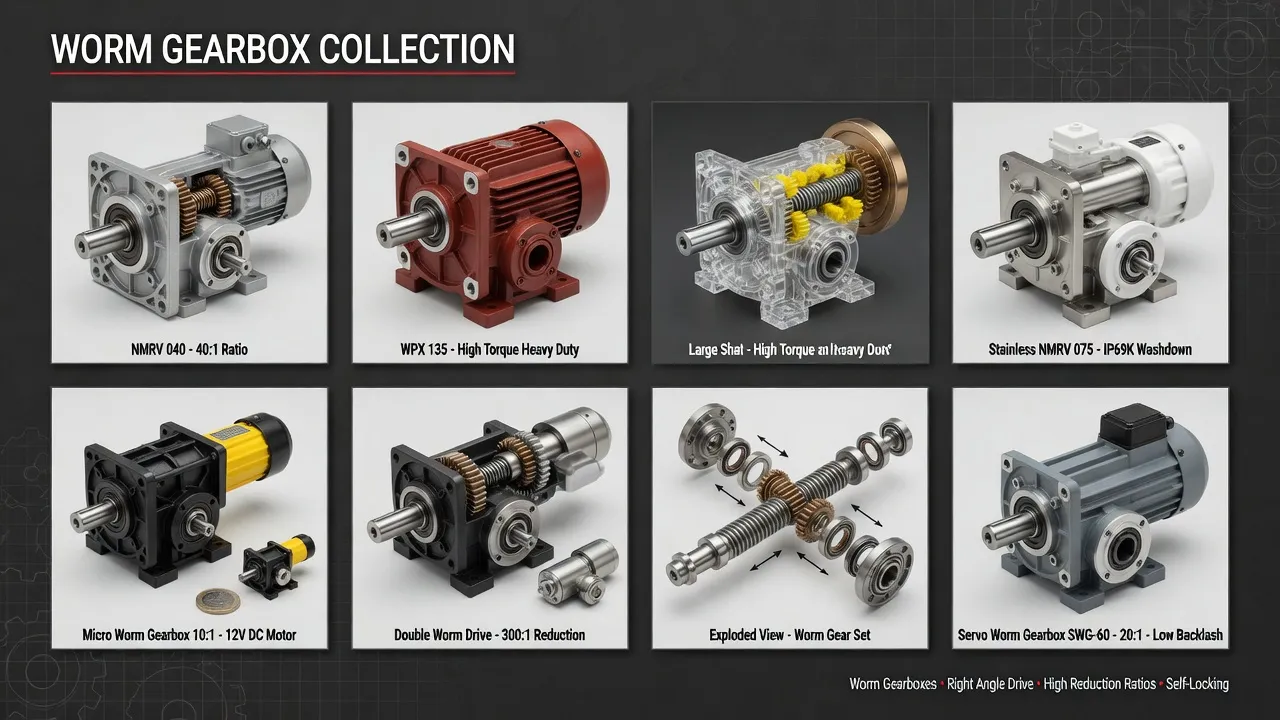
5 Most Common Worm Gearbox Lubrication Mistakes
- Using the wrong oil type (non-worm-rated EP oil): Standard gear oils (CLP, R&O, hydraulic) do not have bronze-compatible EP additives. Using them on worm gearboxes causes rapid bronze wheel corrosion and adhesive wear, often destroying the wheel within 500–1,000 hours. Always verify the lubricant data sheet specifies “suitable for worm gear drives with bronze/copper alloy gear wheels.”
- Skipping the run-in oil change: As covered above, fine metallic particles from run-in contaminate the first fill. The first oil change at 200–300 hours removes them before they cause abrasive damage to the bronze wheel in normal service. This single step has more impact on bronze wheel service life than any lubricant upgrade.
- Wrong fill level for the mounting position: The correct fill volume depends on mounting orientation. Installing at a different orientation than the oil was filled for is a very common installation error — especially when gearboxes are shipped filled for standard B3 horizontal mounting but installed vertically by the end-user without adjusting oil volume.
- Mixing lubricant types: Mixing mineral and synthetic oils, or mixing different synthetic base-oil types (especially PAG with anything else), causes chemical incompatibility that destroys additive performance. If switching lubricant type, flush the housing with 0.5–1× oil-fill volume of the new oil, drain, then refill with fresh oil. Never just “top up” with a different type.
- Extending change intervals beyond limits at high temperatures: At oil sump temperatures above 70°C, lubricant oxidation rate approximately doubles for every 10°C rise (Arrhenius rule). Mineral oil at 80°C sump temperature degrades as fast as mineral oil at 60°C running twice as long — meaning the standard 4,000-hour interval must be cut in half to 2,000 hours at 80°C operating temperature. Extending the change interval in high-temperature service is one of the leading causes of premature worm wheel failure in continuous-duty industrial drives.
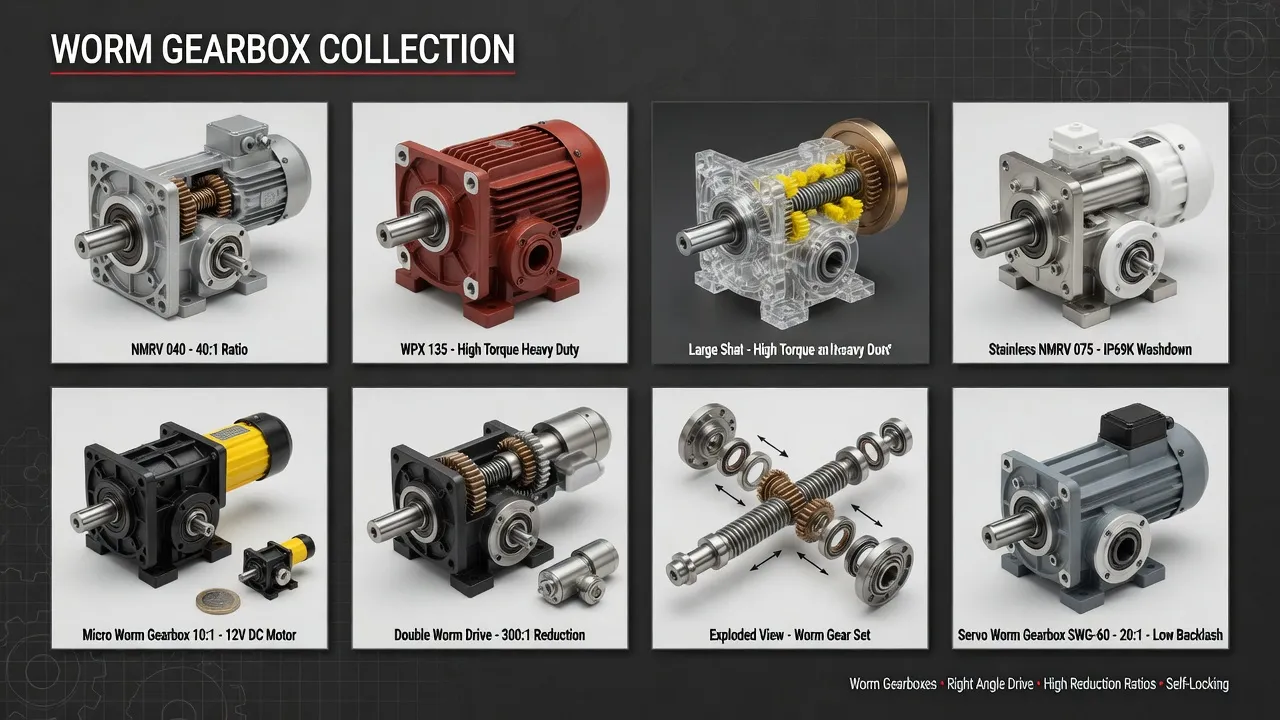
Frequently Asked Questions
Can I use any synthetic oil in a worm gearbox?
No — the oil must be specifically formulated for worm gear drives with bronze wheels. Many synthetic oils (PAO-based gear oils, for example) contain EP additive packages that are corrosive to bronze at operating temperature. Always verify the TDS states “suitable for worm gears with copper alloy wheels” or equivalent. Engine oils, hydraulic oils, and general circulating oils are not suitable for worm gearboxes regardless of viscosity grade.
My NMRV gearbox is marked “sealed for life” — does it ever need re-lubrication?
Sealed-for-life NMRV units filled with PAO synthetic are designed for the design life of light-duty OEM equipment (typically 8–10 years or 15,000–20,000 hours in intermittent duty) without scheduled oil changes. However, “sealed for life” does not mean “maintenance free indefinitely under all conditions.” If the unit runs in high-temperature, heavy-shock, or continuous 24/7 duty beyond the OEM equipment design spec, re-lubrication at 8,000-hour intervals is recommended. If you can access the fill plug on your unit, it is not truly sealed — treat it as a standard serviceable gearbox.
How do I know if the lubricant has degraded without sending it to a lab?
Three field indicators: (1) Color — new worm gear oil is typically amber or pale yellow; degraded oil is dark brown to black. (2) Smell — fresh oil has a mild petroleum or synthetic odor; degraded oil smells acrid or burnt. (3) Texture — dip a clean finger and check for gritty particles (metallic wear debris indicating accelerated wear) or milky color (water contamination from condensation). Any of these conditions warrants an immediate oil change regardless of the scheduled interval.
What quantity of oil does a standard NMRV gearbox need?
Fill volumes for NMRV gearboxes in standard B3 horizontal mounting: NMRV030 ≈ 0.06 L; NMRV040 ≈ 0.12 L; NMRV050 ≈ 0.20 L; NMRV063 ≈ 0.35 L; NMRV075 ≈ 0.60 L; NMRV090 ≈ 0.90 L; NMRV110 ≈ 1.50 L; NMRV130 ≈ 2.50 L; NMRV150 ≈ 4.00 L. These are B3 horizontal values — multiply by 1.3–1.5 for V1 vertical-up mounting. Always confirm with the specific unit’s documentation as values vary by manufacturer.
Need Lubrication Specifications for Your Worm Gearbox?
Send our technical team your gearbox model, operating temperature, duty cycle, and mounting position — we’ll return the exact oil type, viscosity grade, fill volume, and change interval for your installation.
Lubricant Compatibility With Bronze Worm Wheels — Critical Material Consideration
The bronze worm wheel introduces a material-compatibility requirement that is absent in all-steel gearboxes. Lubricant additives that work excellently in helical or planetary gearboxes can aggressively corrode bronze, accelerating wear and drastically shortening wheel life.
- Extreme-pressure (EP) additives containing active sulfur: Many industrial EP gear oils use sulfurized additives that react with steel gear surfaces beneficially. The same sulfur compounds react chemically with copper alloys (bronze) — the reaction corrodes the bronze wheel surface, generating copper compounds in the oil and accelerating wheel wear by 3–5×. Never use active-sulfur EP oils in worm gearboxes. Always verify the lubricant is rated “suitable for bronze/copper alloy gear applications.”
- Mild EP additives (non-active sulfur): These are acceptable for worm gearboxes and are included in most worm-specific oil formulations. The additive treats the steel worm surface without attacking the bronze wheel.
- PAG synthetic lubricants: PAG has excellent film strength without requiring corrosive EP additives, making it inherently compatible with bronze. This is one reason PAG is preferred for high-temperature, high-ratio worm gearbox applications beyond PAO’s effective temperature range.
- Compatibility check procedure: When substituting a lubricant brand, always request the supplier’s written confirmation that the product is compatible with CuSn12Ni2 phosphor bronze and does not contain active sulfur EP additives. This takes one email and can prevent premature bronze wheel failure.
First Fill vs Top-Up vs Full Change — The Three Lubricant Operations
Most worm gearbox lubricant failures in the field result from procedural errors — wrong quantity, wrong oil at top-up, or contaminated fill point — rather than inherently poor lubricants. Three distinct operations have distinct requirements:
- First fill (new unit or post-rebuild): Use the manufacturer’s specified lubricant type and viscosity grade. Fill to the level marked on the housing sight glass or as specified in the installation manual — not to “full” on a dipstick, because fill volume depends on mounting orientation (B3, B5, V1, etc.). Installing in a non-standard orientation without adjusting fill volume is the most common first-fill error. A B3 foot-mount unit installed on its side has a completely different oil level requirement — consult the mounting-position oil-volume table in the catalog.
- Top-up (between change intervals): Only top up with the same lubricant brand and grade currently in the unit. Mixing lubricant brands, viscosity grades, or base oil types (mineral + synthetic) can cause additive incompatibility, foam formation, and viscosity out-of-specification. If the correct lubricant brand is unavailable for a top-up, drain fully and refill with the available equivalent rather than mixing.
- Full change: Drain at operating temperature (warm oil flows completely; cold oil leaves residue). Flush with a low-viscosity flushing oil if the unit has been run on mineral oil and is being converted to PAO or PAG. Fill to the correct level for the installed orientation. Record the date, lubricant brand, and quantity in the gearbox maintenance log.