
A multiplace hyperbaric oxygen therapy chamber serving wound care, decompression sickness treatment, and emergency carbon monoxide poisoning treatment uses 100% medical-grade oxygen at 2.4-2.8 ATA (atmospheres absolute) — equivalent to 14-18 meters underwater pressure — across treatment sessions of 90-120 minutes each. The chamber main entry door, typically 800-1,000 mm diameter circular hatch, must seal against this pressure differential while supporting clinical workflow that includes 4-8 patient treatment cycles per day across multi-shift operations. The door drive operates the door locking mechanism that engages 8-12 perimeter dogs (locking pins) into the chamber bulkhead before the chamber pressurizes, then releases the dogs after depressurization. Each door cycle requires 250-450 Nm output torque to engage the locking dogs against the chamber sealing gasket compression force. Drive failure during the locking cycle either prevents chamber pressurization (delaying patient treatment) or — in the worst case — fails to verify door integrity allowing inadvertent depressurization during treatment with serious patient safety implications. Properly specified hyperbaric chamber door worm gearbox equipment — engineered for medical oxygen environment compatibility, double-redundant safety verification, and pressure vessel code compliance — eliminates the unscheduled outage events and safety concerns that disrupt hyperbaric treatment scheduling and patient safety.
This guide covers the unique drive duty profile of hyperbaric chamber door locking mechanisms in clinical hyperbaric oxygen therapy facilities, addresses the medical oxygen environment fire safety constraints and pressure vessel code compliance requirements, walks through selection criteria balancing reliability with safety verification, and provides a maintenance roadmap suitable for hyperbaric medicine programs with strict patient safety commitments. Audience: hyperbaric chamber OEMs, hyperbaric medicine program directors, pressure vessel system integrators, and consulting engineers specifying drive equipment for hyperbaric facility installations.
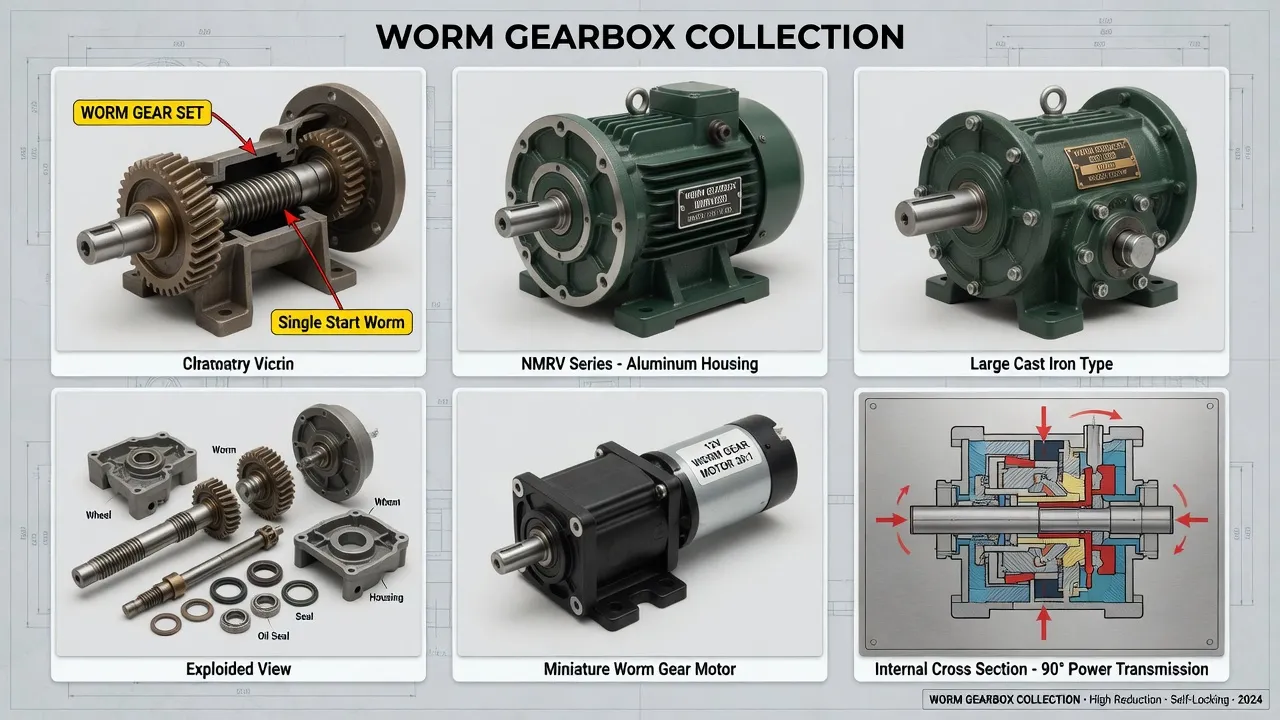
What Drive Demands Distinguish Hyperbaric Doors from General Service?
Hyperbaric chamber door drives combine four operational characteristics that distinguish them from any non-hyperbaric application. The first is the medical oxygen environment fire safety requirement: hyperbaric chambers operate at oxygen partial pressures 2.4-2.8 ATA, where standard industrial materials and lubricants present elevated fire ignition risk. NFPA 99 Health Care Facilities Code Chapter 14 specifies the materials and operations protocols for hyperbaric chamber installations including drive components mounted within the oxygen environment or on penetrations into the oxygen environment. Drive specifications for door drives mounted within the chamber oxygen environment require oxygen-compatible lubricant fills (PFPE perfluoropolyether-based grease, NFPA 99 approved) and oxygen-compatible material specifications. The second characteristic is the pressure vessel code compliance environment: hyperbaric chambers are pressure vessels regulated under ASME Boiler and Pressure Vessel Code Section VIII and PVHO-1 Safety Standard for Pressure Vessels for Human Occupancy. Door locking mechanisms require dual-verification safety systems with independent position sensing and mechanical interlock design.
The third characteristic is the corrosion-resistant stainless steel construction requirement: hyperbaric chambers operate in clinical environments with elevated humidity (treatment-related water vapor, daily disinfection chemicals) plus the elevated oxygen partial pressure that accelerates corrosion of standard ferrous materials. AISI 316 stainless steel construction throughout the drive becomes mandatory for door drives on hyperbaric chambers, with all external fasteners, mounting hardware, and seal arrangements specified in stainless materials. The fourth is the high-cycle clinical operations service profile: clinical hyperbaric programs operate 4-8 patient treatments per day across multi-shift operations, totaling 8-24 door cycles per day with cumulative cycle counts reaching 60,000-200,000 events across the 15-20 year chamber economic life. The right hyperbaric chamber door gearbox selection addresses oxygen environment compatibility, pressure vessel safety, stainless steel construction, and high-cycle clinical service simultaneously per stainless steel drive technical references.
How Do Stainless Steel Drives Address Hyperbaric Door Failure Modes?
AISI 316 Construction Resists Hyperbaric Environment Corrosion
AISI 316 stainless steel construction for the gearbox housing, end covers, and external surfaces resists corrosion from the elevated humidity and elevated oxygen partial pressure environment of clinical hyperbaric facility installations. The 316 grade includes molybdenum addition that provides superior corrosion resistance in the chloride-containing disinfectant chemistry typical of clinical environments. Stainless steel mounting fasteners (A4 grade stainless equivalent to AISI 316) eliminate galvanic corrosion at fastener interfaces. The corrosion-resistant construction supports the 15-20 year chamber service life without housing degradation that would compromise drive sealing or external appearance.
Self-Locking Architecture Prevents Inadvertent Door Opening
Self-locking worm gear architecture at high reduction ratios (typically 60:1 to 100:1) prevents inadvertent door opening under any operating condition — the door locking mechanism cannot back-drive the worm under any combination of pressure differential or external loading. This passive mechanical safety behavior provides the first line of safety protection beyond the active electrical interlock systems. Even if all electrical control systems and active brake systems fail simultaneously, the locked door cannot inadvertently unlock because the worm-worm wheel engagement mechanically prevents back-drive motion. This safety behavior is fundamental to PVHO-1 compliance for human-occupancy pressure vessel door systems.
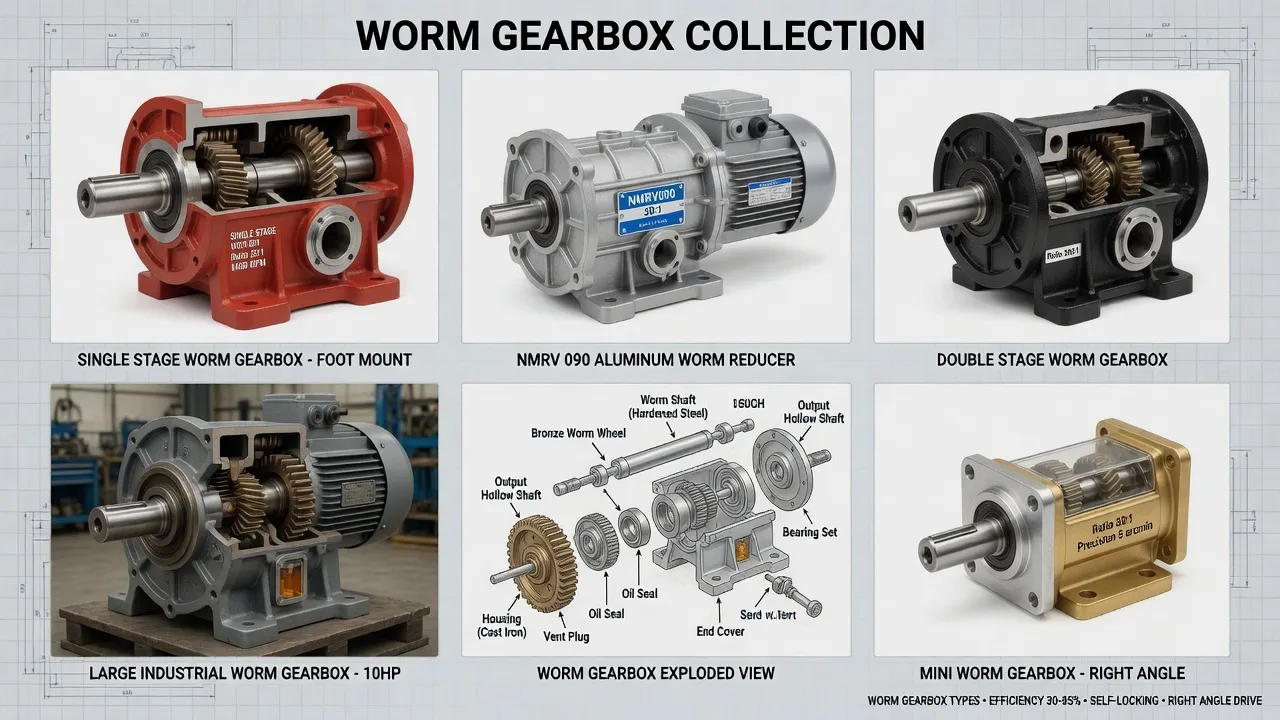
Technical Parameters: Hyperbaric Door Drive Specification Window
The table below summarizes specifications distinguishing hyperbaric chamber door drives from generic stainless steel worm gearbox alternatives. Values reflect AGMA 6034-B92 worm gear power rating combined with PVHO-1 and NFPA 99 hyperbaric chamber safety requirements.
| Parameter | Hyperbaric Door Spec | Generic Stainless |
|---|---|---|
| Housing material | AISI 316 stainless | AISI 304 typical |
| Self-locking requirement | Mandatory PVHO-1 | Optional |
| Reduction ratio | 60:1 – 100:1 | 5:1 – 100:1 |
| Output torque (rated) | 250 – 850 Nm | 200 – 4,000 Nm |
| Lubricant compatibility | Oxygen-compatible PFPE (when in O₂ env.) | Standard PAO/mineral |
| Code compliance | PVHO-1, NFPA 99 | CE only |
| Service life cycle count | 200,000+ cycles | 100,000-500,000 typical |
| Service factor | 2.5 minimum clinical | 1.0 – 1.25 typical |
The single specification most often miscalculated on hyperbaric chamber door projects is the lubricant compatibility for drives mounted within the chamber oxygen environment. Standard worm gear lubricants (mineral oil, polyalphaolefin synthetic, polyalkylene glycol synthetic) present elevated fire ignition risk in 100% oxygen environments at elevated pressure. Drives mounted within the chamber oxygen environment require oxygen-compatible PFPE perfluoropolyether-based grease specifically approved for medical oxygen service per NFPA 99 protocols. Drives mounted on chamber penetrations (drive housing outside the chamber, output shaft penetrating chamber wall through pressure-sealed bushing) can use standard worm gear lubricants — the dividing line is whether the drive lubricant has any potential pathway to the oxygen environment.
Application Matrix: Where Hyperbaric Door Drives Operate
Multiplace Hyperbaric Chamber Main Doors
Multiplace hyperbaric chambers (capacity 4-12 patients plus medical attendants) serve wound care, decompression sickness, carbon monoxide poisoning, and other clinical hyperbaric oxygen therapy indications. The main entry door is typically 800-1,000 mm diameter with 8-12 perimeter dogs locking the door against the chamber bulkhead. Drive specifications include AISI 316 stainless steel construction, oxygen-compatible specifications (when mounted in chamber oxygen environment), and full PVHO-1 / NFPA 99 compliance documentation. Output torque requirements range 450-850 Nm depending on chamber size and locking mechanism design.
Multiplace Chamber Medical Lock Doors
Multiplace chambers include medical lock or transfer lock chambers — small intermediate chambers between the main treatment compartment and the external environment, allowing transfer of medications, supplies, and emergency personnel without depressurizing the main chamber. The medical lock door drive specifications match main door specifications but at smaller torque requirements (typical 250-450 Nm) reflecting the smaller door diameter (typical 400-600 mm). Each multiplace chamber typically deploys 2-3 medical lock door positions per chamber, with corresponding drive count.
Monoplace Hyperbaric Chamber Doors
Monoplace hyperbaric chambers (single-patient acrylic-tube chambers) use simpler door locking mechanisms typically with motor-driven manifold valves rather than mechanical perimeter dogs. The drive specifications scale down with output torque requirements 80-200 Nm, but with the same PVHO-1 / NFPA 99 compliance and AISI 316 stainless steel construction. Monoplace chamber drives serve a much larger installed base than multiplace alternatives reflecting the wide deployment of monoplace chambers across wound care clinics, hospital outpatient programs, and specialty hyperbaric medicine practices.
Specialty Pressure Vessel Door Drives
Specialty pressure vessel applications including industrial autoclaves, sterilizers, and pressure cooking vessels in pharmaceutical and food processing applications use similar door drive specifications without the medical oxygen environment requirements. The drives include AISI 316 stainless steel construction, self-locking architecture, and pressure vessel code compliance per ASME Section VIII for the specific pressure vessel application. Output torque requirements vary widely from 150-1,200 Nm depending on the specialty application. Reference stainless steel reducer specifications for industrial pressure vessel door drive sizing.
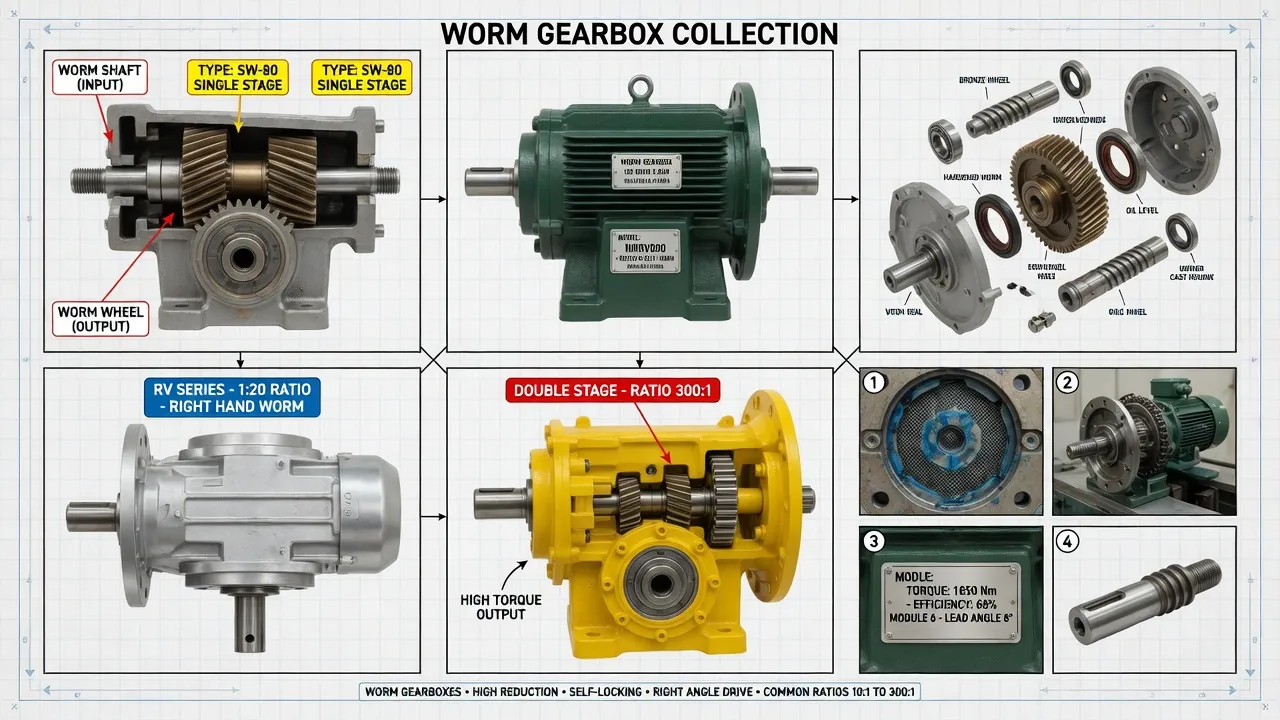
Selection Roadmap: Step-by-Step Workflow
The four-step procedure below covers hyperbaric chamber door drive selection from initial requirements documentation through commissioning verification.
Verify Self-Locking Architecture and Code Compliance Pathway
Confirm reduction ratio above 60:1 to ensure inherent self-locking behavior — the door locking mechanism must not back-drive the worm under any pressure differential or external loading condition. Document compliance pathway including PVHO-1 Safety Standard for Pressure Vessels for Human Occupancy (where applicable) and NFPA 99 Health Care Facilities Code Chapter 14 hyperbaric facilities requirements. Verify drive manufacturer’s self-locking demonstration test report supporting code compliance.
Calculate Door Locking Torque from Mechanism Geometry
Determine output torque from worst-case door locking mechanism geometry: door perimeter dog count × dog actuation force × dog mechanical advantage. Include gasket compression force across the full door circumference at peak operating pressure differential. Apply 2.5 service factor for clinical high-cycle service. The resulting equivalent uniform-duty torque must fall within catalog rating with verified cycle life of 200,000+ events for clinical hyperbaric service.
Specify AISI 316 Stainless Steel Construction Throughout
Order AISI 316 stainless steel housing, end covers, mounting flanges, and external fasteners (A4 grade stainless steel equivalent to AISI 316). Specify oxygen-compatible PFPE perfluoropolyether-based grease lubrication where the drive mounts within the chamber oxygen environment per NFPA 99 protocols. For drives mounted on chamber penetrations (housing outside chamber), standard synthetic worm gear lubricant is acceptable. Verify seal materials use Viton fluoroelastomer or EPDM rubber compatible with oxygen-bearing environment exposure.
Document Dual-Verification Safety System Integration
Verify drive integration with dual-verification position sensing system per PVHO-1 requirements: independent position sensors (typically two redundant proximity switches or limit switches) confirm door fully locked or fully unlocked status. Document mechanical interlock design preventing chamber pressurization until full locking confirmed. Coordinate factory acceptance test procedure with chamber OEM commissioning protocols including position sensor calibration and pressure cycle testing per chamber commissioning requirements.
Spare Parts Integration: Hyperbaric Medicine Facility Service
Hyperbaric medicine facility maintenance operations prioritize spare drive inventory matching the consequences of chamber outage on patient treatment availability — typically every facility carries one complete spare drive matched to each chamber door position in the facility. The case-hardened steel worm shaft meshing with bronze worm wheel reaches 200,000+ cycle service life under proper synthetic lubrication and AISI 316 stainless steel housing protection — typically translating to 15-20 year service life under clinical hyperbaric door operation matching the typical chamber economic life.
Premium-grade SKF or NSK stainless steel-shielded tapered roller bearings throughout the drive handle the combined radial and thrust loads typical of hyperbaric door service with L10 fatigue life exceeding hyperbaric chamber design cycle counts under rated load. Viton or EPDM fluoroelastomer seal lips with stainless garter springs maintain ingress protection across the elevated humidity hyperbaric facility environment. Reference stainless steel drive component specifications for component-level technical details.
Spare parts kits combining worm shaft, worm wheel, complete bearing set, all shaft seals, gasket and o-ring kit, breather valve, and synthetic lubricant fill provide complete rebuild capability during scheduled chamber maintenance windows coordinated with chamber OEM service visits. Akgnx Co., Ltd ships kits packaged for hyperbaric facility maintenance practices, with all wear components sourced from the same factory production runs to ensure dimensional consistency and PVHO-1 / NFPA 99 code compliance reproducibility across rebuild cycles spanning multi-decade chamber service lives.
Cost & Sustainability: Total Ownership Across 18-Year Chamber Life
Hyperbaric medicine programs and chamber OEMs evaluate door drive investments across the chamber economic life — typically 15-20 years matching depreciation schedules for major hyperbaric medicine capital investments. The table compares total cost of ownership for hyperbaric-grade door drives against generic stainless industrial alternatives across this horizon.
| Cost Component | Hyperbaric-Grade HSRV | Generic Stainless |
|---|---|---|
| Initial unit price (FOB) | USD 2,400 – 8,500 | USD 1,200 – 4,500 |
| Service life chamber duty | 15-20 years | 5-8 years |
| Replacement frequency | 1× over 18 years | 2-3× over 18 years |
| Code compliance support | Full PVHO-1 / NFPA 99 | Not certified |
| Treatment outage risk | Negligible | USD 2,500-6,000 per event |
| 18-year cumulative TCO | ~ 1.4× installed cost | ~ 5.8× installed cost |
Sustainability and compliance documentation accompanies every hyperbaric-grade drive shipment. The housing carries CE marking per EU Machinery Directive 2006/42/EC and complies with RoHS Directive 2011/65/EU. Manufacturing follows ISO 9001:2015 quality management procedures with full material traceability from AISI 316 stainless steel housing chemical composition through bronze worm wheel material certification and case-hardened worm shaft heat-treatment records. Worm gear tooth geometry follows DIN 3974 quality grade Q7 with load capacity per AGMA 6034-B92 worm gear power rating methodology adjusted for hyperbaric chamber service factor. Documentation supports PVHO-1 Safety Standard for Pressure Vessels for Human Occupancy and NFPA 99 Health Care Facilities Code Chapter 14 hyperbaric facilities compliance pathways.
Synthetic polyalphaolefin (PAO) lubricant fills (or oxygen-compatible PFPE perfluoropolyether grease for drives within chamber oxygen environment) support 4,000-hour drain intervals producing significantly less waste lubricant compared to mineral oil alternatives requiring more frequent change intervals. The 15-20 year service life eliminates 1-2 replacement cycles compared to generic stainless industrial alternatives, substantially reducing the equipment lifecycle environmental footprint. Akgnx Co., Ltd manufactures hyperbaric-grade door drives through a dedicated medical pressure vessel drive program serving hyperbaric chamber OEMs, hyperbaric medicine programs, and pressure vessel system integrators globally.
Customer Testimonials from Hyperbaric Medicine Operations
“Our hospital hyperbaric medicine program operates 2 multiplace chambers and 4 monoplace chambers supporting wound care, decompression sickness, and emergency carbon monoxide poisoning treatment programs. We standardized on HSRV-based door drives in 2019 across our facility commissioning and chamber retrofit projects. Six years into the standardization, we’ve maintained zero drive-related treatment delays across the chamber fleet, supporting our patient treatment scheduling and emergency response capabilities.”
— Director of Hyperbaric Medicine, Academic Medical Center, USA Northeast
“As a multiplace hyperbaric chamber OEM serving hospital and military hyperbaric facility markets, we evaluated multiple alternative door drive suppliers for our standard chamber product line. Akgnx HSRV stainless steel drives passed our PVHO-1 self-locking demonstration test and our NFPA 99 oxygen environment compatibility testing. The serialized matching documentation and AISI 316 material certifications support our chamber commissioning processes including hospital biomedical engineering departmental validation.”
— Director of Engineering, Hyperbaric Chamber OEM, USA Florida
“We retrofitted door drives across 4 monoplace hyperbaric chambers in our outpatient wound care clinic after experiencing chronic drive failures on the original drives within 5-6 years of clinical service. The HSRV replacement drives mounted to existing chamber door interfaces with coordinated chamber OEM service support. Three years into the retrofit program, we’ve maintained zero drive replacement events across the affected chambers, supporting our wound care service capacity and our outpatient program clinical commitments.”
— Clinical Director, Outpatient Wound Care, USA Texas
“Our naval hyperbaric medicine training facility operates research and training chambers supporting underwater medical research and dive medicine training programs. The HSRV door drives we deployed across 3 specialty chamber installations have completed approximately 180,000 door cycles each over 8 years of operation across multi-shift training schedules. The PVHO-1 compliance documentation and AISI 316 stainless steel construction support our naval safety inspection protocols and our coastal facility environmental durability requirements.”
— Facility Operations Director, Naval Hyperbaric Medicine, USA Eastern
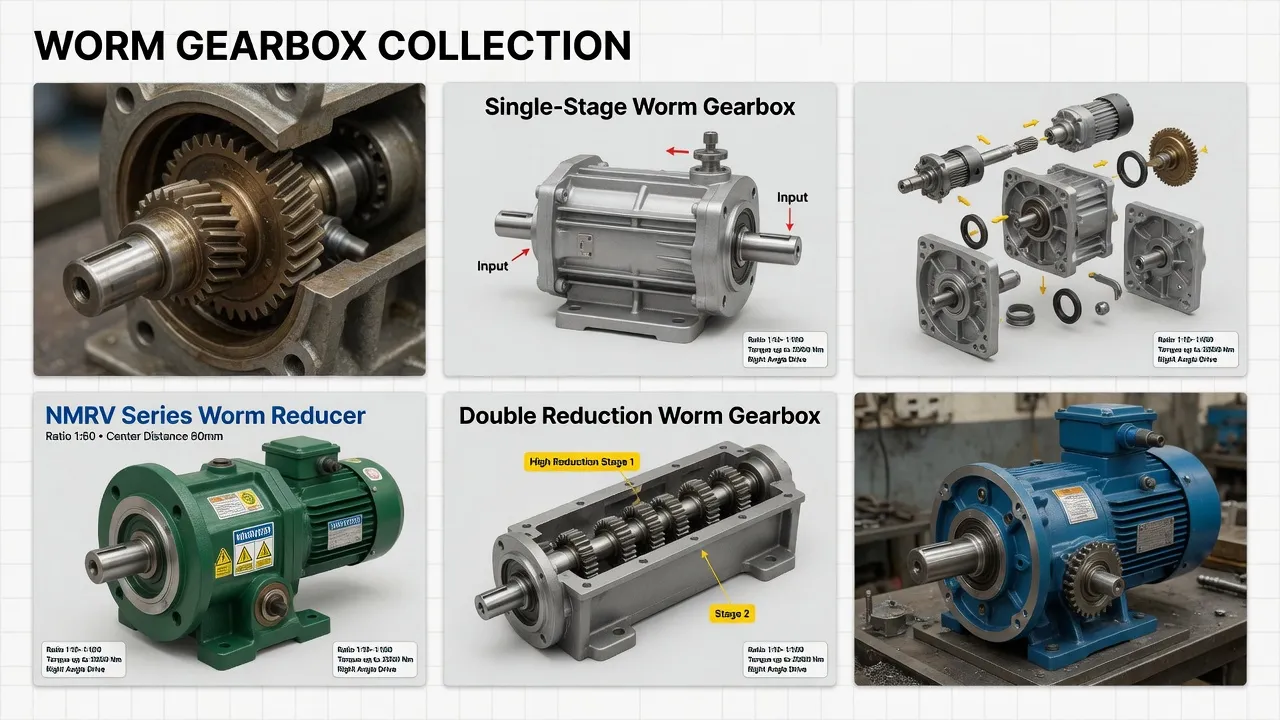
Recommended Drive: HSRV Stainless Steel Worm Gearbox for Hyperbaric Door Service
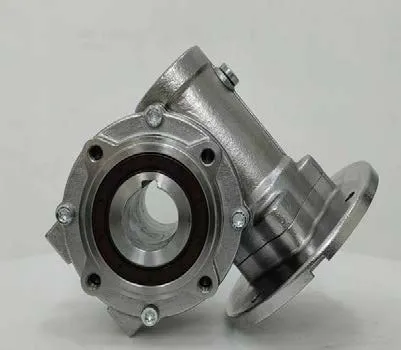
For multiplace hyperbaric chamber main doors, multiplace chamber medical lock doors, monoplace hyperbaric chamber doors, and specialty pressure vessel door applications, the HSRV Stainless Steel Worm Gearbox in hyperbaric door specification targets the 15-20-year-service, PVHO-1-compliant, AISI 316 service class with engineering features specifically chosen to address the safety, code compliance, and clinical environment durability requirements of hyperbaric medicine programs.
Specifications include AISI 316 stainless steel housing rated for sustained clinical environment exposure, single-stage worm-and-wheel architecture with centrifugally cast tin bronze ZCuSn10P1 worm wheel per ISO 1338 meshing with case-hardened 20CrMnTi steel worm shaft hardened to HRC 58-62 surface, reduction ratios from 60:1 through 100:1 ensuring inherent self-locking behavior per PVHO-1 requirements, premium-grade stainless steel-shielded SKF or NSK tapered roller bearings rated for hyperbaric door cycle counts under rated load, fluoroelastomer (Viton) or EPDM rubber double-lip output shaft seals with stainless garter springs at all shaft penetrations, IP66 ingress protection plus medical environment-resistant breather configuration, oxygen-compatible PFPE perfluoropolyether grease lubrication option (for drives mounted in chamber oxygen environment per NFPA 99) or synthetic PAO oil lubrication option (for drives mounted on chamber penetrations), motor flange compatibility with three-phase AC motors and matched electromagnetic brake assemblies, and AISI 316 stainless steel A4 grade mounting hardware throughout. Output torque ratings reach 850 Nm continuous. CE marking per EU Machinery Directive 2006/42/EC, RoHS compliance, ISO 9001:2015 quality system certification, PVHO-1 self-locking demonstration test, and NFPA 99 oxygen environment compatibility documentation ship with every unit.
Beyond the HSRV stainless steel frame, complete hyperbaric chamber door drive packages typically pair the gearbox with three-phase AC motors with electromagnetic brake assemblies and stainless steel motor housings, dual-redundant position sensor mounting brackets supporting PVHO-1 dual-verification safety system requirements, weatherproof control connection junction box rated for hyperbaric medicine facility environment, and full A4 grade stainless steel mounting hardware throughout. Akgnx Co., Ltd supplies matched drive packages for hyperbaric chamber OEMs and provides aftermarket replacement units for installed hyperbaric chamber fleets across major hyperbaric medicine markets globally.
Specifying Drives for Hyperbaric Chamber Doors?
Send chamber type, door diameter, locking mechanism geometry, and code compliance pathway. We supply HSRV stainless steel drives engineered for PVHO-1 self-locking compliance with AISI 316 construction and 15+ year clinical service life.
Frequently Asked Questions
© Akgnx Co., Ltd · About Us · Contact Us · [email protected]