
A highway construction crew operating a tracked asphalt paver on a 12-meter-wide highway resurfacing project lays down 4-6 tonnes of hot mix asphalt per minute at production paving speeds of 6-12 m/min, totaling 500-700 tonnes of asphalt placed before the lunch break on a typical production day. The paver’s auger system distributes hot mix from the central feed conveyor outward to both ends of the 12-meter screed, maintaining uniform material depth across the full paving width while the paver advances continuously. Each auger drive operates at 60-120 RPM under variable torque loading that ranges from steady-state material flow to peak loading 4-6× steady-state when frozen mix lumps, foreign objects, or material density variations resist auger rotation. The drive operates exposed to 150-180°C asphalt mix temperatures, road grit and aggregate dust loading, and the constant vibration environment of tracked construction equipment under operating loads. Drive failure during a paving run forces immediate shutdown of the asphalt placement operation — every minute of downtime costs the contractor approximately USD 800-1,500 in idle crew labor plus risk of asphalt mix cooling beyond placement specifications. Properly specified asphalt paver auger drive equipment — engineered for the unique combination of elevated operating temperature, abrasive material loading, vibration exposure, and shock loading from material density variations — eliminates the unscheduled paving outage events that disrupt construction project schedules and cost projections.
This guide covers the unique drive duty profile of asphalt paver auger systems, addresses the elevated-temperature abrasive service environment and shock-loading characteristics, walks through selection criteria balancing torque capacity with vibration resistance, and provides a maintenance roadmap suitable for construction equipment fleet managers and paving contractor operations. Audience: asphalt paver OEM engineers, paving contractor fleet managers, and construction equipment dealers managing aftermarket replacement drive specifications.
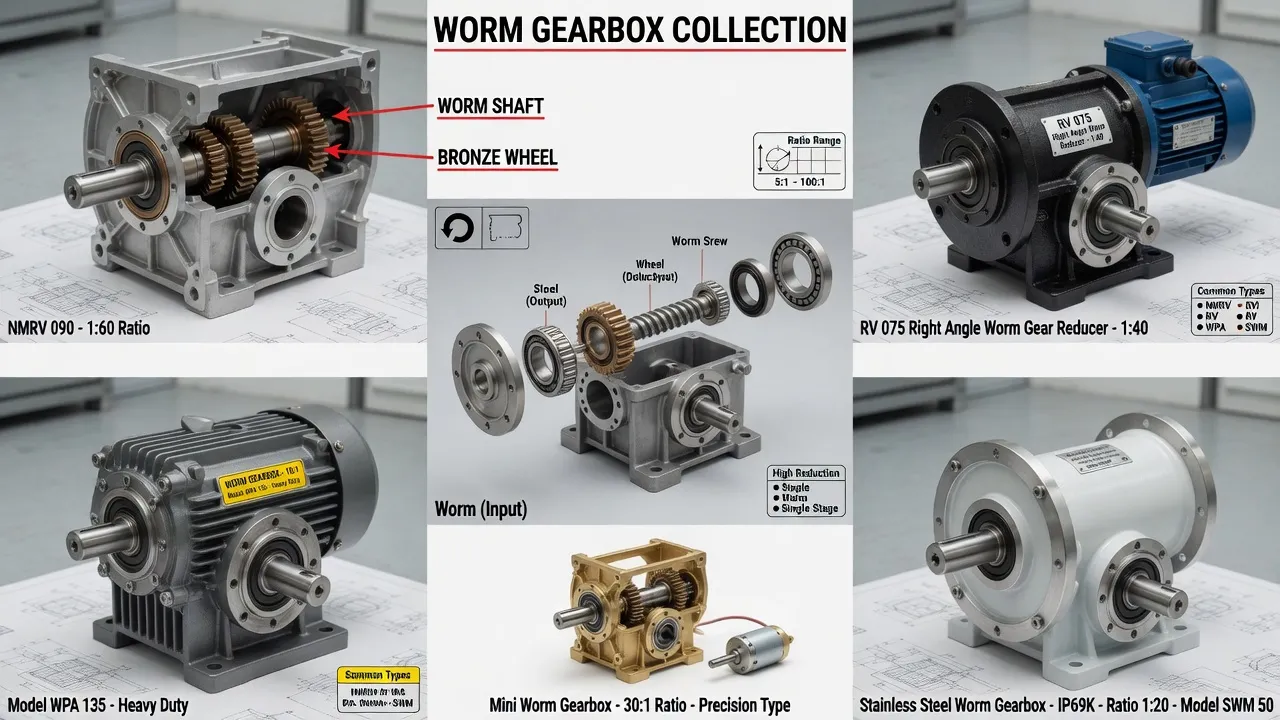
What Drive Demands Distinguish Asphalt Pavers from Generic Construction Equipment?
Asphalt paver auger drives combine four operational characteristics that distinguish them from any non-paving construction application. The first is the elevated-temperature operating environment: hot mix asphalt arrives at the paver at 150-180°C and remains at temperatures above 130°C throughout the auger distribution process. The drive housing operates at 70-95°C ambient skin temperature during paving runs — substantially elevated above the 35-50°C range that defines typical construction equipment thermal exposure. Drive lubricant viscosity, seal materials, and bearing arrangements must accommodate this elevated thermal environment without breakdown across the construction season service profile. The second characteristic is the abrasive aggregate loading: asphalt mix contains 92-95% mineral aggregate by weight, with particle sizes from sub-millimeter fines through 19-25 mm coarse aggregate. Auger rotation through this material produces wear patterns substantially more aggressive than the loose-soil exposure typical of earthmoving equipment.
The third characteristic is the shock loading profile from material density variations: asphalt mix density varies through the auger distribution path due to temperature gradients, aggregate segregation, and feed conveyor delivery patterns. Peak torque events reach 4-6× steady-state during dense material patches, frozen lumps from cold trucks, or foreign object encounters (rocks, metal fragments, accumulated material from previous shifts). The fourth is the high-vibration operating environment: tracked paver equipment produces continuous structural vibration through the drive mounting structure that transfers to the gearbox bearing arrangement. Vibration amplitudes typically reach 4-8 mm/s RMS at the auger drive mounting point during paving operations. The right asphalt paver gearbox selection addresses elevated temperature operation, abrasive material exposure, shock loading capacity, and vibration resistance simultaneously per construction equipment drive technical references.
How Do Helical Hypoid Drives Address Asphalt Paver Failure Modes?
Compact Right-Angle Architecture Suits Paver Mounting Constraints
Asphalt paver auger drives mount directly adjacent to the auger shaft with the drive motor extending laterally from the paver chassis. The right-angle helical hypoid architecture delivers high torque density in compact dimensions appropriate for the limited mounting envelope between the auger flighting and the paver structure. The hypoid gear architecture transmits high torque through compact concentric gear envelopes, eliminating the radial extension of pure worm gear architecture that would interfere with paver chassis structure or auger mounting brackets.
Hardened Steel Construction Resists Shock Loading and Vibration
Helical hypoid gear sets using case-hardened steel sun gears and ring gears (typical 20MnCr5 or 18CrNiMo7-6 case-hardened to HRC 58-62 surface and HV 350-450 core hardness) handle peak shock loading from material density variations and frozen lump events without permanent deformation. The hardened steel construction sustains the cumulative cyclic peak loading across the full construction season cycle count. The reinforced bearing arrangement using opposed tapered roller bearings handles the combined radial loading from auger weight plus axial thrust from auger flighting hydraulic forces during material movement.
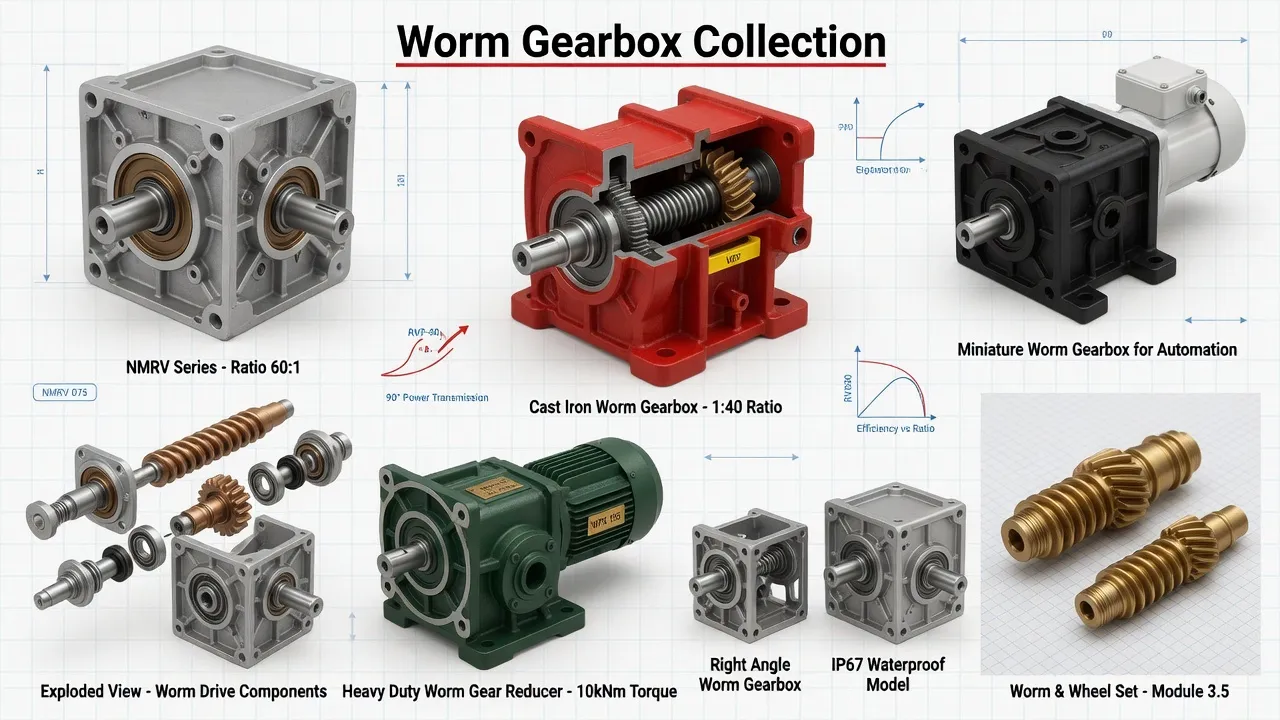
Technical Parameters: Asphalt Paver Drive Specification Window
The table below summarizes specifications distinguishing asphalt paver auger drives from generic industrial gearbox alternatives. Values reflect ISO 6336 gear rating combined with construction equipment industry conventions for high-temperature shock-loaded service.
| Parameter | Paver Drive Spec | Generic Industrial |
|---|---|---|
| Architecture | Right-angle helical hypoid | Worm or helical inline |
| Reduction ratio | 15:1 to 50:1 | 5:1 to 100:1 |
| Output torque (rated) | 800 – 4,500 Nm | 200 – 2,000 Nm |
| Peak shock capacity | 6× rated, no permanent damage | 2× rated typical |
| Operating temperature | -15 °C to +95 °C ambient | -10 °C to +60 °C |
| Vibration capacity | 8 mm/s RMS sustained | 2-3 mm/s typical |
| Service factor | 2.0 minimum, 2.5 high-density mix | 1.0 – 1.25 typical |
| Design service life | 8,000+ paving hours | 3,000 – 5,000 hours |
The single specification most often miscalculated on asphalt paver projects is the elevated-temperature service capability. Catalog torque ratings assume ambient temperature exposure (10-40°C) completely incompatible with paver drive operation at 70-95°C housing skin temperature during active paving. Service factor 2.0 minimum applied to steady-state auger torque covers typical highway paving installations, with high-density mix applications (heavy-aggregate Stone Matrix Asphalt, polymer-modified mixes, or recycled asphalt with elevated stiffness characteristics) justifying 2.5 service factor. Synthetic polyalphaolefin (PAO) lubricant fills with extreme-pressure additive packages handle the elevated operating temperatures while supporting the 8,000+ paving hour service intervals expected from premium paver auger drive specifications.
Application Matrix: Where Asphalt Paver Auger Drives Operate
Highway Production Pavers (8-13 m Working Width)
Highway production pavers represent the dominant asphalt placement equipment for major road construction and rehabilitation projects, with extensible screed configurations covering 8-13 meter paving widths. Each paver deploys auger drives at both ends of the screed extension assembly (left and right side), with output torque requirements ranging 1,800-4,500 Nm depending on paver size and design production rate. The high-volume production paving service produces typical seasonal cycle counts of 800-1,200 paving hours annually with cumulative material throughput reaching 80,000-120,000 tonnes per paver per construction season.
Mid-Size Commercial Pavers (4-7 m Working Width)
Mid-size commercial pavers serve municipal street paving, parking lot construction, commercial driveway projects, and secondary road construction applications. The smaller paving width matches typical urban paving requirements with output torque requirements ranging 800-2,200 Nm per auger drive. The mixed urban service produces variable seasonal cycle counts depending on contractor specialization, with typical annual paving hours ranging 400-800 hours per paver. The smaller envelope and reduced production rate match contractor cost economics for projects below highway production scale.
Specialty Pavers and Trail Equipment
Specialty pavers including bike path construction equipment, recreation trail pavers, airport runway pavers, and slipform pavers for concrete applications use scaled-down auger drive specifications with output torques typically 400-1,200 Nm. The smaller equipment size accommodates compact mounting envelopes appropriate for narrow-track construction sites and specialty surface applications. Reference specialty construction reducer specifications for application-specific sizing examples.
Asphalt Reclaiming Equipment
Asphalt reclaiming and full-depth reclamation equipment uses auger-style material handling drives in the reclaiming and stabilization processes. The reclaiming service environment produces higher abrasion exposure than virgin asphalt placement plus elevated chemical exposure from emulsion stabilizers and cement additives. Drive specifications include enhanced abrasion-resistant sealing and corrosion-resistant housing materials. Output torque requirements range 1,500-3,800 Nm depending on equipment size and reclaiming depth.
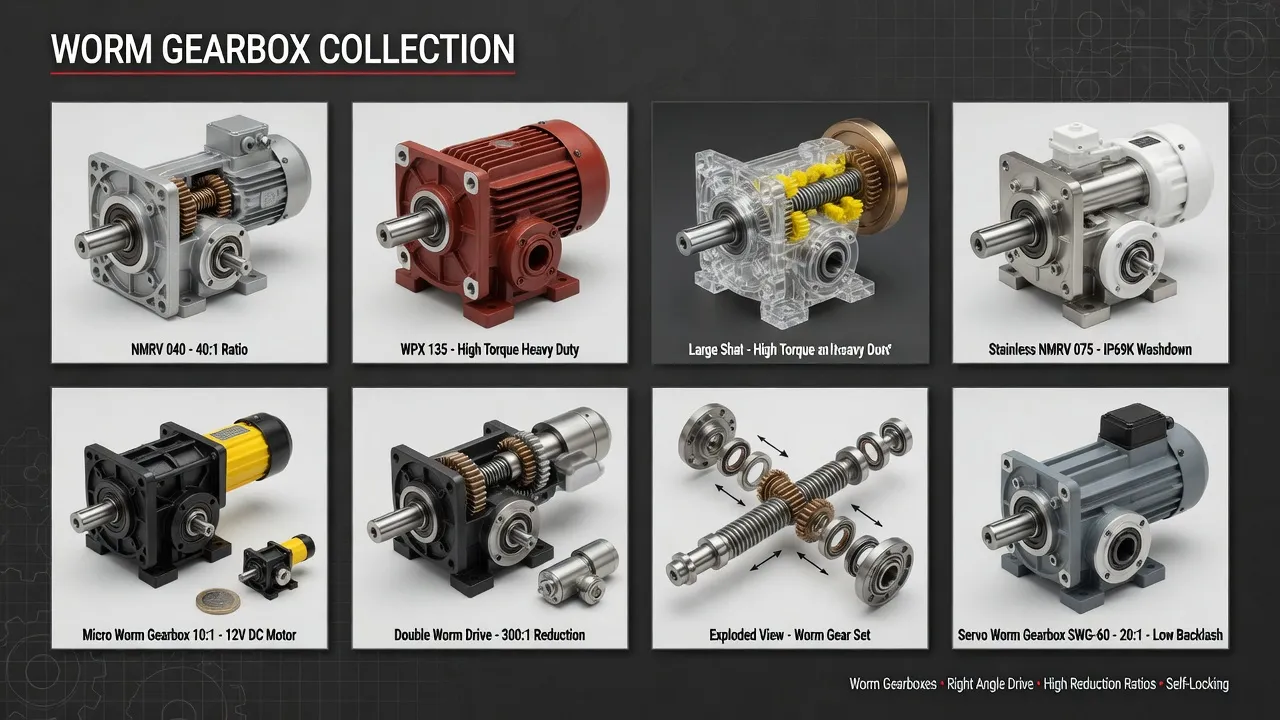
Selection Roadmap: Step-by-Step Workflow
The four-step procedure below covers asphalt paver auger drive selection from initial requirements documentation through commissioning verification.
Calculate Auger Torque from Paving Production Rate and Mix Density
Determine steady-state auger torque from paver production rate (tonnes per minute), auger length, design mix density (typical 2,300-2,500 kg/m³ for typical highway hot mix), and target auger RPM. Document worst-case torque events from frozen mix lumps, dense aggregate patches, and foreign object encounters that produce 4-6× steady-state torque spikes. Industrial mix designs (Stone Matrix Asphalt, polymer-modified) typically produce 15-25% higher steady-state torque than standard highway mixes.
Apply Service Factor for Construction Equipment Shock Loading
Multiply calculated steady-state auger torque by 2.0 service factor for typical highway paving applications, 2.5 for high-density mix and reclaiming applications. The resulting equivalent uniform-duty torque must fall within catalog rating with peak shock capacity 6× rated handling individual material density events. Service factor below 2.0 produces drives that fatigue within 4,000-6,000 paving hours rather than reaching the 8,000+ hour service life target expected from premium construction equipment specifications.
Specify Synthetic Lubricant for Elevated-Temperature Operation
Order synthetic polyalphaolefin (PAO) lubricant fill at ISO VG 320 with extreme-pressure additive package rated for sustained 95°C ambient operation plus periodic excursions to 110°C during peak paving conditions. Mineral oil alternatives breakdown rapidly at sustained elevated temperatures, producing acidic byproducts that attack bronze worm wheel materials. Specify the synthetic fill explicitly on procurement documentation rather than accepting default mineral oil alternatives that fail at paver operating temperatures.
Verify Vibration-Resistant Mounting and Reinforced Sealing
Confirm reinforced bearing arrangement supporting sustained 8 mm/s RMS vibration exposure typical of tracked construction equipment operations. Verify sealing package includes IP65 ingress protection plus high-temperature fluoroelastomer (Viton) seal materials rated for the 95°C ambient plus 130-180°C asphalt mix splash exposure environment. Specify abrasion-resistant external coating compatible with road grit and aggregate dust loading typical of paver service environments.
Spare Parts Integration: Construction Fleet Management
Paving contractor fleet operations prioritize spare drive inventory matching the seasonal economics of construction equipment — typically every contractor carries 1-2 complete spare drives per paver size deployed across the fleet, with replacement dispatch protocols supporting field swap-out during construction season operations. The case-hardened helical hypoid gear sets reach 8,000-12,000 paving hours under proper synthetic lubrication and reinforced sealing protection — typically translating to 8-12 construction seasons before major rebuild becomes economically necessary, matching the typical paver chassis economic life that justifies the equipment capital investment.
Reinforced bearing arrangements using premium-grade SKF or NSK opposed tapered roller bearings handle the combined radial loading from auger weight plus axial thrust from auger flighting hydraulic forces. Bearing L10 fatigue life exceeds 12,000 hours under rated load. High-temperature fluoroelastomer (Viton) seal lips with stainless garter springs maintain ingress protection across the elevated-temperature paver service environment exposure period. Reference heavy-duty drive component specifications for component-level technical details.
Spare parts kits combining helical hypoid gear set, complete bearing set, all shaft seals, gasket and o-ring kit, breather valve, and synthetic lubricant fill provide complete rebuild capability during off-season maintenance windows when construction equipment moves to dealer service facilities for major service events. Akgnx Co., Ltd ships kits packaged for construction equipment dealer inventory practices with all wear components sourced from the same factory production runs to ensure dimensional consistency across rebuild cycles.

Cost & Sustainability: Total Ownership Across Paver Fleet Service Life
Paving contractors and equipment dealers evaluate paver drive investments across the equipment service life — typically 8-12 construction seasons matching paver chassis depreciation schedules. The table compares total cost of ownership for paver-grade hypoid drives against generic industrial alternatives across this horizon.
| Cost Component | Paver-Grade KM | Generic Industrial |
|---|---|---|
| Initial unit price (FOB) | USD 1,800 – 5,500 | USD 720 – 2,200 |
| Service life paving hours | 8,000 – 12,000 hrs | 3,000 – 5,000 hrs |
| Replacement frequency | 1× over equipment life | 2 – 3× over equipment life |
| Field downtime cost (per failure) | Rare events | USD 4,000 – 12,000 per event |
| Lubricant interval | 2 seasons synthetic | Annual mineral |
| Equipment-life cumulative TCO | ~ 1.3× installed cost | ~ 5.8× installed cost |
Sustainability and compliance documentation accompanies every paver-grade drive shipment. The housing carries CE marking per EU Machinery Directive 2006/42/EC and complies with RoHS Directive 2011/65/EU. Manufacturing follows ISO 9001:2015 quality management procedures with full material traceability from gear forging chemical composition through case-hardening heat-treatment records. Gear tooth geometry follows ISO 6336 quality grade with load capacity per ISO 6336 methodology adjusted for construction equipment cyclic shock loading service factor.
Synthetic polyalphaolefin (PAO) lubricant fills produce 60 to 70 percent less waste oil over the equipment service life compared to mineral oil alternatives requiring annual changes. The 8,000+ hour service life eliminates the lifecycle carbon footprint of multiple replacement cycles typical of generic industrial alternatives applied to paver service. Akgnx Co., Ltd manufactures paver-grade auger drives through a dedicated construction equipment drive program serving asphalt paver OEMs, paving contractor fleet managers, and construction equipment dealers across major construction markets globally.
Customer Testimonials from Paving Operations
“Our regional paving company operates 12 production pavers across the construction season, placing approximately 1.4 million tonnes of asphalt annually across highway and commercial projects. We standardized on KM-based paver auger drives across our fleet in 2019 after experiencing escalating downtime costs from drive failures with the original generic-spec drives. Six seasons into the program, we’ve reduced auger drive replacement events from approximately 28 per season to 4 per season, saving an estimated USD 380,000 annually in equipment and downtime costs.”
— Fleet Director, Regional Paving Contractor, USA Mid-Atlantic
“As an asphalt paver OEM serving North American and European construction markets, we evaluated multiple alternative auger drive suppliers for our standard production paver package. Akgnx KM-based drives passed our 12,000-hour accelerated life test simulating typical construction season service plus elevated-temperature exposure cycles. The compact right-angle envelope fits our standard auger drive mounting brackets across our paver product line without requiring envelope modifications.”
— Director of Engineering, Asphalt Paver OEM, Germany
“We retrofitted auger drives across 8 pavers in our state highway department equipment fleet after experiencing chronic seal failures on the original drives. The KM replacement drives mounted to existing auger mounting brackets without modification. Three construction seasons into the retrofit program, we’ve eliminated auger drive replacement events that previously cost our department approximately USD 240,000 annually across the affected pavers, supporting our paving contractor service performance metrics.”
— Equipment Manager, State DOT Equipment Pool, USA Northeast
“Our highway construction operations include both standard hot-mix paving and specialty applications including Stone Matrix Asphalt and polymer-modified mixes that produce higher auger torque loading than typical highway construction. The KM drives at 2.5 service factor specification handle the elevated torque demands without measurable performance degradation across 4 construction seasons of mixed-application service. Documentation including ISO 6336 calculation summary and accelerated life test data supported our equipment specification approval process.”
— Operations Manager, Specialty Paving Contractor, Australia
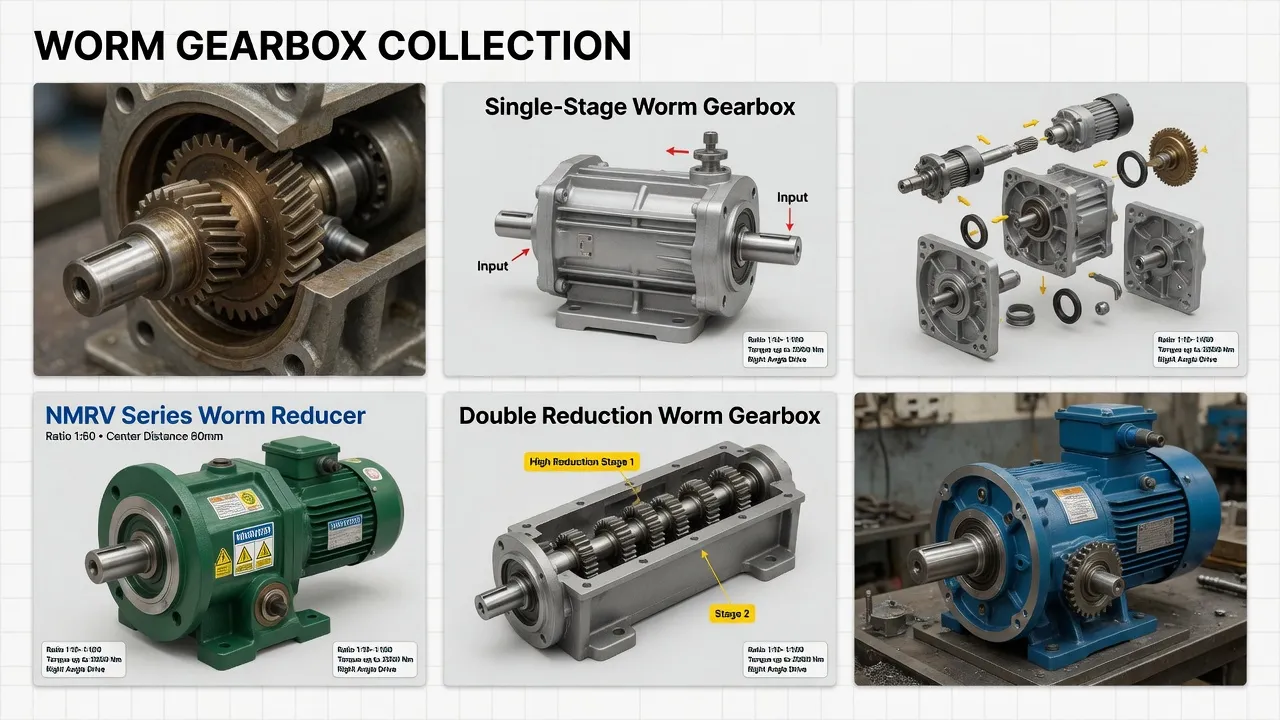
Recommended Drive: KM Helical Hypoid for Paver Auger Service
For asphalt paver auger drive applications across highway production pavers, mid-size commercial pavers, specialty pavers, and asphalt reclaiming equipment, the KM Helical Hypoid Gearbox in paver service specification targets the 8,000+ paving hour, elevated-temperature, shock-loaded construction equipment service class with engineering features specifically chosen to address the failure modes that retire generic industrial alternatives within 3,000-5,000 paving hours.
Specifications include cast iron housing with two-coat industrial epoxy paint plus heat-resistant topcoat rated for 95°C sustained ambient operation, helical hypoid gear set with case-hardened sun and ring gears (20MnCr5 or 18CrNiMo7-6 hardened to HRC 58-62 surface and HV 350-450 core), reinforced bearing arrangement using opposed tapered roller bearings rated for sustained 8 mm/s RMS vibration exposure, fluoroelastomer (Viton) double-lip output shaft seals with stainless garter springs at all shaft penetrations, IP65 ingress protection plus splash-resistant breather configuration, synthetic polyalphaolefin (PAO) lubricant fill rated for sustained elevated temperature operation with extreme-pressure additive package, and stainless steel A2 mounting hardware throughout. Reduction ratios from 15:1 through 50:1 cover the full paver auger duty range. Output torque ratings reach 4,500 Nm continuous with peak shock capacity 6× rated output supporting material density variations and frozen lump events. CE marking, RoHS compliance, and ISO 9001:2015 quality system certification ship with every unit.
Beyond the KM-based gearbox, complete paver auger drive packages typically pair the gearbox with hydraulic motor or three-phase induction motor configurations supporting the variable-speed control architecture typical of modern paver designs, weatherproof control connection junction box rated for construction equipment exposure, vibration sensor mounting provisions for predictive maintenance instrumentation, and full stainless steel A2 mounting hardware throughout. Akgnx Co., Ltd supplies matched drive packages for paver OEMs and provides aftermarket replacement units for installed paver fleets across major construction markets globally.
Specifying Drives for Asphalt Paver Augers?
Send paver size, design production rate, mix specifications, and exposure conditions. We supply KM-based hypoid drives engineered for 8,000+ paving hours with elevated-temperature and shock loading capacity.
Frequently Asked Questions
© Akgnx Co., Ltd · About Us · Contact Us · [email protected]