
A commercial meat grinding line at a USDA-inspected processing plant runs 1,800 kg of frozen beef trim through twin-screw grinder heads every hour, with each grinder absorbing peak torque events of roughly 5× steady-state during bone fragment encounters that occur 80 to 120 times per shift. The drive equipment serving these grinders combines four operational demands rare in any other food processing application: extreme peak shock loading that fatigues underdesigned drive trains within months, USDA-mandated sanitation chemistry that destroys cast iron housings within weeks of installation, FSIS regulatory compliance documentation requiring complete material traceability for every component in food-zone proximity, and continuous-duty production schedules that leave narrow windows for any unscheduled service intervention. Standard cast iron worm gearboxes simply do not survive this service — the combination of corrosion, shock loading, and HACCP material non-compliance produces failure modes within 4 to 9 months of installation regardless of catalog rated torque margin. Properly specified stainless steel worm gearbox drives — built around AISI 316 housings, NSF H1 lubricants, 3-A Sanitary Standards-compliant surface finishes, and reinforced shock loading capability — extend service life to 10+ years while supporting the regulatory documentation that meat processing demands.
This guide covers the extreme shock loading characteristics of meat grinding applications, addresses the USDA sanitation chemistry and FSIS regulatory environment typical of meat processing plants, walks through stainless steel material selection criteria balancing chloride resistance with food-grade compliance, and provides a maintenance roadmap suitable for FSIS-inspected continuous production schedules. Audience: meat processing equipment OEM engineers, USDA-inspected meat plant maintenance managers, and procurement specialists sourcing replacement drives for installed grinding and processing equipment.
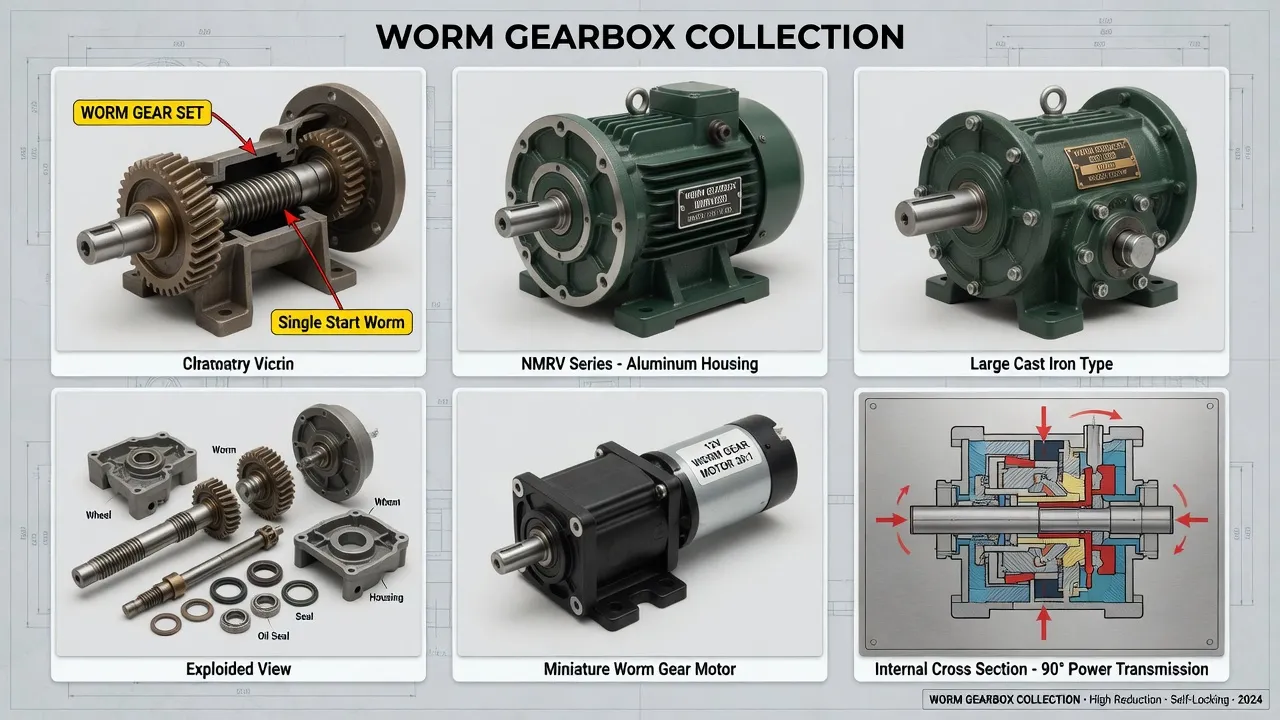
Why Are Meat Grinding Drives So Demanding on Specifications?
Commercial meat grinding combines four operational characteristics that no other food processing application produces in the same intensity. The first is the extreme peak-to-average torque ratio: meat grinders encounter peak shock loading of 4 to 6× steady-state torque during bone fragment encounters, gristle resistance, and frozen product processing — events that occur 80 to 200 times per shift across a continuous production day. Drives sized for average grinding torque alone fail through cyclic fatigue within 12 to 18 months as the peak loading repeatedly exceeds their fatigue endurance limit. The bronze worm wheel material in worm gearboxes actually outperforms many alternatives in this duty profile because the sliding-contact tooth geometry distributes shock loads across a larger contact area than the rolling-contact alternatives, providing inherent shock absorption that protects both the drive train and the upstream motor.
The second characteristic is the USDA sanitation chemistry: meat processing plants use very aggressive caustic alkaline cleaners (typically pH 11-13.5) followed by chlorinated sanitizer rinses (typically 200-400 ppm available chlorine) applied at 80-100 bar pressure with hot water at 70-85 °C. The chloride content particularly attacks AISI 304 stainless steel through pitting corrosion at chloride concentration above 0.5 percent — making AISI 316 stainless construction with molybdenum content the appropriate specification for meat processing service. The third characteristic is the regulatory environment surrounding USDA-inspected facilities: FSIS regulations impose specific material requirements on equipment in food-zone proximity, with documented chemical certification and material traceability supporting the regulatory compliance audit cycle. The fourth is the production schedule pressure inherent to meat processing economics — most facilities run 16 to 22 hours per day across 5 to 6 days per week, with FSIS inspector presence during all production hours that creates additional pressure on equipment reliability and compliance documentation per food processing stainless gearbox technical guides.
How Does Stainless Steel Construction Solve Meat Processing Failure Modes?
AISI 316 Mandatory for Chlorinated Sanitizer Environments
AISI 316 stainless steel construction is the appropriate specification for meat processing service rather than the lower-cost AISI 304 alternative. The 2 percent molybdenum content in AISI 316 (chemistry: 16% Cr, 10% Ni, 2% Mo, 0.08% C max) provides chloride resistance specifically needed for the chlorinated sanitizer environments typical of USDA-inspected meat plants. AISI 304 lacks this molybdenum content and develops pitting corrosion within 2 to 5 years of meat plant exposure as the chloride accumulates in surface texture irregularities and initiates the localized pitting failure mechanism. The cost premium for AISI 316 over AISI 304 runs roughly 18-22 percent of total drive cost — small relative to the consequences of corrosion contamination during USDA inspection cycles.
3-A Sanitary Standards for Meat Processing Equipment
Beyond housing material, meat processing drive specifications require compliance with 3-A Sanitary Standards for equipment cleanability. 3-A requires surface finish Ra ≤ 0.8 μm achieved through electropolishing, eliminates internal corners and crevices that resist cleaning, and specifies seal materials and configurations approved for direct food contact applications. The cost premium for 3-A compliant drive construction runs 12-15 percent of total drive cost above standard food-grade specifications, justified by both regulatory compliance and the substantial reduction in cleaning time during shift-change sanitation cycles. Reduced cleaning time directly translates into recovered production hours that pay back the specification premium across a single production season.
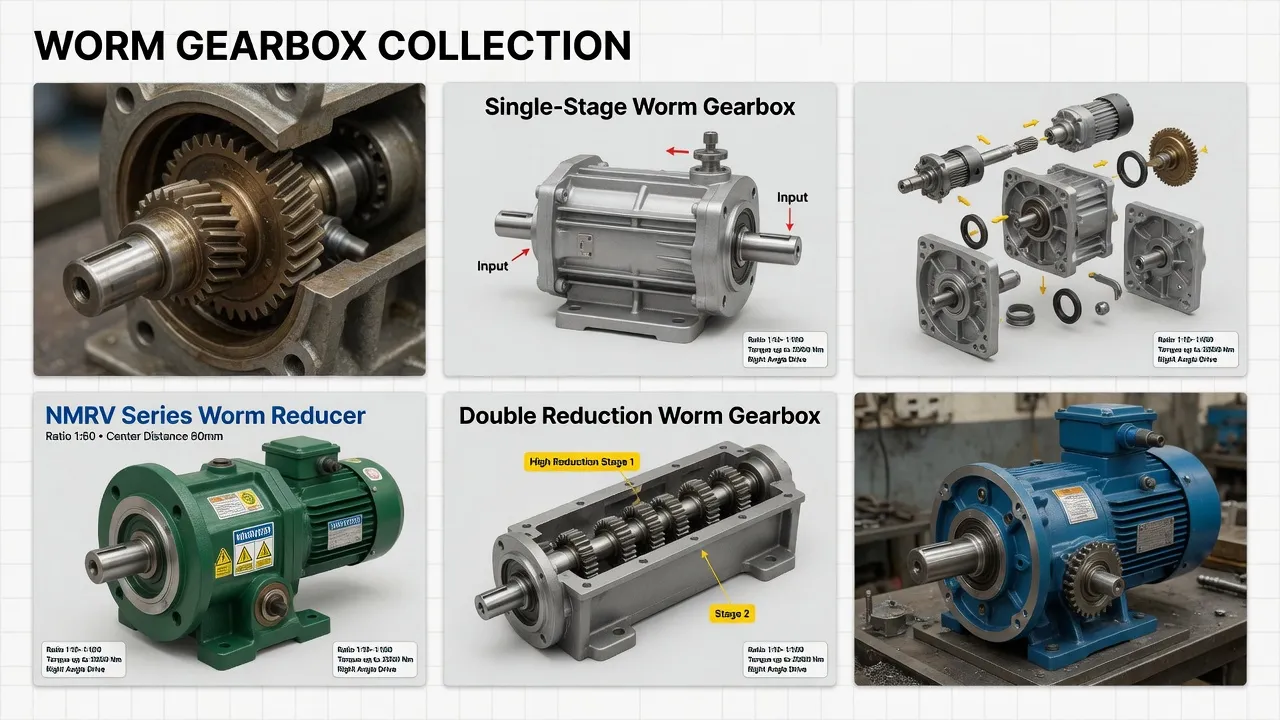
Technical Parameters: Meat Processing Drive Specification Window
The table below summarizes specifications distinguishing food-grade stainless meat processing drives from generic industrial alternatives. Values reflect AGMA 6034-B92 worm gear power rating combined with meat industry conventions for shock loading and USDA-inspected sanitation service.
| Parameter | Meat Processing Spec | Generic Industrial |
|---|---|---|
| Housing material | AISI 316 stainless, electropolished | Cast iron with paint |
| Surface finish | Ra ≤ 0.8 μm (3-A compliant) | Painted, Ra not specified |
| Worm shaft material | AISI 420 stainless, HRC 50-55 | 20CrMnTi case-hardened |
| Reduction ratio range | 15:1 to 80:1 | 5:1 to 100:1 |
| Output torque (rated) | 320 – 2,400 Nm | 200 – 2,000 Nm |
| Service factor (shock duty) | 3.5 minimum, 4.0 recommended | 1.0 – 1.25 typical |
| Lubricant | NSF H1 food-grade synthetic | Mineral oil typical |
| Sealing rating | IP69K high-pressure washdown | IP54 standard |
| Compliance | CE, RoHS, NSF/ANSI 51, 3-A, USDA-AMS, ISO 9001 | CE only |
The single specification most often miscalculated on meat processing projects is the service factor for shock loading duty. Catalog torque ratings assume uniform load with three or fewer starts per hour and minimal shock loading — conditions completely incompatible with meat grinding service. The peak torque during bone fragment encounters reaches 4-6× the steady-state grinding torque, with these events occurring 80 to 200 times per shift across continuous production. Service factor 3.5 minimum covers typical commercial meat grinding duty, with frozen product processing and high-volume bone separator operations justifying 4.0 to 4.5. Service factor below 3.5 produces drives that fatigue within 12 months regardless of housing material or other specifications.
Application Matrix: Where Meat Processing Drive Equipment Operates
Industrial Meat Grinders and Mincers
Industrial meat grinders process trim, primal cuts, and frozen product through screw-and-plate grinding heads producing ground meat for retail packaging or for downstream processing into sausage, hamburger, and prepared foods. Throughput rates range from 800 kg/hr for small commercial operations through 6,000+ kg/hr for industrial-scale meat plants. Drive output torques range 600 to 2,400 Nm depending on grinder size and product mix (frozen product processing demands the upper end of this range). The shock loading characteristic combines with continuous duty operation to make this one of the most demanding drive applications in any food processing sector.
Bowl Choppers and Emulsifying Equipment
Bowl choppers and emulsifying equipment produce sausage emulsion, deli meat batter, and processed meat products through controlled chopping and mixing operations. Drive duty involves continuous-duty bowl rotation plus intermittent high-speed knife operation during the chopping cycles. Output torques range 280 to 1,200 Nm for the bowl drive position, with separate drive systems for the knife operation. The very fine particle size requirements of emulsion products demand smooth controlled bowl rotation throughout the processing cycle, with drive backlash characteristics affecting product quality consistency.
Sausage Stuffer and Linker Equipment
Sausage stuffers and linker machines produce fresh and processed sausage products through controlled extrusion of meat batter into casings. Drive duty includes continuous-duty pump drive plus precision portioning drive on the linker mechanism. Output torques on stuffer pump drives range 320 to 1,400 Nm; linker portioning drives operate at lower torques (typically 80 to 320 Nm) but with very precise speed control. Stainless construction matters particularly on stuffer applications because the equipment routinely processes salt-cured product mixtures with elevated chloride content that attacks any non-AISI 316 stainless surfaces.
Tumblers, Massagers, and Specialty Processing
Vacuum tumblers and meat massagers produce marinated and tenderized products through controlled mechanical action combined with vacuum and brine injection systems. Drive duty involves rotating drum or paddle mechanisms running 12-72 hour cycles per batch. Output torques range 240 to 1,100 Nm depending on drum size and product loading. The extended cycle times mean drive equipment runs continuous-duty for multiple days before scheduled cleaning windows, demanding the upgraded sealing and corrosion protection that AISI 316 construction provides. Specialty processing applications including bone separators and skin removers face similar duty profiles with corresponding drive specifications. Refer to food processing reducer specification references for detailed application sizing examples.
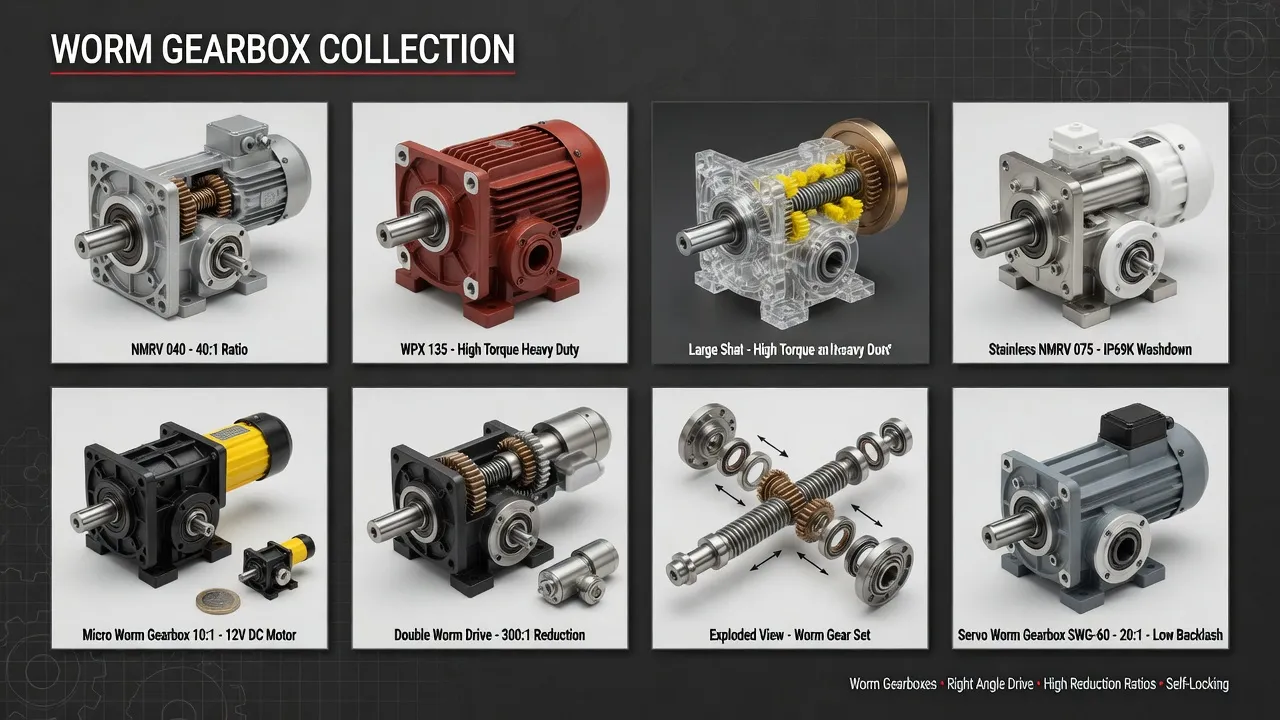
Selection Roadmap: Step-by-Step Workflow
The four-step procedure below covers meat processing drive selection from initial requirements documentation through commissioning verification.
Document Peak Shock Torque, Not Just Average
Measure or calculate the peak torque during bone fragment encounters and frozen product processing events. Peak loading reaches 4-6× the steady-state grinding torque for typical product mixes, with frozen product approaching 6× steady state. The selected gearbox must deliver continuous output torque exceeding the calculated peak load with appropriate service factor margin. Grinder manufacturers can usually provide measured peak torque data for their grinder size and product mix; capture this data during specification phase rather than assuming average loading.
Specify AISI 316 Stainless with Service Factor 3.5+
Specify AISI 316 stainless construction throughout for the chloride resistance required in chlorinated sanitizer environments — never use AISI 304 in meat processing service. Apply service factor 3.5 minimum to peak torque for typical commercial meat grinding, 4.0 for frozen product processing and bone separator service. The resulting equivalent uniform-duty torque is what the catalog rating must exceed at the chosen reduction ratio. Service factor below 3.5 produces drives that fatigue within 12 months regardless of housing material.
Verify NSF/ANSI 51 Plus 3-A Compliance Documentation
Confirm the gearbox carries NSF/ANSI 51 listing for food zone proximity material compliance, plus 3-A Sanitary Standards documentation supporting USDA-inspected meat processing facility integration. Specify electropolished housing surface finish (Ra ≤ 0.8 μm) explicitly. Document NSF H1 lubricant fill at order placement. These three certifications work together — partial compliance does not satisfy USDA-inspected meat processing facility requirements.
Document Material Traceability for FSIS Audit Cycles
Confirm material certification documentation accompanies the gearbox shipment including AISI 316 chemical certification per ASTM A240, NSF H1 lubricant safety data sheet, and gasket/seal material listings approved for direct food contact applications. FSIS audit procedures require documented traceability for all materials in food zone proximity at USDA-inspected facilities. Establish documentation filing procedures during commissioning so the records remain accessible for FSIS audit cycles spanning the equipment service life.
Spare Parts Integration: USDA-Inspected Plant Maintenance
USDA-inspected meat processing plant maintenance prioritizes replacement stock matching the rapid turnaround windows typical of high-volume continuous production schedules. The worm shaft, machined from AISI 420 stainless steel hardened to HRC 50-55 with ground and polished thread surfaces, reaches 25,000+ operating hours under proper food-grade synthetic lubrication and IP69K sealing protection despite the cyclic shock loading inherent to meat grinding. Worm shaft replacement is needed only at major rebuild events typically scheduled at 7 to 9 year intervals during multi-day plant maintenance windows.
The worm wheel, centrifugally cast from premium tin bronze ZCuSn10P1 per ISO 1338 with ground tooth surfaces, reaches 18,000 to 25,000 operating hours under proper lubrication despite the cyclic peak loading characteristic of meat grinding service. Premium-grade SKF or NSK stainless-cage bearings handle the shock loading with L10 fatigue life exceeding 25,000 hours under rated load. Output and input shaft seals (Viton with stainless garter springs and double-lip configuration meeting FDA 21 CFR 177.2600 for direct food contact) require preventive replacement at 2.5-year intervals during scheduled maintenance windows.
Spare parts kits combining worm shaft, worm wheel, complete bearing set, all FDA-compliant shaft seals, NSF H1 lubricant fill, gasket kit, and breather valve provide complete rebuild capability within scheduled meat plant maintenance windows. Akgnx Co., Ltd ships kits packaged for typical USDA-inspected plant maintenance shop inventory practices, with all stainless components sourced from the same factory production runs to ensure dimensional consistency and material traceability across rebuild cycles supporting ongoing FSIS audit documentation requirements.
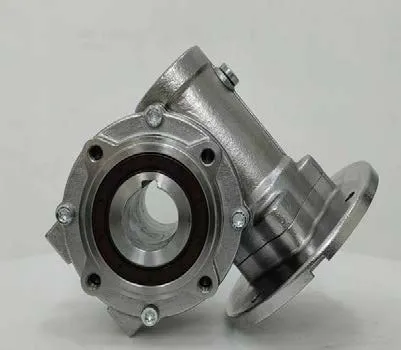
Cost & Sustainability: Total Ownership Across 10-Year Meat Plant Service
USDA-inspected meat processing facility capital planning evaluates equipment investments across 8 to 10 year horizons matching typical plant equipment depreciation schedules. The table compares total cost of ownership for 3-A compliant stainless meat processing drives against standard industrial alternatives across this horizon.
| Cost Component | Meat-Grade HSRV 316 | Standard Industrial |
|---|---|---|
| Initial unit price (FOB) | USD 1,100 – 3,200 | USD 380 – 1,400 |
| Service life in meat plant | 8 – 12 years | 4 – 9 months |
| Replacement frequency | 1× over 10 years | 12 – 18× over 10 years |
| FSIS audit risk | Documented compliance | Citation risk per audit |
| Lubricant interval | 7,000 hours / 22 months | 2,000 hours / 6 months |
| 10-year cumulative TCO | ~ 1× installed cost | ~ 8.5× installed cost |
Sustainability and compliance documentation accompanies every meat-grade HSRV 316 gearbox shipment. The housing carries CE marking per EU Machinery Directive 2006/42/EC and complies with RoHS Directive 2011/65/EU. Manufacturing follows ISO 9001:2015 quality management procedures with full material traceability from stainless steel chemical certification through bronze worm wheel composition records. NSF/ANSI 51 listing covers material compliance for food zone proximity, while 3-A Sanitary Standards documentation supports USDA-inspected meat processing equipment integration. USDA-AMS dairy and meat equipment material acceptance documentation supports FSIS audit compliance. Worm gear tooth geometry follows DIN 3974 quality grade Q8 with load capacity per AGMA 6034-B92 worm gear power rating methodology adjusted for meat grinding shock loading service factor.
Synthetic NSF H1 lubricant fills produce 75 to 85 percent less waste oil over the equipment service life compared to mineral oil alternatives requiring quarterly changes — a substantial reduction in food processing waste oil disposal across USDA-inspected facility operations. Akgnx Co., Ltd manufactures meat-grade stainless gearboxes through a dedicated USDA-inspected food processing drive program serving meat equipment OEMs, USDA-inspected plant maintenance teams, and food processing equipment integrators across North American, European, South American, and Asian markets.
Customer Testimonials from Meat Processing Operations
“Our USDA-inspected pork processing facility runs 14 industrial grinders across primary breaking and processing operations. We replaced the original drives with HSRV 316 stainless after experiencing recurrent FSIS audit citations for corrosion findings on drive equipment in 2023 — non-compliance issues that threatened our production certification. Two years into the new installation, zero corrosion findings during quarterly FSIS audits and our HACCP documentation binder includes complete material traceability supporting future audit cycles.”
— Plant Engineering Director, Pork Processing Plant, Iowa USA
“As a meat processing equipment OEM serving industrial-scale customers, we evaluated four alternative gearbox suppliers for our standard grinder package. HSRV 316 passed our 4,000-cycle peak shock load test simulating frozen beef trim grinding with bone fragments — measured backlash growth under 0.05° at test completion. Akgnx held our annual production schedule across two consecutive years with consistent batch-to-batch quality and complete USDA-AMS documentation.”
— Director of Engineering, Meat Processing Equipment OEM, Brazil
“We sourced direct dimensional replacements for an installed fleet of 22 drives across our beef processing facility. The HSRV 316 mounted to existing brackets without modification and passed our IP69K washdown verification testing on first commissioning. Documentation arrived complete with the first shipment including AISI 316 chemical traceability, electropolished surface finish certification, NSF H1 lubricant safety data, and 3-A Sanitary Standards compliance documentation supporting our HACCP audit binder.”
— Maintenance Manager, Beef Processing Operation, Argentina
“Sausage production line at our European meat processing facility handles salted product mixtures with elevated chloride content that destroyed our previous drives within 6-9 months. HSRV 316 with 2 percent molybdenum content reached 5+ years of service before our first scheduled major rebuild — eliminating the recurring drive replacement cycle that defined our prior maintenance budget. Annual maintenance time on the affected positions reduced 70 percent.”
— Operations Director, Specialty Sausage Production, Germany
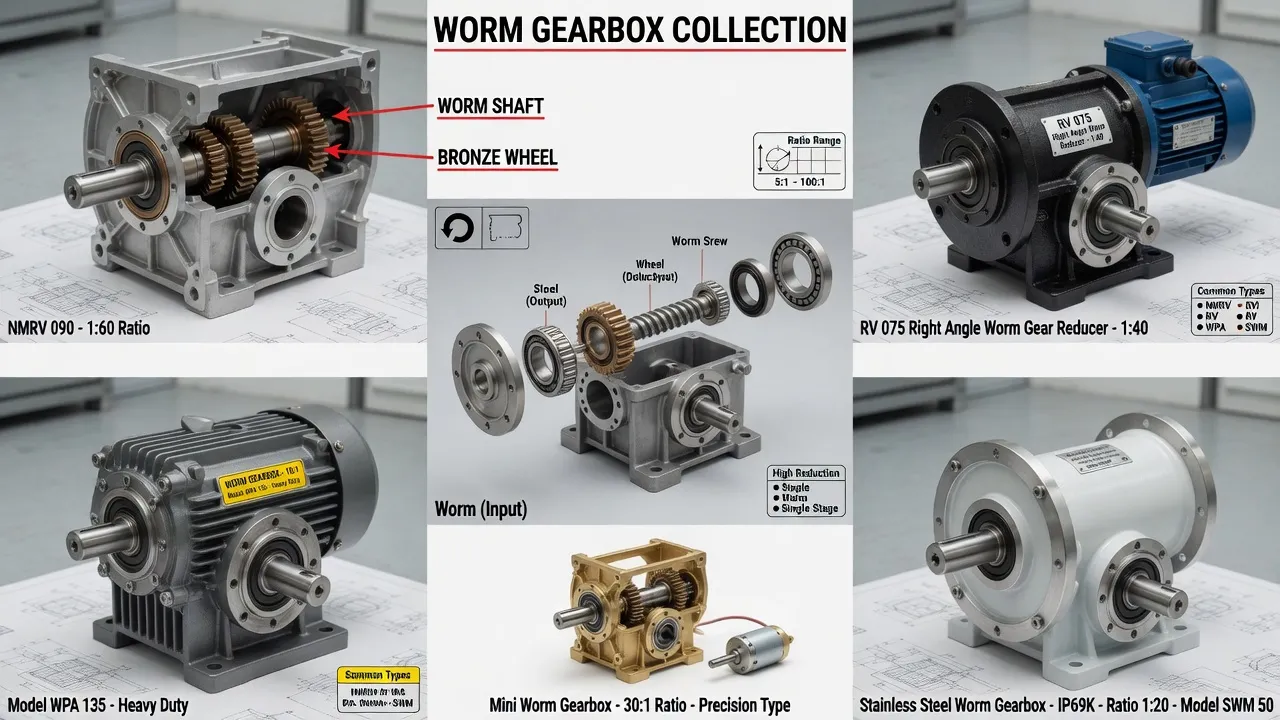
Recommended Drive: HSRV Stainless Steel for USDA-Inspected Meat Processing
For USDA-inspected meat processing applications including industrial grinders and mincers, bowl choppers and emulsifiers, sausage stuffers and linkers, and tumblers and massagers, the HSRV Stainless Steel Worm Gearbox in AISI 316 specification targets the corrosion-resistant, shock-load-capable, food-grade service class with engineering features specifically chosen to address the failure modes that retire standard industrial alternatives within months of meat plant installation.
Specifications include AISI 316 stainless steel housing with electropolished surface finish (Ra ≤ 0.8 μm) for 3-A Sanitary Standards compliance, AISI 420 stainless steel worm shaft hardened to HRC 50-55, AISI 316 output shaft, A4 (316) stainless mounting hardware throughout, fluoroelastomer (Viton) double-lip seals with stainless garter springs meeting FDA 21 CFR 177.2600 for direct food contact applications, IP69K high-pressure washdown ingress protection, and NSF H1 food-grade synthetic PAO lubricant fill at ISO VG 460. Reduction ratios from 15:1 through 80:1 cover the speed and torque range typical of meat processing equipment. Output torque on the HSRV105 frame reaches 1,400 Nm continuous with shock loading capacity supporting service factor 4.0 applications. CE marking, RoHS compliance, ISO 9001:2015 quality system certification, NSF/ANSI 51 material listing, 3-A Sanitary Standards documentation, and USDA-AMS material acceptance support FSIS audit compliance.
Beyond the HSRV frame, complete meat processing drive packages typically pair the stainless gearbox with food-zone-rated IEC TEFC induction motors with stainless mounting flanges, vector-controlled variable frequency drives for soft-start operation reducing peak shock loading, stainless steel shaft couplings supporting periodic disassembly for sanitation, and complete AISI 316 stainless mounting hardware throughout. Akgnx Co., Ltd supplies matched drive packages for meat processing equipment OEMs and provides aftermarket replacement units for installed USDA-inspected plant equipment fleets across major meat processing markets globally.
Specifying Drives for USDA-Inspected Meat Processing?
Send equipment throughput, peak shock torque, sanitizer chemistry, and required output torque. We supply HSRV 316 stainless steel worm gearboxes engineered for shock-tolerant food-grade meat processing service with 3-A Sanitary Standards compliance.
Frequently Asked Questions
© Akgnx Co., Ltd · About Us · Contact Us · [email protected]