
A 4,500 kg yacht suspended on a personal boat lift at the end of a residential dock spends 8 to 9 months per year in the lifted position, with the drive equipment exposed to continuous salt spray, periodic immersion during storm surge events, and the chemical aggressiveness of typical waterfront environments. Standard cast iron worm gearboxes with mineral oil fills survive this service for approximately 18 to 30 months before corrosion penetration reaches the worm shaft surfaces, lubricant emulsification compromises tooth protection, or seal failure allows salt water intrusion that destroys the bearing surfaces. Owners discover the drive failure when attempting to lower the yacht for the next cruising season and find the lift refusing to operate or, worse, operating intermittently with audible bearing distress that signals imminent catastrophic failure. Properly specified marine worm gearbox drives — built around AISI 304 or AISI 316 stainless steel housings, stainless shafts, and synthetic marine-grade lubricants — extend service life to 12+ years even in continuous saltwater exposure, eliminating the seasonal failure mode entirely.
This guide covers the unique corrosion-resistance requirements of boat lift drive applications, addresses the salt-spray and immersion-cycle service profile typical of waterfront installations, walks through stainless steel material selection criteria per ISO 9001 quality standards, and provides a complete maintenance roadmap for installed lift fleets across personal docks, marina commercial installations, and drystack storage operations. Audience: boat lift OEM engineers, marina maintenance managers, and procurement specialists sourcing replacement drives for installed waterfront equipment.
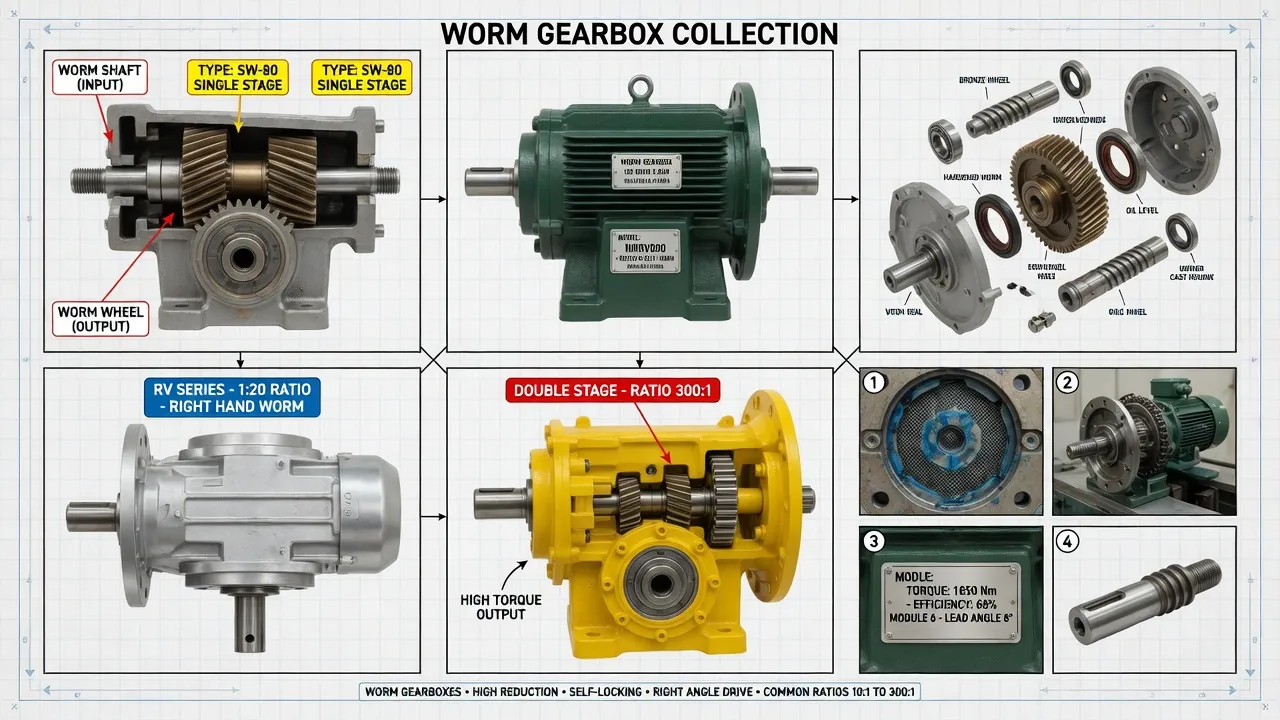
Why Do Boat Lifts Demand Stainless Steel Drive Specifications?
Marine waterfront environments combine four corrosive influences that destroy standard industrial drive equipment within 18 to 30 months of installation. The first is the continuous salt spray exposure: even drives that never directly contact seawater experience daily salt aerosol deposition that accumulates on housing surfaces and penetrates any imperfect seal interface over time. Cast iron housings begin surface rusting within weeks of installation in coastal environments, with rust progression accelerating dramatically once the protective paint coating is breached at any point — typical breach mechanisms include mounting bolt torquing damage, impact damage during installation, or simply the natural paint aging process across multi-year service. The second is the periodic immersion exposure during storm surge, exceptionally high tides, or operational accidents — events that overwhelm any seal package designed for spray protection only.
The third influence is the marine biological environment: tropical and subtropical waterfront installations face barnacle and crustacean growth on any submerged surface, with the calcareous deposits that form during biological growth cycles creating mechanical damage to seal surfaces and corrosion accelerators at the deposit boundaries. The fourth is the chemical aggressiveness of typical marina water, which combines the seawater salinity baseline with hydrocarbon contamination from vessel operations, biological contamination from waste discharge, and pH variations from seasonal stratification — all factors that accelerate corrosion of steel components beyond what pure seawater exposure alone would produce. The right boat lift worm gearbox selection therefore demands stainless steel construction throughout, not just stainless surfaces or stainless mounting hardware applied to a fundamentally vulnerable cast iron base structure.
How Does Stainless Steel Construction Solve Marine Failure Modes?
AISI 304 vs AISI 316 Material Selection
Stainless steel housing construction addresses corrosion at the source by replacing the iron base material entirely. AISI 304 stainless steel (typical chemistry: 18% Cr, 8% Ni, 0.08% C max) provides excellent corrosion resistance in freshwater and brackish water environments, with proven service life exceeding 15 years in typical lakefront and estuarine boat lift installations. AISI 316 stainless steel (typical chemistry: 16% Cr, 10% Ni, 2% Mo, 0.08% C max) adds molybdenum content that enhances chloride resistance, extending service life in full saltwater coastal installations to 18+ years with proper maintenance. Marina commercial installations in tropical environments and Florida-style continuous saltwater exposure justify the AISI 316 specification cost premium; freshwater lake installations and inland river marina service can use AISI 304 economically with full service life expectations per stainless steel worm gearbox technical guides.
Stainless Worm Shafts and Marine Lubricant Selection
Beyond housing construction, marine drive specifications require stainless steel worm shafts (typically AISI 420 hardened to HRC 50-55) and stainless output shafts (AISI 316 or duplex stainless 2205) to prevent localized corrosion at shaft surfaces exposed through any seal degradation event. The bronze worm wheel itself provides natural marine corrosion resistance — tin bronze ZCuSn10P1 per ISO 1338 actually outperforms many stainless steels in chloride-rich environments due to the natural protective oxide layer that bronze develops in marine atmosphere. Synthetic marine-grade lubricants (typically polyalphaolefin PAO base with marine-specific corrosion inhibitor additive packages) replace the mineral oil fills used in industrial service, providing superior water emulsification resistance and corrosion protection across multi-year change intervals.
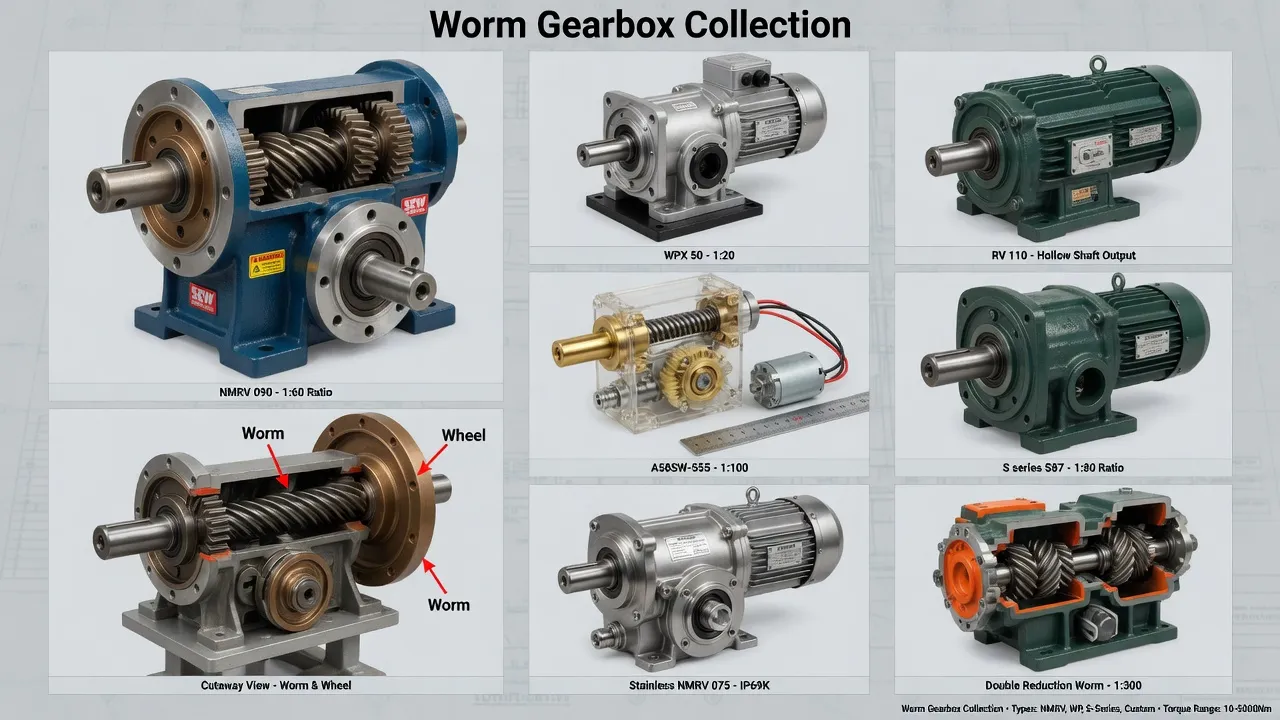
Technical Parameters: Marine Boat Lift Specification Window
The table below summarizes specifications distinguishing marine-grade boat lift worm gearboxes from generic industrial alternatives. Values reflect AGMA 6034-B92 worm gear power rating combined with marine industry conventions for corrosion resistance and seasonal duty profile.
| Parameter | Marine Specification | Generic Industrial |
|---|---|---|
| Housing material | AISI 304 / 316 stainless steel | Cast iron with paint |
| Worm shaft material | AISI 420 stainless, HRC 50-55 | 20CrMnTi case-hardened |
| Output shaft material | AISI 316 / duplex 2205 | 42CrMo carbon steel |
| Mounting hardware | A4 (316) stainless throughout | Plated carbon steel |
| Reduction ratio range | 40:1 to 100:1 (self-lock zone) | 5:1 to 100:1 |
| Output torque (rated) | 120 – 1,800 Nm typical | 200 – 2,000 Nm typical |
| Sealing rating | IP67 immersion-tested | IP54 standard |
| Lubricant | Synthetic marine-grade PAO | Mineral oil typical |
| Compliance | CE, RoHS, ISO 9001:2015, food-grade option | CE only |
The single specification most often miscalculated on marine boat lift projects is the sealing rating. Catalog IP54 ratings handle dust and minor splash exposure but never anticipate the immersion events common in waterfront service — storm surge cycles, exceptionally high tide events, accidental over-lowering during operation. IP67 immersion-tested seal packages survive 30-minute submersion at 1-meter depth without failure, providing the protection margin that marine service actually demands. Specifying anything less than IP67 for boat lift drives compromises the multi-year service life that stainless steel construction would otherwise enable.
Application Matrix: Where Marine Boat Lift Drives Operate
Personal Boat Lifts on Residential Docks
Personal boat lifts at residential dock installations support recreational boats from 4 meters runabouts up to 14 meters cabin cruisers and small yachts, with weight capacities ranging from 1,500 kg to 8,000 kg. The drive duty combines very low cycle counts (typically 60 to 200 lift cycles per year matching seasonal use patterns) with extremely long static hold periods between operational cycles. Output torques range 200 to 1,200 Nm depending on lift capacity and reduction mechanism design (cable-driven vs lead screw vs rack-and-pinion configurations). Self-locking holds the boat at any position absolutely, including the seasonal long-term winter storage position above maximum tide level.
Marina Commercial Boat Lifts
Commercial marinas operate boat lifts as service infrastructure for slip rental customers, supporting maintenance access, hull cleaning operations, seasonal haul-out service, and repair work. Drive duty involves substantially higher cycle counts than personal lifts (typically 800 to 2,500 cycles per year per lift position) plus the operational variability of supporting many different vessel sizes throughout the year. Output torques range 600 to 1,800 Nm to handle the largest vessels in the marina mix. Stainless construction is mandatory because marina locations typically experience the most aggressive saltwater exposure of any waterfront service.
Drystack Storage Lift Systems
Drystack storage operations deploy specialized lift systems to retrieve boats from multi-tier dry storage racks, transport them to launch positions, and return them to storage after use. The drive duty is the most demanding of any boat lift application — typical drystack operations run 4,000 to 8,000 lift cycles per year per drive position with daily duty during boating season. Output torques on drystack drive positions reach 1,000 to 2,400 Nm. Many drystack systems use multiple coordinated drive positions per lift platform to support the substantial boat weights and dimensional requirements of the storage facility configuration. Stainless construction extends drive service life to match the multi-year operational campaigns typical of drystack facility business cycles. See marine reducer technical specifications for drystack-specific sizing examples.
Floating Dock and Variable-Tide Lift Systems
Some waterfront installations combine boat lift functionality with the variable water-level requirements of floating dock systems or tidal-range installations where the lift base position changes through the tide cycle. The drive duty handles standard boat lift cycles plus the additional motion compensation required to maintain proper boat support across changing water levels. Output torques run similar to personal or marina commercial lifts depending on supported vessel size. The IP67 sealing specification matters most in this application because the drive position itself may experience periodic submersion during exceptional tide events.
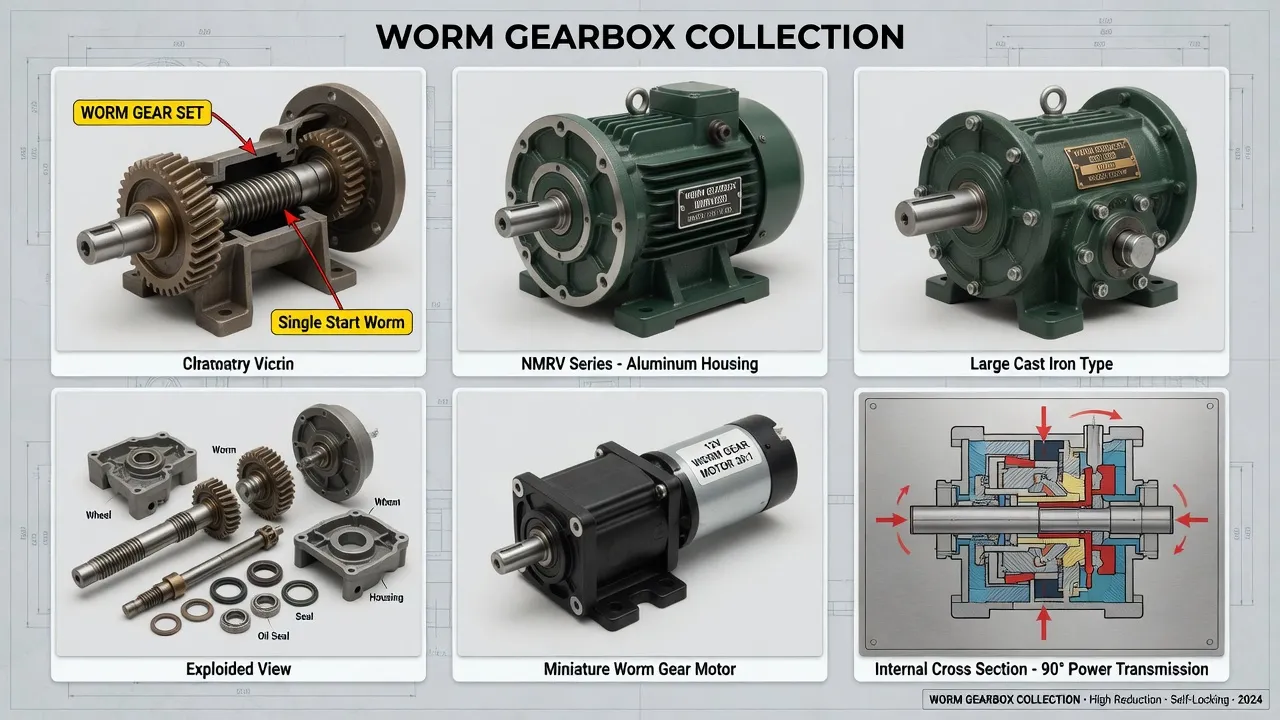
Selection Roadmap: Step-by-Step Workflow
The four-step procedure below covers marine boat lift drive selection from initial requirements documentation through commissioning verification.
Determine Maximum Vessel Weight and Lift Capacity
Document the maximum vessel weight the lift will ever support including fuel, water, and contents. Add structural safety margin per applicable boat lift industry standards (typically 1.25 to 1.5× the rated boat weight). Convert lift capacity to drive output torque using the lift mechanism geometry — cable systems use pulley diameter and reeving factor, lead screw systems use thread pitch, rack systems use pinion radius. Document the worst-case startup torque accounting for breakaway forces during initial lift motion.
Match Stainless Grade to Water Salinity Profile
Specify AISI 304 stainless construction for freshwater lake and inland river installations. Specify AISI 316 stainless for brackish estuary and coastal saltwater installations. Specify AISI 316 plus marine-grade epoxy paint for tropical saltwater locations including Florida, Caribbean, and Pacific island installations. The cost premium for AISI 316 over AISI 304 runs roughly 15-20 percent of total drive cost; the additional cost pays back many times over through eliminated saltwater pitting corrosion across the service life.
Verify IP67 Immersion-Tested Sealing
Confirm the gearbox sealing package includes IP67 ingress protection with documented immersion test results — 30 minutes at 1-meter depth without water intrusion. Specify Viton seal lips at all shaft penetrations with stainless garter springs, plus secondary backup seals for redundancy in immersion-prone installations. Confirm the breather valve uses moisture-shedding configuration suitable for marine service rather than standard industrial breather designs that admit water under negative pressure cycling.
Specify Marine-Grade Synthetic Lubricant
Use synthetic polyalphaolefin (PAO) marine-grade lubricant with corrosion inhibitor additive package, typically ISO VG 460 viscosity grade. Marine-grade synthetic lubricants resist water emulsification across multi-year change intervals, maintain corrosion protection on internal stainless surfaces, and tolerate the wider temperature range typical of seasonal lift operation. Avoid mineral oil fills regardless of any cost savings — the moisture absorption and emulsification behavior compromises drive service life within 18-24 months of installation.
Spare Parts Integration: Marine Maintenance Across Seasonal Cycles
Marine boat lift maintenance prioritizes replacement stock matching the spring commissioning and fall winterization cycles typical of recreational boating regions. The worm shaft, machined from AISI 420 stainless steel hardened to HRC 50-55 with ground and polished thread surfaces, reaches 25,000+ operating hours under proper marine lubrication and IP67 sealing protection. Worm shaft replacement is needed only at major rebuild events typically scheduled at 10 to 12 year intervals — well beyond the typical service life of standard industrial drives in the same application.
The worm wheel, centrifugally cast from premium tin bronze ZCuSn10P1 per ISO 1338 with ground tooth surfaces, provides natural marine corrosion resistance and reaches 20,000+ operating hours under proper lubrication. The bronze actually develops a protective oxide layer in marine atmosphere that enhances rather than compromises long-term wear performance. Premium-grade SKF or NSK stainless-cage bearings handle the radial and axial loads typical of boat lift service with L10 fatigue life exceeding 30,000 hours under rated load. Output and input shaft seals (Viton with stainless garter springs and secondary backup seals) require preventive replacement at 4-year intervals during scheduled fall winterization.
Spare parts kits combining worm shaft, worm wheel, complete bearing set, all shaft seals, marine-grade lubricant fill, gasket kit, and breather valve provide complete rebuild capability during the typical fall service window. Akgnx Co., Ltd ships kits packaged for marine service operation inventory practices, with all stainless components sourced from the same factory production runs to ensure dimensional consistency across the rebuild cycle. Reference standard worm gear technical references for detailed component dimensional specifications.
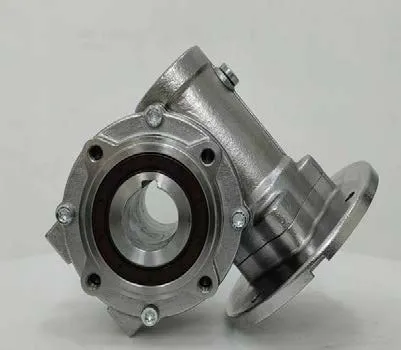
Cost & Sustainability: Total Ownership Across 12-Year Marine Service
Marina capital planning evaluates boat lift drive investments across 10 to 12 year horizons matching typical waterfront infrastructure renovation cycles. The table compares total cost of ownership for marine-grade stainless steel boat lift gearboxes against standard industrial alternatives across this horizon.
| Cost Component | Marine HSRV Stainless | Standard Industrial |
|---|---|---|
| Initial unit price (FOB) | USD 720 – 2,400 | USD 320 – 950 |
| Service life in saltwater | 12 – 18 years | 18 – 30 months |
| Replacement frequency | 1× over 12 years | 5 – 8× over 12 years |
| Lubricant interval | 5,000 hours / 36 months | 2,000 hours / 12 months |
| Mid-season failure risk | Very low | High after 18 months |
| 12-year cumulative TCO | ~ 1× installed cost | ~ 5.5× installed cost |
Sustainability and compliance documentation accompanies every HSRV stainless steel gearbox shipment. The housing carries CE marking per EU Machinery Directive 2006/42/EC and complies with RoHS Directive 2011/65/EU. Manufacturing follows ISO 9001:2015 quality management procedures with full material traceability from stainless steel chemical certification through bronze worm wheel composition records. Worm gear tooth geometry follows DIN 3974 quality grade Q8 with load capacity per AGMA 6034-B92 worm gear power rating methodology. Marine-specific certifications including NSF compliance and FDA food-grade options support specialized applications including aquaculture lifts and food processing facility installations.
Synthetic marine-grade lubricant fill produces 80 to 90 percent less waste oil over the equipment service life compared to mineral oil alternatives requiring annual changes — a substantial reduction in waste oil disposal across waterfront facility operations. The biodegradable lubricant chemistry options meet OECD 301 standards in spillage concentrations, addressing environmental concerns specific to waterfront installations. Akgnx Co., Ltd manufactures marine boat lift gearboxes through a dedicated stainless steel drive program serving boat lift OEMs, marina operators, and drystack facility operators across North American, European, Caribbean, and Asian-Pacific waterfront markets.
Customer Testimonials from Boat Lift Operators
“Our 180-slip marina replaced 24 boat lift drives across the saltwater service area after losing 6 cast iron units to corrosion failure within 24 months of installation. The HSRV stainless replacement reached 5 years of service before our first scheduled major rebuild — substantially better than any alternative we previously deployed in this duty position. Customer complaints about lift availability dropped to near zero.”
— Marina Operations Director, Saltwater Yacht Club, Florida USA
“As a personal boat lift OEM serving the recreational boating market, we evaluated four alternative gearbox suppliers for our standard residential dock lift package. HSRV passed our 5,000-cycle accelerated salt spray test (per ASTM B117 methodology) with measured corrosion penetration under 0.02mm at test completion. Akgnx held our annual production schedule across two consecutive years with consistent batch-to-batch quality.”
— Director of Engineering, Recreational Boat Lift OEM, Michigan USA
“We sourced direct dimensional replacements for an installed fleet of 16 drystack storage lift drives at our south Florida facility. The HSRV mounted to existing brackets without modification and reached 6 years of service before the first scheduled major rebuild — eliminating the 18-month replacement cycle that defined our prior maintenance budget. Documentation arrived complete with the first shipment including AISI 316 chemical traceability certificates.”
— Operations Manager, Drystack Boat Storage Facility, Caribbean
“Personal boat lift drives at our lakefront residential community face freshwater service that destroys standard cast iron units in 4-5 years through paint failure and rust progression. The HSRV stainless construction with AISI 304 housing eliminated the corrosion failure mode entirely across our 38-lift community installation. Annual maintenance time reduced 50 percent because the corrosion inspection step disappeared from the protocol.”
— Maintenance Director, Lakefront Residential Community, Wisconsin USA
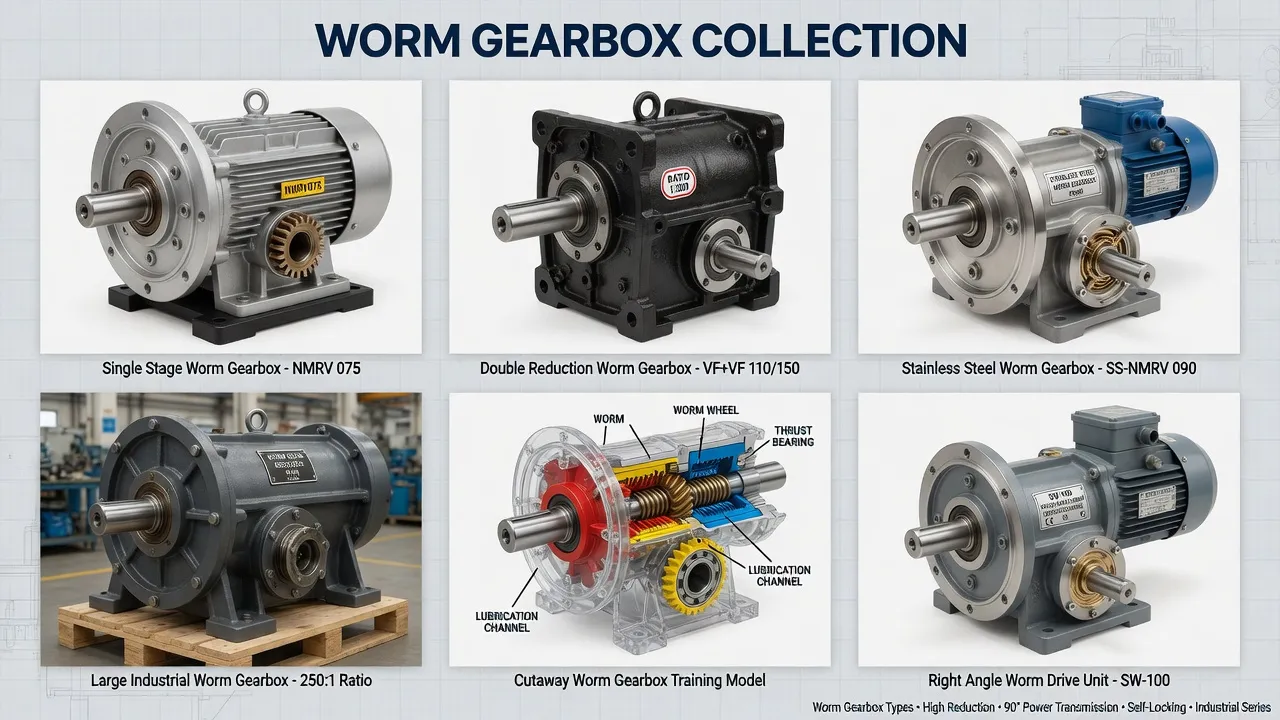
Recommended Drive: HSRV Stainless Steel Worm Gearbox for Marine Service
For marine boat lift applications across personal docks, marina commercial installations, drystack storage facilities, and floating dock systems, the HSRV Stainless Steel Worm Gearbox targets the corrosion-resistant, self-locking, marine service class with engineering features specifically chosen to address the failure modes that retire standard industrial alternatives within 18 to 30 months of waterfront installation.
Specifications include AISI 304 stainless steel housing for freshwater installations or AISI 316 stainless steel housing for saltwater installations, AISI 420 stainless steel worm shaft hardened to HRC 50-55 with ground thread surfaces, AISI 316 or duplex 2205 output shaft, A4 (316) stainless mounting hardware throughout, fluoroelastomer (Viton) double-lip seals with stainless garter springs and IP67 immersion-tested ingress protection, and synthetic marine-grade PAO lubricant fill. Reduction ratios from 40:1 through 100:1 maintain reliable static self-locking across the full marine duty range. Output torque on the HSRV105 frame reaches 1,400 Nm continuous with self-locking holding torque to 320 Nm at 60:1 reduction. CE marking, RoHS compliance, and ISO 9001:2015 quality system certification ship with every unit, with food-grade certification options supporting aquaculture and shellfish facility installations.
Beyond the HSRV frame, complete marine boat lift drive packages typically pair the stainless gearbox with marine-rated IEC TEFC induction motors with stainless mounting flanges, electromagnetic spring-applied brakes for redundancy on commercial marina applications, and full stainless mounting hardware throughout. Akgnx Co., Ltd supplies matched drive packages for boat lift OEMs and provides aftermarket replacement units for installed waterfront equipment fleets across major recreational and commercial marina markets globally.
Specifying Drives for Marine Boat Lifts?
Send vessel weight capacity, water salinity profile, lift mechanism geometry, and required output torque. We supply HSRV stainless steel worm gearboxes engineered for self-locking corrosion-resistant marine service.
Frequently Asked Questions
© Akgnx Co., Ltd · About Us · Contact Us · [email protected]