
A 12,000 GT general cargo vessel transiting heavy seas in the North Sea must maintain course and heading while wave loading on the rudder reaches 250-450 kN dynamic loading peaks across each sea state cycle. The steering gear system rotates the rudder through ±35° angles per IMO Resolution A.601 maneuverability requirements, completing 35°-to-35° rudder transitions in under 28 seconds at maximum continuous service speed. Across a typical 7-day ocean transit, the steering gear performs 2,500-4,000 rudder transitions plus continuous small-angle correction inputs from the autopilot system. SOLAS Chapter II-1 Regulation 29 mandates dual independent steering gear systems with capability to achieve and maintain effective steering using either system independently — meaning each vessel deploys two complete steering gear actuator drives that each must meet full performance requirements. Drive failure during heavy weather operations causes loss of vessel maneuverability — potentially leading to cargo loss in extreme cases or grounding incidents in coastal operations. Properly specified marine steering gear worm gearbox equipment — engineered around dual-redundant safety architecture, marine corrosion resistance, and IMO performance compliance — eliminates the unscheduled outage events that compromise vessel maneuverability and SOLAS regulatory compliance.
This guide covers the unique drive duty profile of marine steering gear actuators on commercial vessels meeting SOLAS requirements, addresses the dual-redundant architecture and heavy weather loading service requirements, walks through selection criteria balancing performance with reliability, and provides a maintenance roadmap suitable for vessel operations and shipyard practices. Audience: marine steering gear OEMs, vessel operations engineers, shipyard outfitters, classification society surveyors, and consulting engineers specifying steering gear equipment for new vessel construction projects.
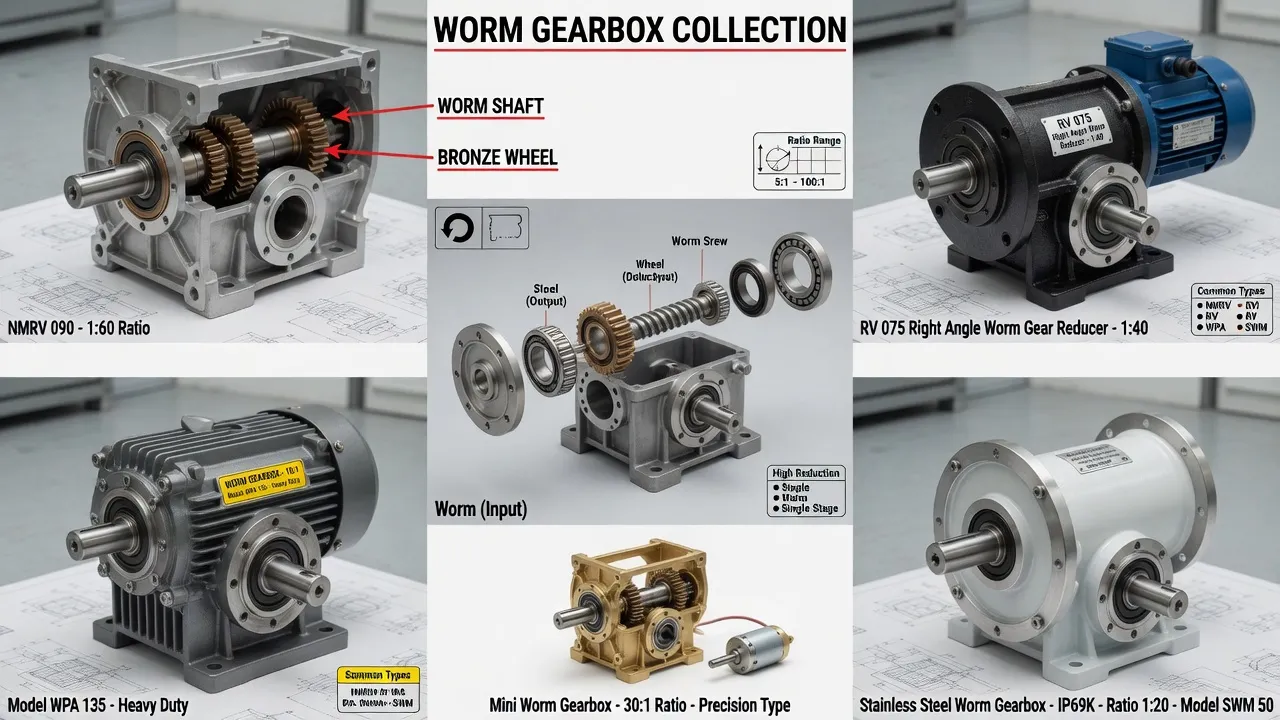
What Drive Demands Distinguish Steering Gear from General Marine Service?
Marine steering gear drives combine four operational characteristics that distinguish them from any non-steering marine application. The first is the SOLAS Chapter II-1 Regulation 29 compliance requirement: each vessel deploys dual independent steering gear systems with capability to achieve full rudder angle in 28 seconds or less at maximum continuous service speed. Each independent system must achieve this performance using its own complete drive train — meaning drive specifications must support 35°-to-35° rudder transitions within the time limit while moving the rudder against worst-case sea state hydrodynamic loading. The second characteristic is the dynamic loading from rudder hydrodynamic forces: rudder loading varies dramatically with vessel speed, sea state, and rudder angle, with peak dynamic loading reaching 4-7× steady-state loading during heavy weather operations. Drive specifications must accommodate this loading variation without permanent damage or accuracy degradation across the cumulative cycle counts of multi-decade vessel service.
The third characteristic is the rudder feedback loop integration: steering gear systems integrate with vessel autopilot systems through closed-loop position feedback maintaining rudder position within ±0.5° of commanded angle during course-holding operations. Drive backlash specifications below 6 arcminutes maintain the required positioning accuracy across the autopilot loop. The fourth is the marine environment exposure including salt water spray, salt fog, rudder shaft seal leakage exposure, and the ambient temperature variation of vessel steering compartment installations (-25°C cold climate operations through +55°C engine room ambient summer conditions). AISI 316 stainless steel construction throughout the drive becomes mandatory for the multi-decade vessel service life expected from steering gear equipment. The right marine steering gear gearbox selection addresses SOLAS compliance, dynamic loading capacity, autopilot integration accuracy, and marine environment durability simultaneously per marine steering technical references.
How Do Stainless Steel Marine Drives Address Steering Gear Failure Modes?
AISI 316 Construction Resists Steering Compartment Marine Environment
AISI 316 stainless steel construction for the gearbox housing, end covers, and external surfaces resists corrosion from the steering compartment marine environment exposure including rudder shaft seal leakage, salt water spray ingress through deck fitting penetrations, and the elevated humidity of vessel below-deck installations. The 316 grade includes molybdenum addition that provides superior corrosion resistance in the chloride-containing marine environment compared to AISI 304 alternatives. AISI 316 stainless steel A4 grade external fasteners eliminate galvanic corrosion at fastener interfaces. The corrosion-resistant construction supports the 25-30 year vessel service life without housing degradation that would compromise steering gear sealing or class society survey requirements.
Precision-Ground Geometry Maintains Autopilot Integration Accuracy
Precision-ground worm and worm wheel geometry with selected tooth contact patterns delivers backlash specifications below 6 arcminutes — well within the rudder positioning accuracy budget for autopilot integration. The tooth grinding follows DIN 3974 quality grade Q7 with worm helix angle and worm wheel tooth profile ground to micrometer-level dimensional control. Each worm and worm wheel pair undergoes individual factory matching to verify backlash specification before assembly, supporting the autopilot loop accuracy requirements that maintain course-holding precision in commercial vessel operations.
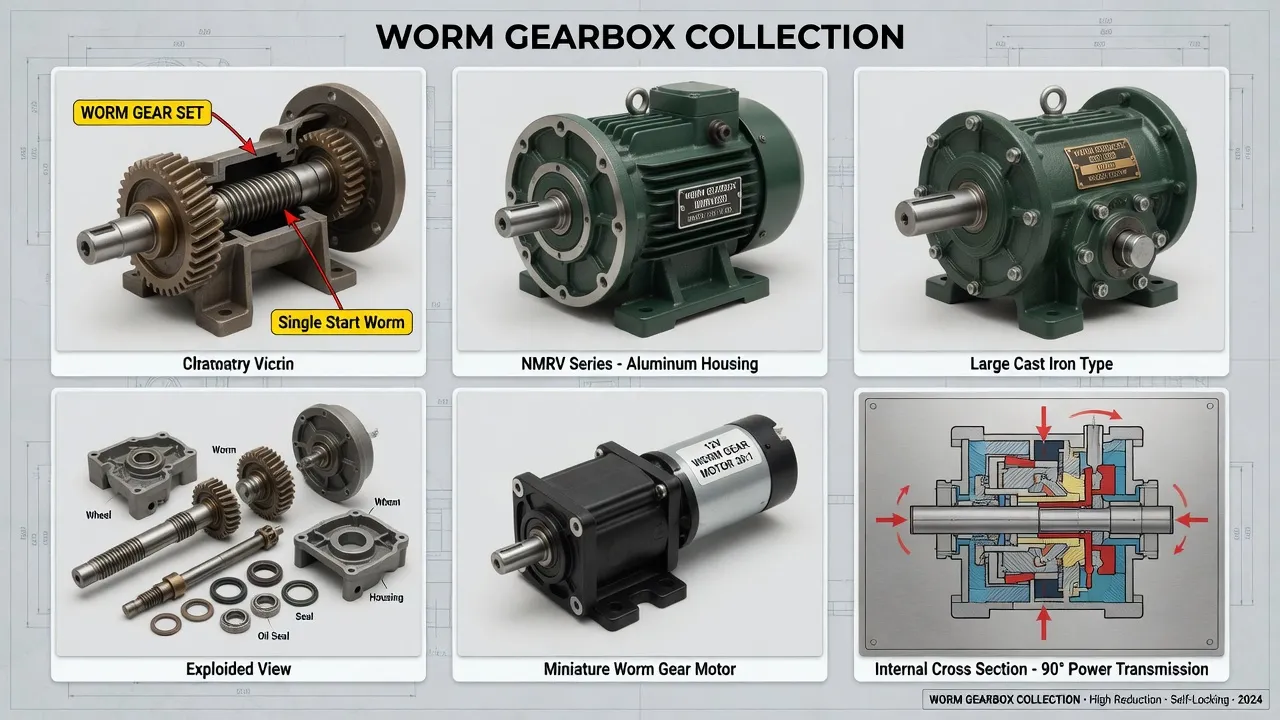
Technical Parameters: Marine Steering Gear Drive Specification Window
The table below summarizes specifications distinguishing marine steering gear drives from generic stainless steel worm gearbox alternatives. Values reflect AGMA 6034-B92 worm gear power rating combined with SOLAS and class society marine steering equipment requirements.
| Parameter | Steering Gear Spec | Generic Stainless |
|---|---|---|
| Housing material | AISI 316 stainless | AISI 304 typical |
| Rudder transition time | Below 28 sec at 35°-35° | Not applicable |
| Backlash specification | Below 6 arcminutes | 15-30 arcminutes |
| Output torque (rated) | 5,500 – 35,000 Nm | 200 – 4,000 Nm |
| Peak dynamic capacity | 7× rated, heavy weather | 2× rated typical |
| Class society approval | DNV, ABS, LR, BV type approval | Not approved |
| SOLAS compliance | Chapter II-1 Reg. 29 | Not certified |
| Service factor | 2.5 minimum heavy weather | 1.0 – 1.25 typical |
The single specification most often miscalculated on steering gear projects is the peak dynamic loading capacity for heavy weather operations. Generic stainless industrial drives use peak shock factors of 2× rated output for typical industrial duty — completely inadequate for marine steering applications where rudder hydrodynamic loading reaches 4-7× steady-state during heavy weather. Marine steering gear drives carry peak dynamic capacity ratings of 7× rated output without permanent damage, achieved through case-hardened gear surface treatment plus oversized bearing arrangements. Service factor 2.5 minimum applied to steady-state rudder torque covers typical commercial vessel steering service.
Application Matrix: Where Marine Steering Gear Drives Operate
Commercial Vessel Steering Gear Actuators
Commercial vessels including bulk carriers, tankers, container ships, and general cargo vessels deploy dual steering gear actuator systems per SOLAS Chapter II-1 Regulation 29. Output torque requirements range 12,000-35,000 Nm per actuator depending on vessel size and rudder design (typically corresponding to vessel sizes 5,000-200,000 GT). The dual independent systems each include complete drive trains — meaning typical vessel installations deploy 2 complete drive units per vessel, with the larger commercial vessels often deploying 4-axis dual systems for redundancy across both rudder operating axes.
Smaller Vessel and Workboat Steering
Smaller commercial vessels (below 500 GT), workboats, fishing vessels, and inland waterway vessels deploy scaled steering gear systems with output torque requirements 1,500-8,500 Nm per actuator. Many smaller vessels operate under simplified regulatory frameworks (SOLAS does not apply below 500 GT for international voyages, with national regulations applying instead). Drive specifications maintain the AISI 316 stainless steel construction and marine environment durability requirements while scaled to the smaller torque requirements. Reference stainless steel reducer specifications for smaller vessel steering applications.
Naval and Government Vessel Steering
Naval vessels, coast guard cutters, and government-operated vessels deploy specialized steering gear systems often with elevated performance specifications beyond commercial SOLAS requirements (faster response time, redundancy beyond minimum 2-system requirements, additional hardening for combat damage resistance). Drive specifications include the commercial steering gear capabilities plus the specialized requirements per the specific naval or government program. These applications typically involve naval architecture firm engineering coordination across the steering gear system specification process.
Offshore Vessel Dynamic Positioning Auxiliary Drives
Dynamic positioning (DP) vessels including offshore supply vessels (OSVs), drillships, and dive support vessels integrate steering gear systems with thruster control systems supporting station-keeping operations. The DP integration requires elevated performance specifications including faster response, higher precision, and integration with the DP control system position feedback architecture. Output torque requirements range 8,500-20,000 Nm depending on vessel class. The DP service environment also includes elevated cycle counts compared to typical commercial vessel operations due to continuous station-keeping during offshore operations.
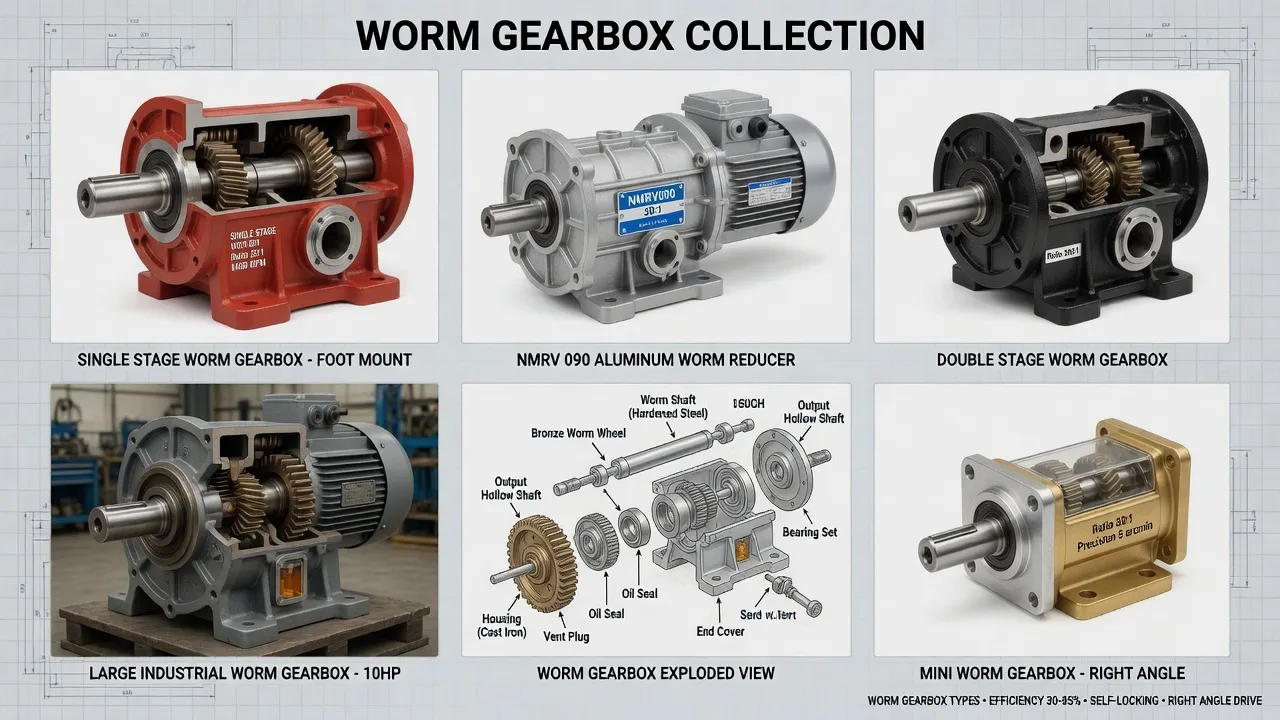
Selection Roadmap: Step-by-Step Workflow
The four-step procedure below covers marine steering gear drive selection from initial requirements documentation through commissioning verification.
Calculate Rudder Torque from Hydrodynamic Loading
Determine rudder torque from rudder area × maximum operating speed² × hydrodynamic coefficient × maximum rudder angle. Apply 2.5 service factor for heavy weather operations. Calculate dynamic torque capacity from peak hydrodynamic loading 4-7× steady-state. Verify rudder transition time capability — drive must achieve 35°-to-35° transition in under 28 seconds at maximum continuous service speed per SOLAS Chapter II-1 Regulation 29 requirements.
Verify Class Society Type Approval Pathway
Document compliance pathway including SOLAS Chapter II-1 Regulation 29 requirements (steering gear), applicable class society rules (DNV, ABS, Lloyd’s Register, Bureau Veritas, ClassNK), and IMO Resolution A.601 maneuverability criteria. Verify drive manufacturer holds current type approval certificates from the relevant class societies for the vessel project. Coordinate factory survey schedule with class society surveyor availability for vessel project timeline.
Specify AISI 316 Construction and Precision Backlash
Order AISI 316 stainless steel housing throughout for steering compartment marine environment exposure. Specify DIN 3974 quality grade Q7 tooth geometry with backlash specification below 6 arcminutes for autopilot loop integration accuracy. Verify seal materials use Viton fluoroelastomer compatible with marine environment exposure plus rudder shaft seal leakage chemistry. Specify AISI 316 stainless steel A4 grade external fasteners eliminating galvanic corrosion.
Coordinate Dual-System Architecture and Survey Documentation
Verify dual independent steering gear system architecture per SOLAS — each system must include complete drive train with independent power sources. Coordinate documentation package including type approval certificates, factory inspection report (FIR) under class society survey, EN 10204 3.1 material certifications, and SOLAS performance test verification including 35°-to-35° rudder transition time and operational testing under loaded conditions.
Spare Parts Integration: Vessel Operations Asset Management
Vessel operations and shipyard maintenance organizations prioritize spare drive inventory matching the consequences of steering gear failure on vessel safety and SOLAS compliance — typically every active commercial vessel carries one complete spare drive matched to the steering gear class plus full wear component sets. The case-hardened steel worm shaft meshing with bronze worm wheel reaches 30,000+ operating hours under proper synthetic lubrication and AISI 316 stainless steel housing protection — typically translating to 25-30 year vessel service life under commercial steering service patterns matching the typical vessel economic life.
Premium-grade SKF or NSK heavy-duty tapered roller bearings throughout the drive handle the combined radial and thrust loads typical of marine steering service with L10 fatigue life exceeding 30,000 hours under rated load. Viton fluoroelastomer seal lips with stainless garter springs maintain ingress protection across the steering compartment marine environment exposure period typical of commercial vessel service environments. Reference stainless steel marine drive component specifications for component-level technical details.
Spare parts kits combining worm shaft, worm wheel, complete bearing set, all shaft seals, gasket and o-ring kit, breather valve, and synthetic lubricant fill provide complete rebuild capability during scheduled vessel dry-docking events on the 5-year IACS Common Structural Rules schedule. Akgnx Co., Ltd ships kits with class society material certifications supporting the dry-dock survey documentation requirements, with all wear components sourced from the same factory production runs to ensure dimensional consistency and class society type approval reproducibility across rebuild cycles.
Cost & Sustainability: Total Ownership Across 28-Year Vessel Life
Vessel operators and shipbuilders evaluate steering gear drive investments across the vessel economic life — typically 25-30 years matching depreciation schedules for major commercial vessel capital investments. The table compares total cost of ownership for marine-grade steering gear drives against generic stainless industrial alternatives across this horizon.
| Cost Component | Marine-Grade HSRV | Generic Stainless |
|---|---|---|
| Initial unit price (FOB) | USD 12,500 – 48,000 | USD 4,500 – 18,000 |
| Service life vessel duty | 25-30 years | 5-10 years |
| Class society compliance | Full type approval + SOLAS | Not approved |
| Replacement frequency | 1× over 28 years | 3-5× over 28 years |
| Steering failure risk | Negligible | Severe SOLAS implications |
| 28-year cumulative TCO | ~ 1.4× installed cost | ~ 7.5× installed cost |
Sustainability and compliance documentation accompanies every marine-grade steering gear drive shipment. The housing carries CE marking per EU Machinery Directive 2006/42/EC and complies with RoHS Directive 2011/65/EU. Manufacturing follows ISO 9001:2015 quality management procedures with full material traceability per EN 10204 3.1 mill test reports for major components. Worm gear tooth geometry follows DIN 3974 quality grade Q7 with load capacity per AGMA 6034-B92 worm gear power rating methodology adjusted for marine heavy weather service factor. Documentation supports SOLAS Chapter II-1 Regulation 29 compliance plus class society type approval per the relevant DNV, ABS, Lloyd’s Register, Bureau Veritas, and ClassNK rules for marine steering equipment.
Synthetic polyalphaolefin (PAO) lubricant fills support 8,000-hour drain intervals coordinated with 5-year vessel dry-docking events, producing significantly less waste oil compared to mineral oil alternatives requiring more frequent change intervals. The 25-30 year vessel service life eliminates 2-4 replacement cycles compared to generic stainless industrial alternatives, substantially reducing the equipment lifecycle environmental footprint. Akgnx Co., Ltd manufactures marine-grade steering gear drives through a dedicated marine equipment drive program serving marine steering gear OEMs, shipbuilders, vessel operators, and naval architecture firms globally.
Customer Testimonials from Marine Steering Operations
“Our shipping company operates a fleet of 32 general cargo vessels and 18 container vessels across regional and international trade routes. We standardized on HSRV-based steering gear drives in 2020 across new-build vessel projects and major dry-dock retrofits. Five years into the standardization, we’ve maintained zero steering gear drive-related incidents across the fleet, supporting our SOLAS compliance and our flag state inspection records across multiple regulatory jurisdictions.”
— Director of Ship Management, International Shipping, Greece
“As a marine steering gear OEM serving major Korean and Japanese shipbuilding markets, we evaluated multiple alternative drive suppliers for our standard product line. Akgnx HSRV stainless steel drives passed our DNV and ABS type approval testing including 7× shock loading verification, 30,000+ hour accelerated life test, AISI 316 stainless steel material certification, and SOLAS rudder transition time performance verification. The class society type approval certificates streamline our shipbuilding customer commissioning processes.”
— Director of Engineering, Marine Steering Gear OEM, Japan
“We retrofitted steering gear drives across 6 bulk carrier vessels in our fleet during scheduled 5-year dry-docking events. The HSRV replacement drives mounted to existing steering gear chassis with class society survey approval. Three years into the retrofit program, we’ve eliminated the chronic steering gear drive issues that previously affected our heavy weather operations across the affected vessels, supporting our cargo delivery schedules and our charterer customer service performance.”
— Technical Director, Bulk Carrier Operations, Norway
“Our offshore supply vessel fleet operates dynamic positioning operations supporting offshore oil and gas projects in challenging North Sea environmental conditions. The HSRV drives we deployed across 8 vessel steering gear positions during DP system upgrades have completed approximately 5 years of continuous DP service so far with zero drive-related steering incidents. The AISI 316 stainless steel construction and 7× shock loading capacity support the demanding station-keeping reliability our offshore operations require.”
— Operations Director, Offshore Supply Vessel Operations, United Kingdom
Recommended Drive: HSRV Stainless Steel for Marine Steering Gear Service
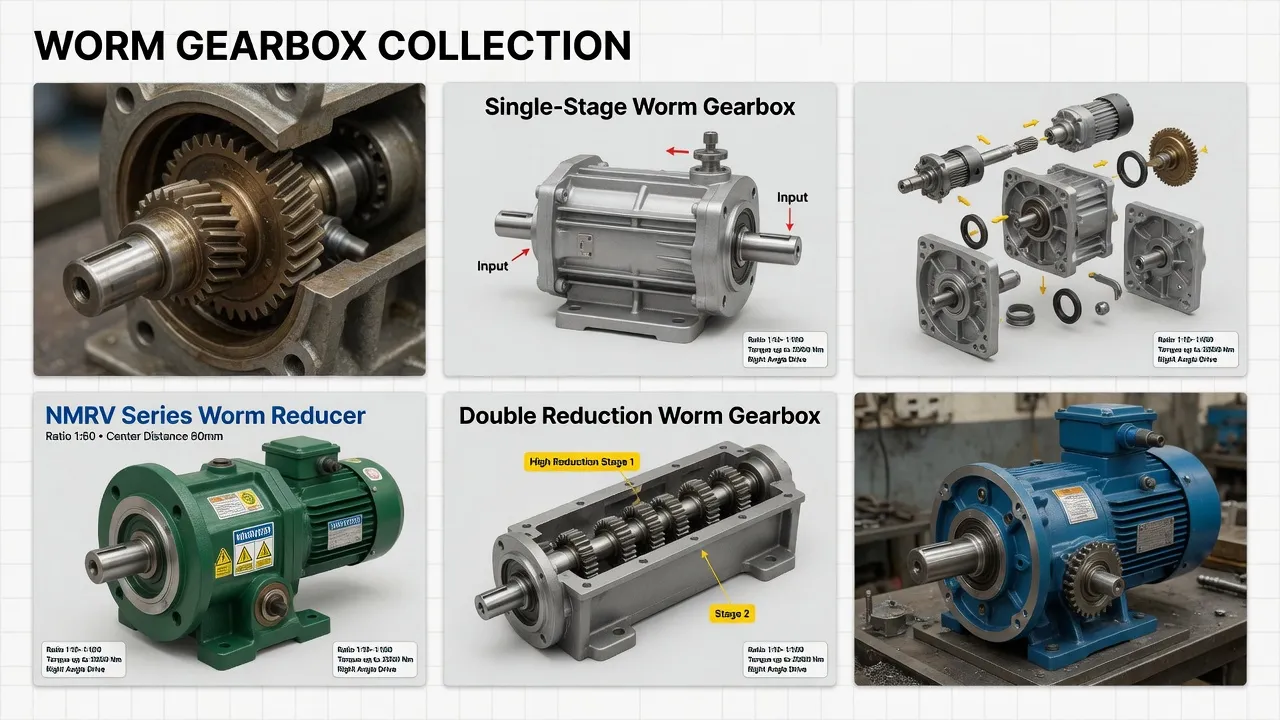
For commercial vessel steering gear actuators, smaller vessel and workboat steering, naval and government vessel steering, and offshore vessel dynamic positioning auxiliary drives, the HSRV Stainless Steel Worm Gearbox in marine steering gear specification targets the 25-30-year-vessel-service, SOLAS-compliant, AISI 316 service class with engineering features specifically chosen to address the failure modes that retire generic stainless industrial alternatives within 5-10 years of marine steering service.
Specifications include AISI 316 stainless steel housing rated for sustained steering compartment marine environment exposure including rudder shaft seal leakage and salt water spray ingress, single-stage worm-and-wheel architecture with centrifugally cast tin bronze ZCuSn10P1 worm wheel per ISO 1338 meshing with case-hardened 18CrNiMo7-6 steel worm shaft hardened to HRC 58-62 surface, precision-ground tooth geometry per DIN 3974 quality grade Q7 with backlash specification below 6 arcminutes for autopilot loop integration, premium-grade SKF or NSK heavy-duty stainless-shielded tapered roller bearings rated for 30,000+ hour L10 fatigue life under rated load, fluoroelastomer (Viton) double-lip seals with stainless garter springs at all shaft penetrations, IP66 marine-grade ingress protection plus marine breather configuration, synthetic polyalphaolefin (PAO) lubricant fill rated for 8,000-hour drain intervals coordinated with 5-year dry-docking events, motor flange compatibility with marine three-phase AC motors and matched electromagnetic brake assemblies for class society approval, and AISI 316 stainless steel A4 grade external mounting hardware throughout. Output torque ratings reach 35,000 Nm continuous with peak dynamic capacity 7× rated output for heavy weather operations. Class society type approval documentation from DNV, ABS, Lloyd’s Register, Bureau Veritas, and ClassNK ships with every unit along with EN 10204 3.1 material certifications, SOLAS Chapter II-1 Regulation 29 compliance documentation, CE marking per EU Machinery Directive 2006/42/EC, RoHS compliance, and ISO 9001:2015 quality system certification.
Beyond the HSRV stainless steel marine frame, complete steering gear drive packages typically pair the gearbox with marine-grade three-phase AC motors with marine electromagnetic brake assemblies and IP66 stainless steel motor housings, marine-grade absolute encoder feedback for autopilot system integration, weatherproof control connection junction box rated for steering compartment marine environment, and full A4 grade stainless steel mounting hardware throughout. Akgnx Co., Ltd supplies matched drive packages for marine steering gear OEMs and provides aftermarket replacement units for installed commercial vessel and offshore installation fleets across major shipbuilding and marine operations markets globally.
Specifying Drives for Marine Steering Gear?
Send vessel class, rudder area, design service speed, and class society pathway. We supply HSRV stainless steel marine drives engineered for SOLAS Chapter II-1 Regulation 29 compliance with AISI 316 construction and 25+ year vessel service life.
Frequently Asked Questions
© Akgnx Co., Ltd · About Us · Contact Us · [email protected]