
Modern textile production lines run at thread speeds up to 1,500 meters per minute on circular knitting machines, with hundreds of needle drives, take-up rollers, and tension control mechanisms operating in synchronized motion across machine groups producing fabric continuously through three-shift schedules. Each drive position demands compact mounting, low acoustic emission to meet workplace noise standards, smooth motion to prevent yarn breakage, and consistent reduction ratio across years of fiber dust exposure that infiltrates every imperfect seal. A standard worm gearbox sourced from a generic catalog typically experiences accelerated wear and elevated vibration within 18 to 24 months in textile service — symptoms that translate directly to fabric quality defects flagged by automated optical inspection systems. Properly engineered textile-grade worm gearboxes such as the FRV030 hold their original noise and vibration signatures past 10 years of three-shift production.
This guide walks through the unique drive demands of textile manufacturing equipment, lays out the precision worm geometry that handles continuous-duty fabric production, addresses the dust-resistant sealing and synchronous motion requirements specific to knitting and weaving service, and provides selection parameters per AGMA 6034-B92 design methodology. The audience: textile equipment OEM engineers, mill maintenance teams, and procurement specialists sourcing replacement drives for installed knitting, weaving, and finishing equipment fleets.
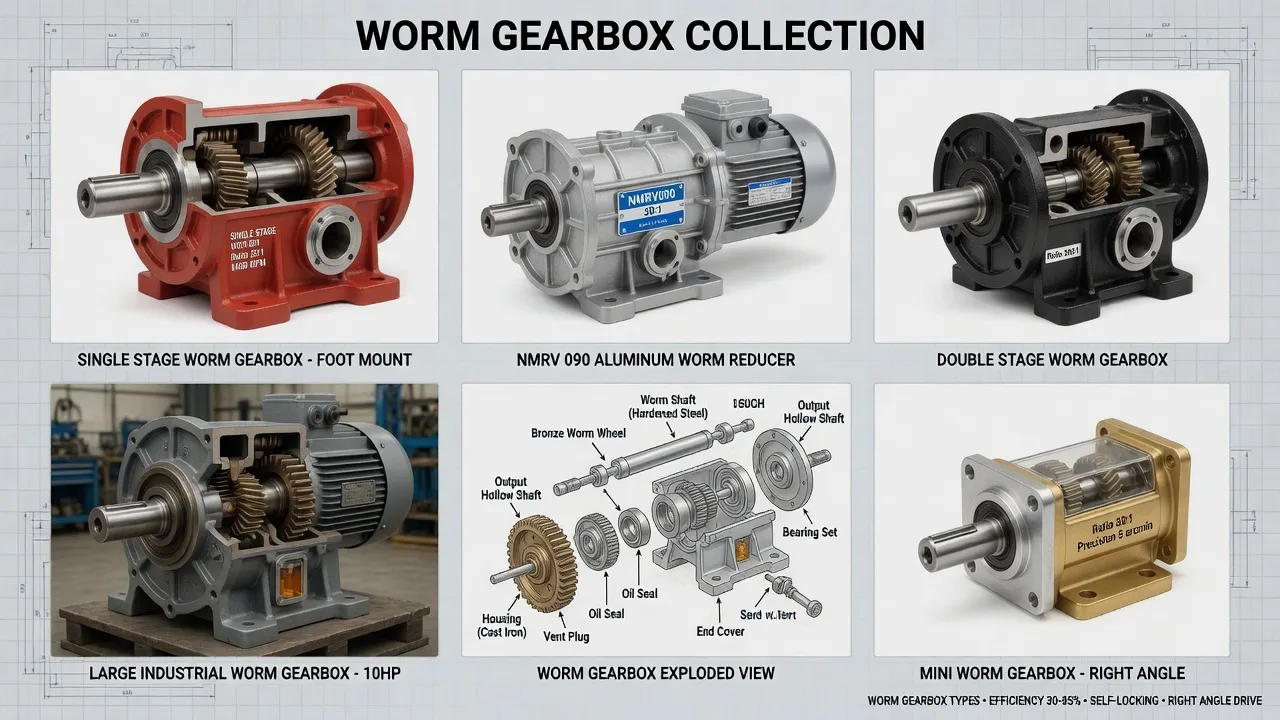
What Drive Requirements Distinguish Textile Service from General Industrial?
Textile production equipment imposes a combination of demands that no other industrial duty matches. Acoustic emission targets run aggressive — modern mills require gearbox noise levels below 65 dB at one meter to meet workplace exposure limits across hundreds of distributed drive positions, since cumulative facility noise compounds rapidly as drive count rises. Vibration transmitted into the fabric production zone produces yarn tension variation that automated quality control systems detect as fabric defects, so drive smoothness directly translates to fabric saleability. Cycle counts run 24 hours per day, 350+ days per year between scheduled outages, with each rotation applying small but cumulative loading that eventually produces measurable backlash growth detectable at the fabric output.
Fiber dust contamination is the under-appreciated environmental factor. Cotton, polyester, and synthetic fiber processing generates fine particulates that deposit on every horizontal surface and infiltrate any imperfectly sealed bearing or gearbox housing. Standard nitrile shaft seals lose elasticity within 18 months under continuous fiber dust exposure, admitting contamination into the lubricant and accelerating bronze wheel wear. The right worm gearbox for textile applications addresses acoustic emission, low vibration, dust-resistant sealing, and continuous-duty fatigue rating simultaneously — none of these specifications is optional in modern textile equipment.
How Precision Worm Geometry Meets Textile Production Demands
Ground Worm Surfaces for Quiet, Smooth Operation
Premium textile-grade worm gearboxes specify ground worm shaft surfaces rather than the milled or cut surfaces typical of general industrial alternatives. Surface finish quality directly affects acoustic emission — ground worm surfaces produce noise levels 8 to 12 dB lower than equivalent milled gearboxes at the same operating speed, the difference between meeting and missing modern textile mill workplace noise targets. The smoother gear meshing also produces lower velocity ripple at the output shaft, reducing yarn tension variation that automated fabric inspection systems would detect as quality defects. The cost premium for ground worms over milled worms runs 15 to 20 percent of total gearbox cost — a small premium relative to fabric quality consequences across years of production.
Compact Right-Angle Mounting at Every Drive Position
Circular knitting machines, weaving looms, and warp tension stands carry dozens to hundreds of distributed drive positions, each with limited space for gearbox installation. The 90° right-angle output configuration of worm gearboxes mounts behind take-up rollers, beside warp beams, and within machine guards where inline alternatives cannot fit. The hollow output shaft option on the FRV030 frame mounts directly onto driven roller shafts, eliminating couplings that would create maintenance points and additional alignment surfaces susceptible to fiber dust accumulation.
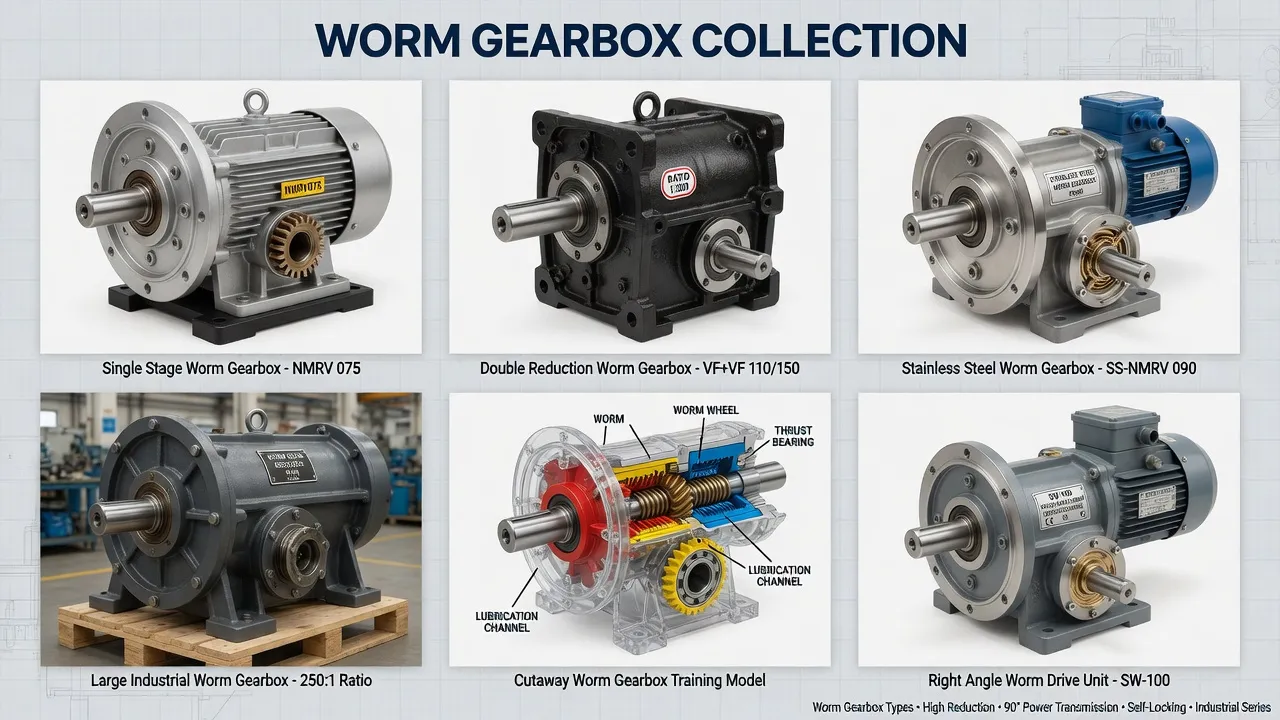
Technical Parameter Table: Textile-Grade Specification Window
The table summarizes specifications that distinguish textile-grade worm gearboxes from general industrial alternatives. Parameters reflect AGMA 6034-B92 design practice combined with textile equipment industry conventions for noise, vibration, and contamination resistance.
| Parameter | Textile Specification | Generic Industrial |
|---|---|---|
| Output configuration | 90° right-angle, hollow shaft | 90° right-angle |
| Reduction ratio range | 5:1 to 100:1 | 5:1 to 100:1 |
| Worm finish | Ground, lapped to Q7 (DIN 3974) | Milled, Q9 typical |
| Acoustic emission | ≤ 60 dB at 1 m, full speed | 70 – 78 dB |
| Sealing rating | IP65 with dust deflectors | IP54 standard |
| Self-locking torque (typ.) | 15 – 95 Nm at ≥30:1 | 15 – 95 Nm at ≥30:1 |
| L10 bearing life | ≥ 50,000 hours rated load | 25,000 hours typical |
| Compliance | CE, RoHS, ISO 9001 | CE only |
The single specification most often miscalculated on textile equipment projects is the L10 bearing fatigue life. General industrial gearboxes carry bearings rated 25,000 hours under catalog conditions — a number that converts to roughly 3 years of textile service under three-shift continuous duty. Textile-grade gearboxes specify upgraded bearings at 50,000+ hours to match the 7 to 10 year service horizon textile operators expect from drive equipment, justifying the marginal cost premium through extended replacement intervals across mill operating cycles.
Application Matrix Across Textile Equipment Types
Circular Knitting Machine Take-Up Drives
Circular knitting machines produce tubular fabric continuously, with take-up rollers pulling finished fabric away from the needle bed at carefully controlled rates synchronized to needle motion. The take-up roller drive must hold consistent rotation rate within 0.5 percent across the production run to maintain fabric weight specification, while accommodating fabric thickness variations across product changes. The FRV030 frame at ratios from 50:1 to 80:1 covers typical take-up duty, with output torques ranging 12 to 45 Nm depending on fabric weight and cylinder diameter. Continuous duty rating 24/7 plus low-vibration smooth motion makes this drive position particularly demanding on gear mesh quality.
Weaving Loom Warp Beam Let-Off Drives
Weaving looms unwind warp yarn from large beams under controlled tension during fabric production. The let-off drive must maintain warp tension precisely as the beam diameter decreases through the production run, with drive torque adjusting continuously to compensate. Worm gearbox self-locking holds beam position during loom stops without external brake hardware, while the 90° output configuration tucks behind the loom frame in tight space. Output torques run 30 to 120 Nm depending on beam mass and warp tension. Service factor 1.8 to 2.0 covers the cyclic loading pattern from beat-up impacts at each weft insertion.
Yarn Winding and Twisting Equipment
Yarn winding and twisting machines wrap finished yarn onto packages at high spindle speeds (up to 30,000 RPM on the spindle, with the drive gearbox at a lower speed providing the package traverse motion). Traverse drives use compact worm gearboxes at high reduction ratios (60:1 to 100:1) to convert motor speed into the slow oscillating motion that distributes yarn evenly across the package. Operating duty is continuous, output torques are modest (5 to 25 Nm), and the priority shifts to acoustic emission and reliability rather than peak load capacity. The FRV030 frame’s quiet operation and high cycle life rating match this application class precisely.
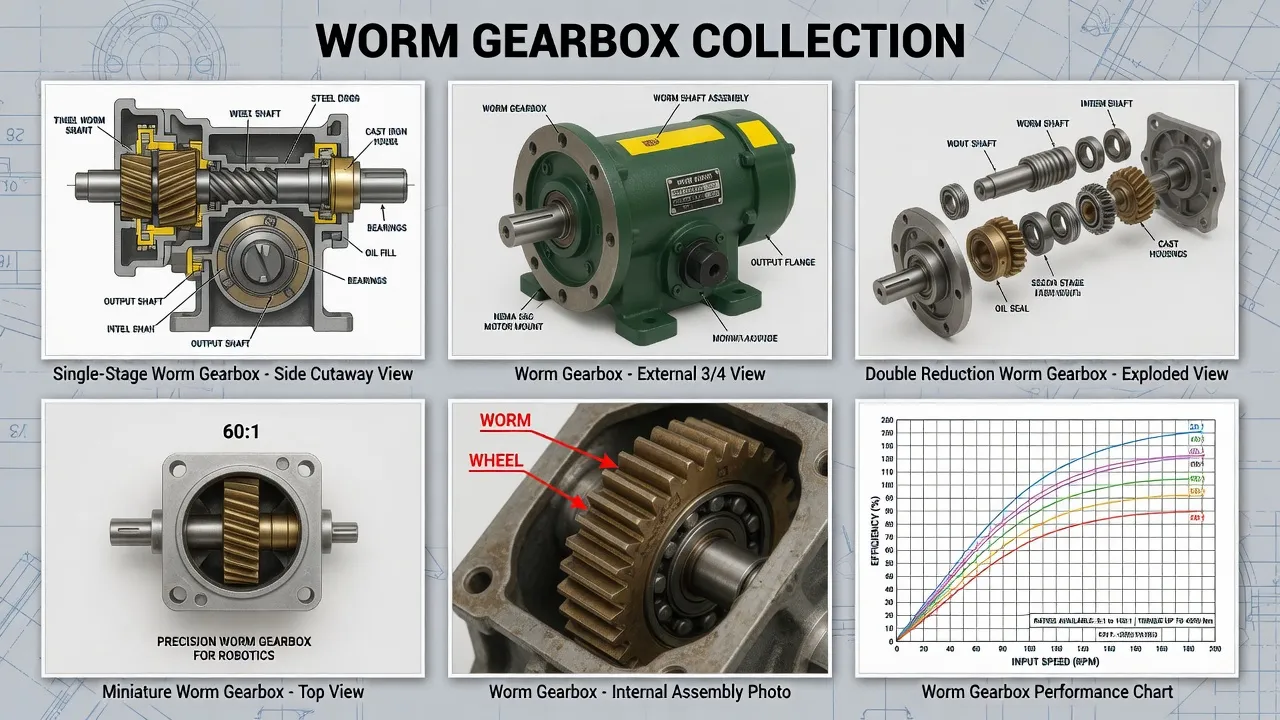
Selection Roadmap: Step-by-Step Workflow
The four-step procedure below covers textile equipment drive selection from initial requirements documentation through commissioning verification.
Define Production Profile and Target Output Speed
Document the daily operating hours, target output shaft speed (knitting take-up typically 15-60 RPM, weaving let-off 2-15 RPM, yarn traverse 80-200 RPM), motor power, and expected continuous service life. These determine reduction ratio selection, frame size, and bearing rating. Textile mills running three-shift 24/7 schedules should specify L10 bearing life of 50,000+ hours to match equipment operating expectations.
Specify Ground Worm Finish for Acoustic and Smoothness
Order the FRV030 with ground and lapped worm shaft option for textile applications — the surface finish difference between ground (Q7 per DIN 3974) and milled (Q9) worms produces 8 to 12 dB lower acoustic emission and substantially smoother output motion. Textile mill workplace noise compliance and fabric quality both depend on this specification. The cost premium is small relative to operational consequences.
Verify IP65 Sealing with Dust Deflectors
Confirm the gearbox sealing package includes IP65 ingress protection plus mechanical dust deflectors at all shaft penetrations. Fiber dust accumulation around shaft seals over multi-year service eventually overwhelms standard sealing — the deflector creates a primary barrier that protects the elastomer seal from direct fiber contact. Specify Viton seal lips for chemical resistance to lubricant and oxidation byproducts across multi-decade service intervals.
Document Baseline Acoustic and Vibration Signatures
Record acoustic emission and vibration spectrum at each gearbox during commissioning, with the equipment running at production speed under normal load. These baseline signatures become the reference for predictive maintenance throughout the gearbox service life. Drift from baseline by 20 percent or more triggers inspection — most textile mills catch developing issues 3 to 6 months before mechanical failure forces unscheduled outage.
Spare Parts Integration for Textile Equipment Fleets
Textile mill maintenance programs prioritize replacement stock for the components that wear under three-shift continuous duty plus fiber dust exposure. The worm wheel (centrifugal cast tin bronze ZCuSn10P1, ground tooth surfaces) is the higher-cycle wear component, with replacement intervals typically 25,000 to 35,000 hours under proper lubrication and dust protection. Output shaft seals (Viton with stainless garter) require preventive replacement at 4-year intervals or whenever evidence of dust intrusion appears in the lubricant sample.
Bearing replacement on the FRV030 frame uses premium-grade SKF or NSK bearings with L10 life of 50,000+ hours under rated load — the longer life rating compared to standard industrial bearings is what enables the textile-grade service life expectation. Spare parts kits combining worm wheel, output shaft seals, input shaft seals, bearing set, and gasket kit provide complete rebuild capability for installed equipment fleets, with kit packaging optimized for typical textile mill maintenance shop inventory practices.
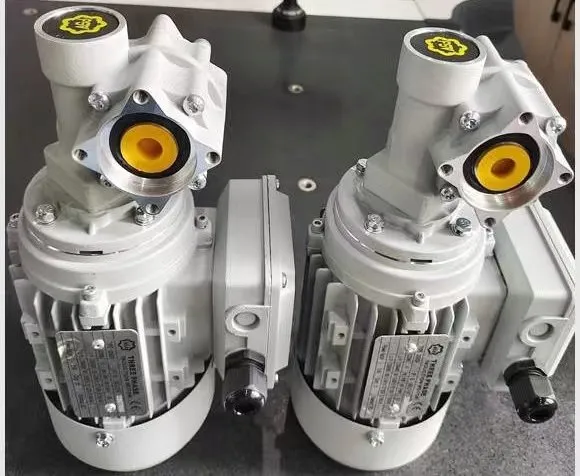
Cost & Sustainability: Total Ownership Across 10-Year Mill Operations
Modern textile mills evaluate equipment investments across 10-year operating horizons because mill capital cycles align with fabric market trends. The table compares total cost of ownership for FRV030 specialized gearboxes against generic industrial alternatives across this horizon.
| Cost Component | FRV030 Specialized | Generic Industrial |
|---|---|---|
| Initial unit price (FOB) | USD 195 – 285 | USD 130 – 175 |
| Replacement frequency | 1× over 10 years | 3 – 4× over 10 years |
| Lubricant interval | 8,000 hours / 18 months | 3,000 hours / 6 months |
| Quality reject impact | Minimal (smooth motion) | Material loss from vibration |
| 10-year cumulative TCO | ~ 1× installed cost | ~ 2.8× installed cost |
Sustainability and compliance factors weigh in textile mill specification decisions. The FRV030 housing carries CE marking per EU Machinery Directive 2006/42/EC and complies with RoHS Directive 2011/65/EU. Manufacturing follows ISO 9001:2015 quality management procedures with full material traceability. Synthetic polyalphaolefin (PAO) lubricant fill produces 65 to 75 percent less waste oil over the equipment service life compared to mineral oil alternatives requiring more frequent changes, with biodegradability verified per OECD 301 standards in spillage concentrations.
For broader product line context, the Akgnx engineering team manufactures the FRV030 alongside textile-grade helical and bevel-helical reducers covering high-power production equipment requirements. Production capacity supports OEM volumes from prototype quantities through monthly shipments of several thousand units for high-volume textile equipment manufacturers across major global mill regions.
Customer Testimonials from Textile Equipment Operators
“Our acoustic compliance audit flagged 18 knitting machines exceeding the 70 dB threshold. We replaced the original gearboxes with FRV030 ground-worm units across the affected machines and pulled measured noise down to 62-64 dB at 1 meter. The mill workplace exposure documentation cleared on the next inspection cycle.”
— Plant Engineering Manager, Knit Fabric Producer, Turkey
“As a circular knitting machine OEM, we evaluated five alternative gearbox suppliers for our take-up drive position. FRV030 passed our 8,000-hour accelerated life test with measured backlash growth under 0.05° — half the average across the other four candidates. Akgnx held our 1,800-unit annual schedule without exception across two years of supply.”
— Director of Engineering, Textile Machinery OEM, Italy
“We sourced direct dimensional replacements for an installed fleet of 240 weaving loom warp let-off drives across two facilities. The FRV030 mounted to existing brackets without modification and reduced our annual gearbox replacement budget by 70 percent over the first 24 months. Documentation arrived complete with the first shipment — no follow-up emails required.”
— Maintenance Director, Cotton Weaving Mill Group, India
“Yarn package quality on our high-speed twisters depends entirely on traverse drive smoothness. We trialed FRV030 against our long-term incumbent supplier and measured 30 percent fewer package defects flagged by automated optical inspection over a 60-day production trial. Standardized on Akgnx for new equipment builds going forward.”
— Production Manager, Synthetic Yarn Manufacturer, Vietnam
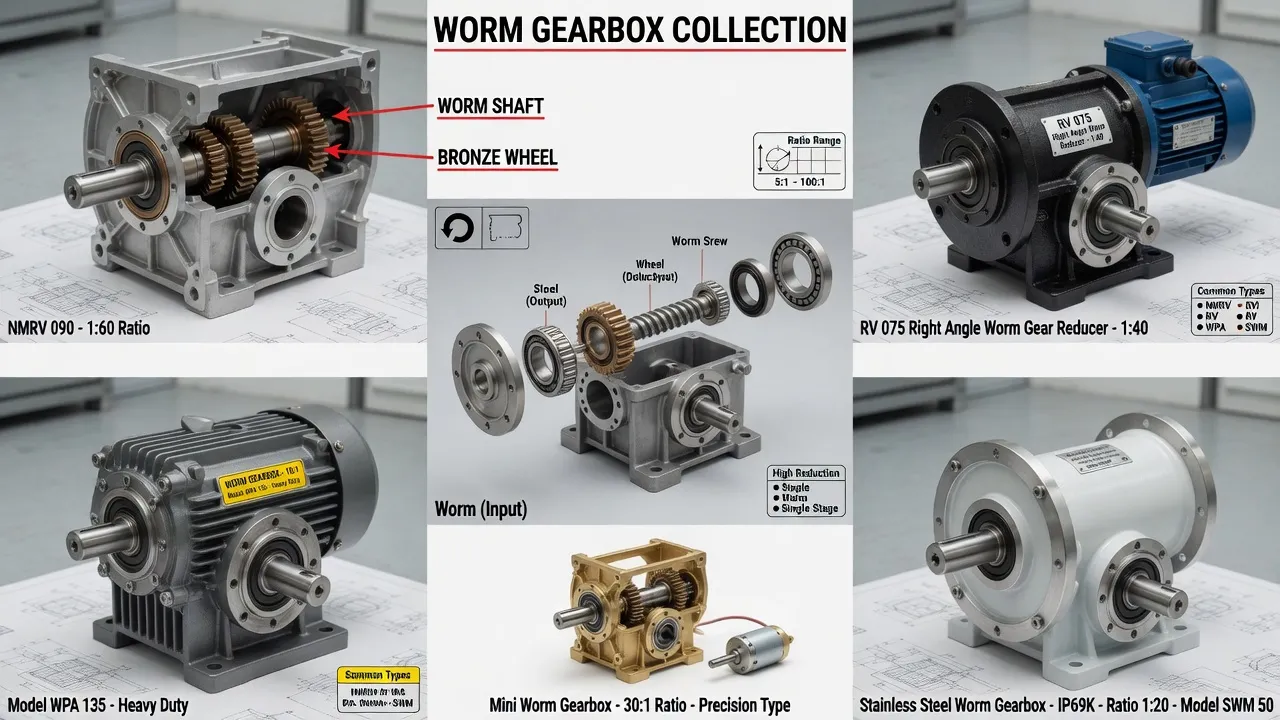
Recommended Drive: FRV030 Worm Gearbox for Textile Machinery
For textile production equipment including circular knitting take-up drives, weaving loom let-off mechanisms, yarn winding traverse drives, and warp tension control positions, the FRV030 worm gearbox targets the continuous-duty, low-noise, dust-resistant service class with engineering features specifically chosen to address the failure modes that retire general industrial alternatives within textile mill operating cycles.
Specifications include precision aluminum housing with epoxy powder coat finish for dust resistance, ground and lapped worm shaft surfaces meeting DIN 3974 quality grade Q7 for low acoustic emission, fluoroelastomer (Viton) double-lip seals with stainless garter springs and mechanical dust deflectors, and IP65 ingress protection. Reduction ratios from 7.5:1 through 100:1 cover knitting, weaving, and yarn handling applications. Output torque on the FRV030 frame reaches 95 Nm continuous with peak transient capacity to 180 Nm. CE marking, RoHS compliance, and ISO 9001 quality system certification ship with every unit.
Beyond the FRV030 frame, complete textile equipment drive packages typically pair the worm gearbox with IEC three-phase induction motors at appropriate frame size, premium roller chain for any final reduction stages, and acoustic-rated motor mountings. The Akgnx engineering team supplies matched drive packages for textile equipment OEMs and provides aftermarket replacement units for installed mill equipment across major textile production regions globally.
Specifying Drives for Textile Machinery?
Send equipment type, target output speed, daily operating hours, and required acoustic compliance targets. We supply FRV030 worm gearboxes engineered for continuous-duty textile production.
Frequently Asked Questions
© Akgnx Co., Ltd · About Us · Contact Us · [email protected]