
Commercial ice production lines run drive systems through 6,000 to 8,000 hours per year inside chambers held continuously below 0 °C, where condensate forms on every cold surface and wash-down sanitation cycles soak motors and gearboxes in food-grade detergent twice daily. A standard industrial worm gearbox pulled from a general catalog and pressed into ice maker service typically lasts 14 to 22 months before seal failure, lubricant emulsification, or housing corrosion forces unplanned replacement during peak summer demand — exactly when a beverage distributor, hotel chain, or seafood processor can least tolerate equipment downtime. Properly engineered ice maker worm gearboxes such as the BGV063 hold past 8 years of continuous service in the same duty profile, and the engineering reasoning for that gap is straightforward once the failure modes are understood.
This guide covers the cold-environment operating profile of commercial ice equipment, explains the right-angle worm gearbox configuration that fits behind ice harvest mechanisms and conveyor drives, walks through selection criteria for stainless seal packages and food-grade lubricant compliance, and addresses cost-of-ownership economics across an 8-year ice plant operating horizon. The audience: ice maker OEM engineers, beverage and seafood plant maintenance managers, and procurement specialists sourcing replacement drives for installed fleet equipment.
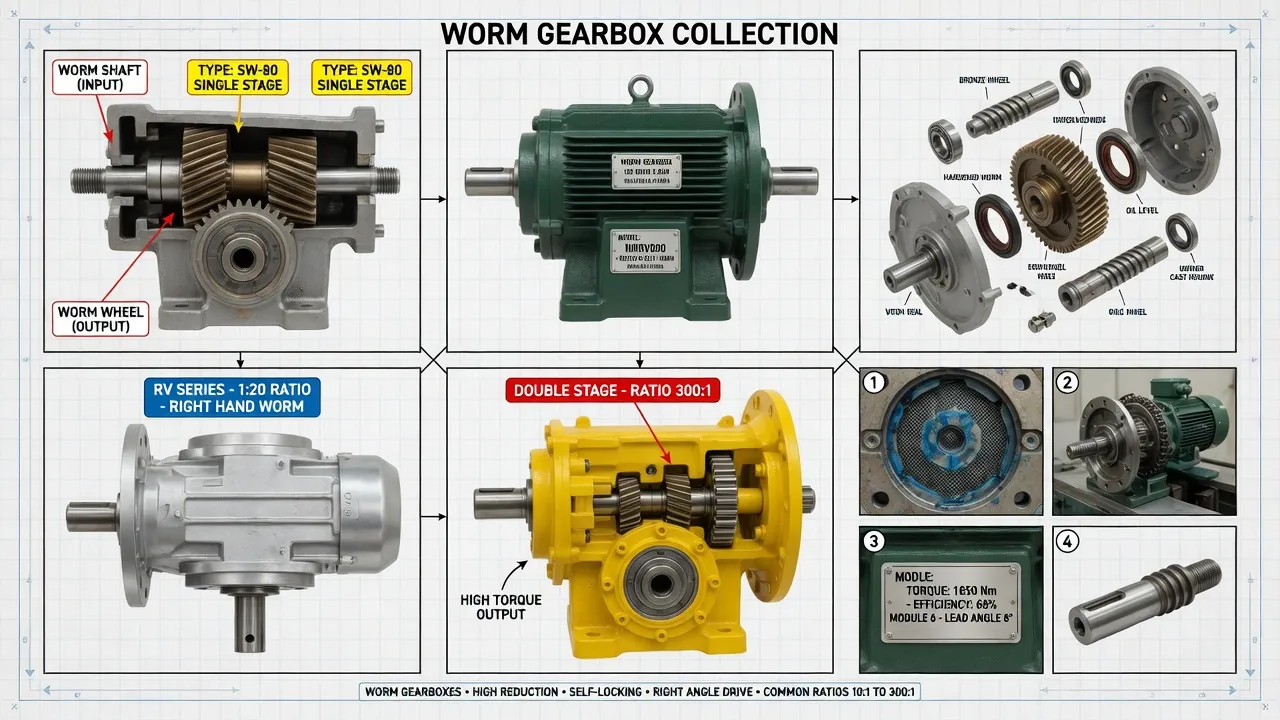
What Makes Ice Maker Drive Service Different from General Industrial?
Ice production equipment combines three stress factors no other industrial duty produces in the same intensity. First, sustained sub-zero ambient operation — chamber temperatures from -5 °C down to -25 °C — keeps lubricants near their pour-point limits where standard ISO VG 220 mineral oil thickens to viscosities that starve gear meshing. Second, daily thermal cycling between operating chamber temperatures and elevated wash-down temperatures (60 to 75 °C with caustic CIP detergents) drives moisture into any imperfectly sealed housing, where it then freezes during the next production cycle and damages internal components from inside. Third, food-grade compliance — NSF H1 lubricants for incidental food contact, FDA-compliant elastomers, washdown-rated housings — narrows the specification window dramatically compared to general industrial alternatives.
The mechanical duty profile compounds these environmental stresses. Ice harvest mechanisms cycle several thousand times per day, each cycle imposing a momentary peak load when the harvest blade or auger encounters partially formed ice. Conveyor systems carrying finished ice cubes through the bagging line accelerate and decelerate at every product transition. The drive must absorb these cyclic peaks without fatiguing the worm wheel teeth or exciting resonances at the bagging head. Selecting a worm gearbox for ice maker applications therefore means addressing cold-environment lubrication, washdown sealing, food-grade compliance, and shock-load tolerance simultaneously — not separately.
How Right-Angle Worm Geometry Solves Ice Maker Constraints
Compact 90° Output for Tight Equipment Envelopes
Commercial ice maker chassis dimensions are tight by design — every cubic centimeter of interior volume costs energy through reduced insulation and increased cold-loss area. The 90° right-angle output of worm gearboxes mounts directly behind the harvest cylinder or auger drive sprocket, where an inline planetary or helical alternative would force significant chassis depth increase. The hollow output shaft option on the BGV063 frame eliminates intermediate couplings, removing the alignment surfaces and additional sealing points that ice formation would otherwise compromise.
Self-Locking Holds Harvest Position During Power-Off Cycles
Ice harvest mechanisms must hold final position at the end of each cycle so the next batch begins from a known reference. Worm gearbox geometric self-locking at reduction ratios above 30:1 delivers this without external brake hardware, eliminating an additional electrical component that would itself need washdown sealing and food-grade approval. The self-locking property also protects the drive train if facility power drops mid-cycle — the harvest mechanism freezes in place rather than back-driving under the weight of partially formed ice and damaging the drive shaft.
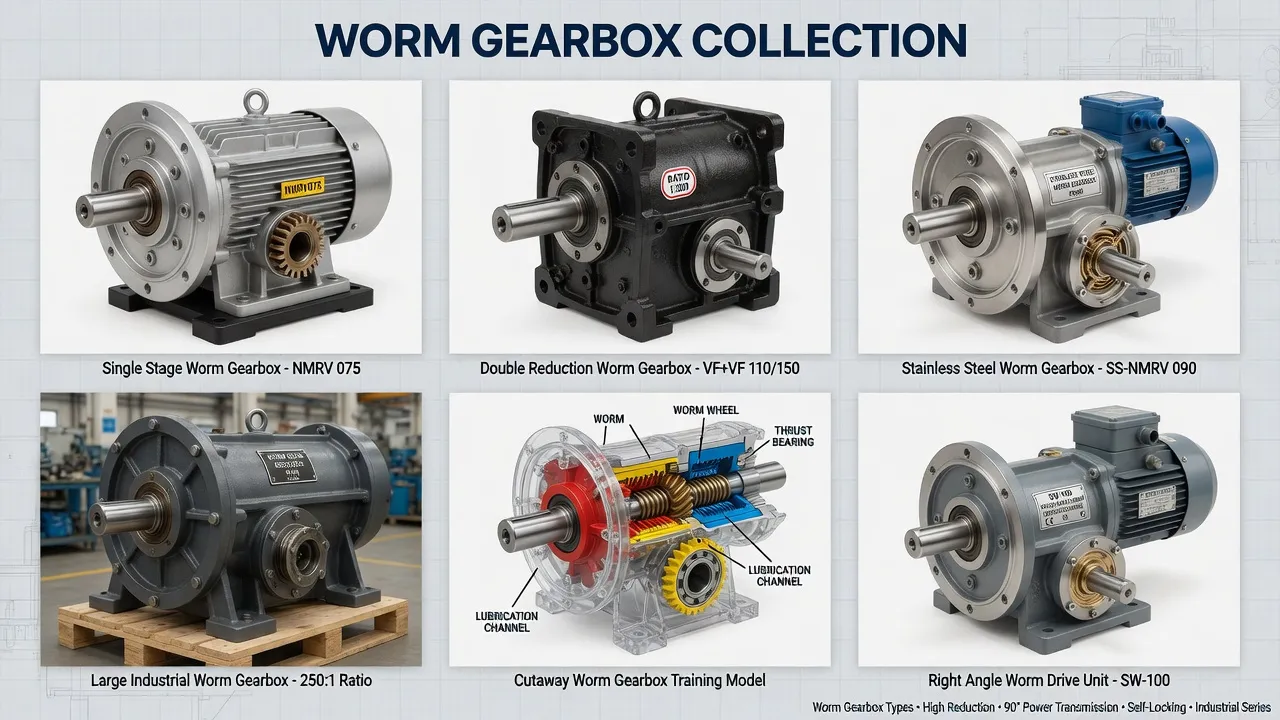
Technical Parameter Specifications for Ice Maker Service
The table below summarizes the specification window that distinguishes ice-maker-grade worm gearboxes from general industrial alternatives. Values reflect AGMA 6034-B92 design practice combined with food-equipment industry conventions.
| Parameter | Ice Maker Specification | Generic Industrial |
|---|---|---|
| Output angle | 90° right-angle | 90° right-angle |
| Reduction ratio range | 5:1 to 100:1 | 5:1 to 100:1 |
| Operating temperature | -25 °C to +75 °C | -10 °C to +40 °C |
| Lubricant grade | NSF H1 synthetic PAO ISO VG 320 | Mineral ISO VG 220 |
| Sealing rating | IP66 / IP69K washdown | IP54 industrial |
| Self-locking torque (typ.) | 25 – 180 Nm at ≥30:1 | 25 – 180 Nm at ≥30:1 |
| Service factor | 2.0 minimum | 1.0 – 1.5 typical |
| Compliance | CE, RoHS, NSF, FDA elastomers | CE only |
Worm tooth geometry on the BGV063 frame follows DIN 3974 quality grade Q8 for medium-precision food-equipment applications, with the worm shaft case-hardened to HRC 58-62 and the worm wheel cast from centrifugal tin bronze ZCuSn10P1 for hygienic durability. The single specification most often miscalculated on ice maker projects is lubricant grade — using ISO VG 220 mineral oil at -15 °C chamber temperature produces viscosity values exceeding 50,000 cP, far above the gear meshing threshold and a direct cause of bronze wheel polishing failure within a single production season.
Application Matrix Across Ice Production Equipment
Cube Ice Harvest Cylinder Drives
Cube ice machines build product on refrigerated metal grids, then activate a harvest cycle that lifts the cube assembly through a thaw spray and into the storage bin. The harvest mechanism uses a worm-gearbox-driven cam or eccentric crank, with cycle counts running 800 to 1,500 harvests per day in commercial restaurant and hospitality service. The BGV063 frame at ratios from 30:1 to 60:1 covers the typical harvest drive duty, with output torques ranging 50 to 200 Nm depending on cube grid weight and harvest mechanism geometry. Self-locking holds the grid at home position between cycles without external solenoid brake hardware.
Flake Ice Auger and Drum Drives
Flake ice machines freeze a thin water film on a rotating drum or stationary cylinder, then scrape the formed ice with a stainless auger that delivers product to a chute below. Auger drives run continuous duty 18 to 24 hours per day during peak production seasons, demanding service factor 2.0 minimum and washdown sealing at IP66 to handle daily sanitation cycles. Output torques range 80 to 450 Nm depending on drum diameter and ice production rate. Output shafts on the BGV063 hollow-bore configuration mount directly onto the auger drive shaft, eliminating coupling alignment surfaces that condensate would otherwise corrode.
Ice Storage and Conveyor Bagging Drives
Ice storage bins use rotating rake mechanisms or screw augers to feed product to the bagging head on demand. The drives operate intermittently — typically 200 to 400 cycles per shift — and must restart cleanly even when ice has partially compacted around the rake during idle periods. Service factor 2.5 covers the breakaway shock load typical of restart conditions. Output torques run 100 to 600 Nm depending on bin geometry. Bagging conveyor drives downstream from storage demand similar service factors plus the smooth start/stop characteristics that prevent product damage during transit.
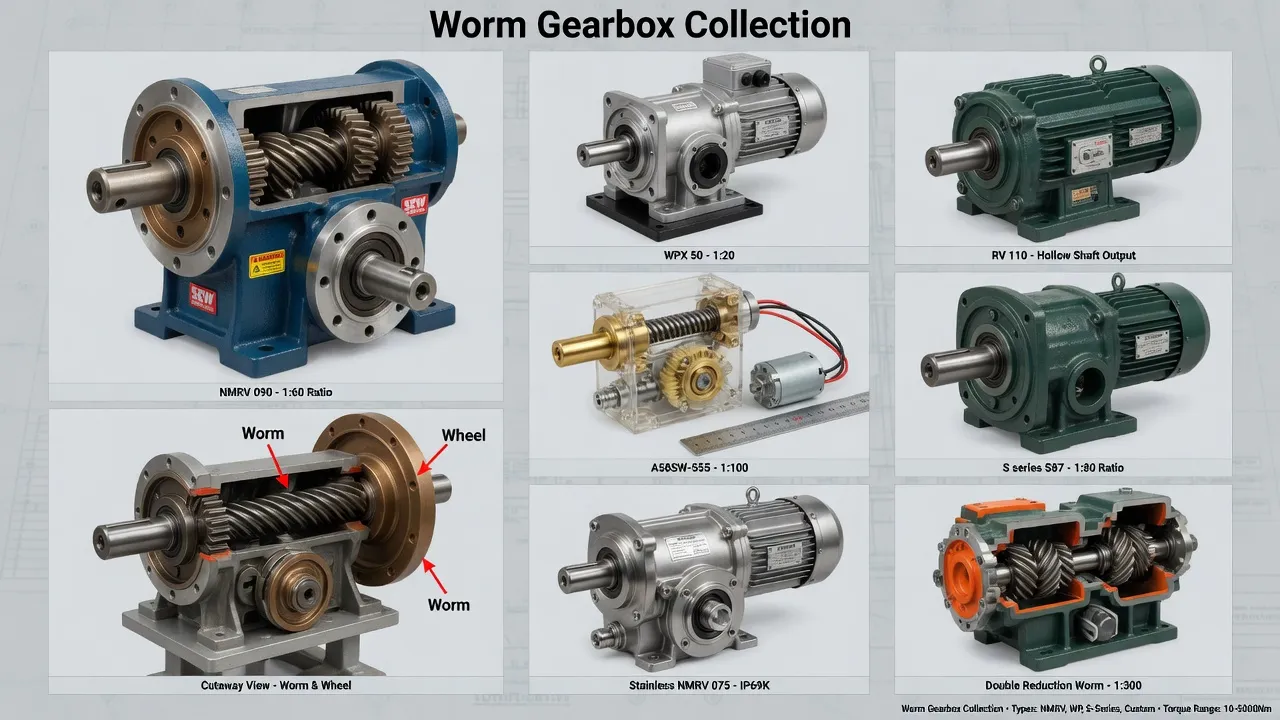
Selection Roadmap: Step-by-Step Workflow
The four-step procedure below guides ice maker drive selection from the first specification questions through commissioning. Following the sequence avoids the most common sizing mistakes that produce premature seal or bearing failures.
Define the Cold Environment Operating Window
Document the worst-case low ambient temperature (chamber operating set-point), the highest expected washdown temperature (CIP cycle peak), the daily cycle count, and the harvest or production rate at peak season. These four numbers determine lubricant grade, seal package, service factor, and bearing fatigue rating. Insufficient documentation here is the leading cause of premature seal failures within the equipment warranty period.
Calculate Output Torque with Service Factor 2.0+
Determine base load torque from motor power, target output speed, and assumed gearbox efficiency (use 75% for cold-environment worm drives — efficiency drops 8 to 12 percent below catalog values when oil viscosity rises). Apply service factor 2.0 minimum for harvest cycles, 2.5 for storage rake breakaway loads. The resulting equivalent uniform-duty torque is what the catalog rating must exceed at the chosen reduction ratio.
Specify NSF H1 Synthetic Lubricant from Day One
Order the gearbox factory-filled with NSF H1 synthetic polyalphaolefin (PAO) oil at ISO VG 320 viscosity grade. The PAO base maintains pourable viscosity down to -30 °C while resisting oxidation at washdown temperatures, and the NSF H1 certification covers incidental food contact through any seal failure. Field-converting a mineral-oil-filled gearbox to synthetic later is impractical because residual mineral oil contaminates the new fill.
Verify IP66 Sealing and Stainless Mounting Hardware
Confirm the output shaft seal package uses fluoroelastomer (Viton) lips with stainless garter springs — standard nitrile seals harden under daily CIP exposure within 6 to 9 months. Specify A2 (304) or A4 (316) stainless steel mounting hardware throughout, and apply marine-grade anti-seize compound to thread interfaces during installation to prevent galvanic seizure during future maintenance.
Spare Parts Integration: Wear Components and Replacement Stock
Ice maker drive maintenance prioritizes replacement stock for the components that wear under cold-cycling and washdown service. The worm shaft (case-hardened 20CrMnTi steel, ground and polished worm thread) reaches 30,000+ operating hours under proper lubrication; replacement is needed only after major overhaul. The worm wheel (centrifugal cast tin bronze ZCuSn10P1) is the higher-cycle wear item, with typical replacement intervals of 15,000 to 25,000 hours depending on harvest cycle frequency and lubricant condition. Output shaft seals and input shaft seals (Viton with stainless garter) require preventive replacement at 3-year intervals regardless of visible condition.
Bearings on the BGV063 frame use SKF or NSK premium-grade tapered roller bearings on the worm shaft for thrust capacity and deep-groove ball bearings on the worm wheel shaft for radial support. L10 bearing fatigue life exceeds 25,000 hours under rated load, and replacement is typically performed concurrent with worm wheel service rather than as a separate maintenance event. Spare parts kits combining worm wheel, output shaft seals, input shaft seals, and bearing set provide complete rebuild capability for installed equipment fleets.
Cost & Sustainability: Total Ownership Across 8-Year Service Life
The economics of ice maker drive selection favor specialized equipment substantially over general industrial alternatives across realistic operating horizons. The table compares total cost across an 8-year ice plant operating cycle — the typical service life of commercial ice production equipment between major rebuild events.
| Cost Component | BGV063 Specialized | Generic Industrial |
|---|---|---|
| Initial unit price (FOB China) | USD 280 – 420 | USD 180 – 240 |
| Replacement frequency | 1× over 8 years | 4 – 5× over 8 years |
| Lubricant change interval | 5,000 hours / 3 years | 1,500 hours / annually |
| Cumulative downtime cost | Low (planned only) | High (peak-season unplanned) |
| 8-year cumulative TCO | ~ 1× installed cost | ~ 3.5× installed cost |
Sustainability factors weigh heavily in modern food equipment specification. The BGV063 housing carries CE marking per the EU Machinery Directive 2006/42/EC and complies with RoHS Directive 2011/65/EU restricting hazardous substances in electronic equipment components. The synthetic PAO lubricant fill produces 60 to 70 percent less waste oil over the equipment service life compared to mineral oil alternatives requiring annual changes, and PAO oil itself is biodegradable per OECD 301 standards in concentrations typical of accidental spillage events. NSF H1 certification ensures incidental food contact compliance per FDA 21 CFR 178.3570 for food-grade lubricant chemistry.
For broader product line context, the Akgnx engineering team manufactures the BGV063 alongside a family of food-equipment-grade worm and helical reducers, with each frame size tested per ISO 9001:2015 quality management procedures and shipped with full material traceability documentation. Production capacity covers OEM volumes from prototype quantities through monthly shipments of several thousand units for high-volume ice maker manufacturers across North America, Europe, and Asia-Pacific markets.
Customer Testimonials from Ice Equipment Operators
“We replaced our generic worm gearboxes on 14 commercial cube ice machines with BGV063 units after losing two production days during the 2024 summer peak. Eighteen months in, zero failures and we cancelled our quarterly seal replacement budget line. The synthetic lubricant fill alone saved us 6 maintenance hours per machine per year.”
— Operations Manager, Hospitality Equipment Service Provider, Chicago IL
“As an OEM building flake ice machines for seafood processors, we needed a drive that survived continuous CIP washdown plus -20 °C ambient. The BGV063 with NSF H1 fill passed our 5,000-hour accelerated life test on the first attempt. Akgnx held the production schedule for our 2,400-unit annual order without exception.”
— Chief Engineer, Commercial Ice Equipment Manufacturer, Italy
“We sourced replacement gearboxes for an installed fleet of 80 storage bin rake drives across our distribution network. Akgnx supplied direct dimensional replacements that mounted to existing brackets without modification. Unit-to-unit consistency was tighter than the original equipment manufacturer’s tolerances.”
— Maintenance Director, Beverage Distribution Network, Texas
“Documentation quality matched what we expect from European suppliers. CE marking, RoHS declaration, NSF certificate, ISO 9001 audit report — everything arrived with the first shipment. That cut our internal qualification cycle from 12 weeks to 4 weeks.”
— Procurement Lead, Industrial Refrigeration Contractor, Australia
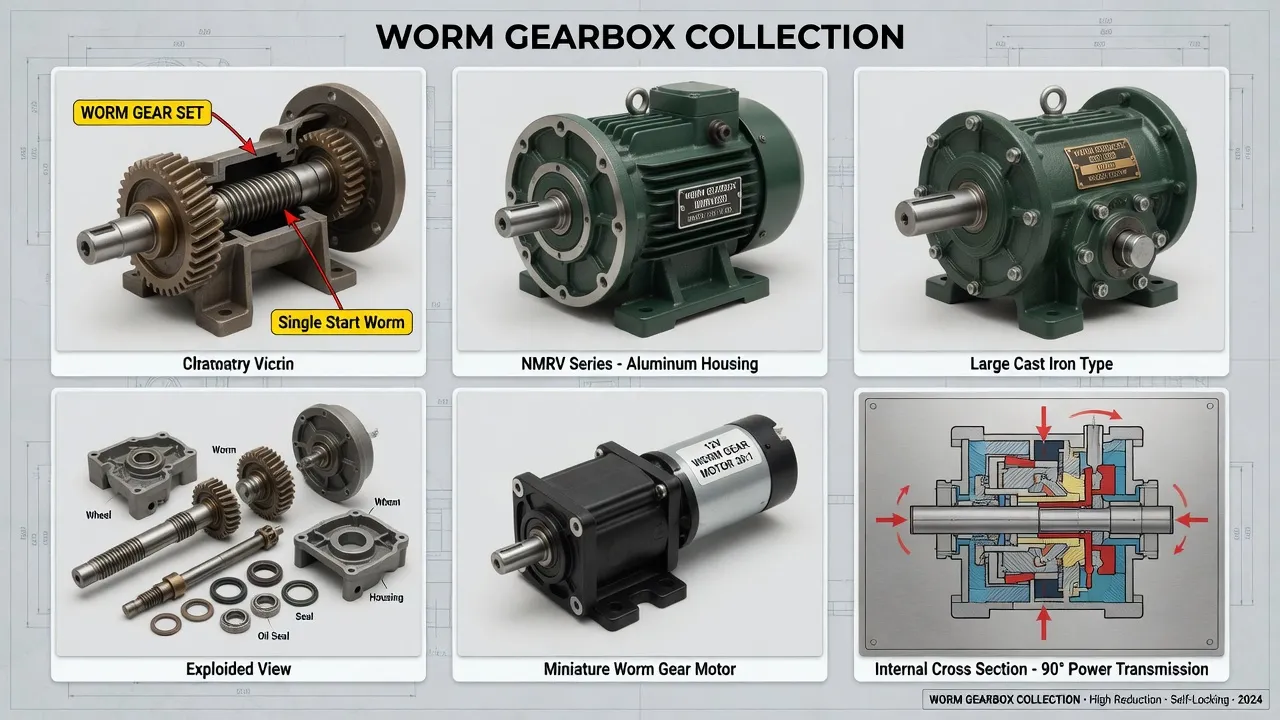
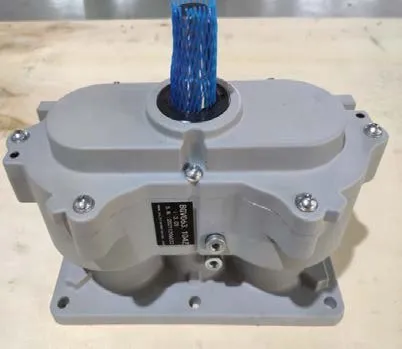
Recommended Drive: BGV063 Worm Gearbox for Ice Maker
For commercial ice production equipment including cube ice harvest mechanisms, flake ice augers, drum ice machines, and ice storage rake drives, the BGV063 worm gearbox targets the cold-environment, washdown-rated, food-equipment service class with engineering features specifically chosen to address the failure modes that retire general industrial alternatives within months.
Specifications include cast aluminum housing with epoxy powder coat finish for corrosion resistance under daily CIP exposure, NSF H1 synthetic PAO lubricant fill rated -25 °C to +75 °C, fluoroelastomer (Viton) double-lip seals with stainless garter springs at all shaft penetrations, and IP66 ingress protection covering direct washdown spray. Reduction ratios from 7.5:1 through 100:1 cover harvest cycle, auger drive, and conveyor service requirements. Output torque on the BGV063 frame reaches 220 Nm continuous with peak transient capacity of 450 Nm. CE marking, RoHS compliance, and NSF certification ship with every unit.
Beyond the BGV063 frame, complete ice equipment drive packages typically pair the worm gearbox with stainless-finish IEC motor flanges, food-grade roller chain for any final reduction stages, and washdown-rated condition monitoring sensors for plant-wide equipment management. The Akgnx engineering team supplies matched drive packages for ice equipment OEMs and provides aftermarket replacement units for installed equipment fleets globally.
Specifying Drives for Ice Production Equipment?
Send chamber temperature, harvest cycle rate, washdown chemistry, and required output torque. We supply BGV063 worm gearboxes engineered for commercial ice equipment service.
Frequently Asked Questions
© Akgnx Co., Ltd · About Us · Contact Us · [email protected]