
Float glass production lines stretch hundreds of meters from melting tank through annealing lehr to finishing stations, with each segment running drive systems that operate continuously across multi-year production campaigns between scheduled cold-end shutdowns. Ceramic tile manufacturing operates similar continuous campaigns with kilns at 1,200 °C radiating heat across drive equipment positioned just meters away. Both industries combine sustained high temperatures, abrasive dust contamination, and shock loading from product transitions — operating conditions that destroy general-industrial worm gearboxes within 24 to 30 months while purpose-engineered alternatives such as the HRV104 hold past 12 years of continuous service. The engineering reasoning for that 5x service life multiplier deserves examination by anyone specifying drive equipment for high-temperature material processing.
This guide walks through the high-temperature, dust-contaminated operating environment of glass and ceramic production, explains the heat-resistant housing and seal specifications that distinguish purpose-engineered drives from general industrial alternatives, addresses the lubricant chemistry required for sustained operation above 80 °C housing temperatures, and provides selection criteria per AGMA 6034-B92 design methodology. The audience: glass and ceramic plant mechanical engineers, kiln operations managers, and OEM equipment designers specifying drives for high-temperature material processing equipment.
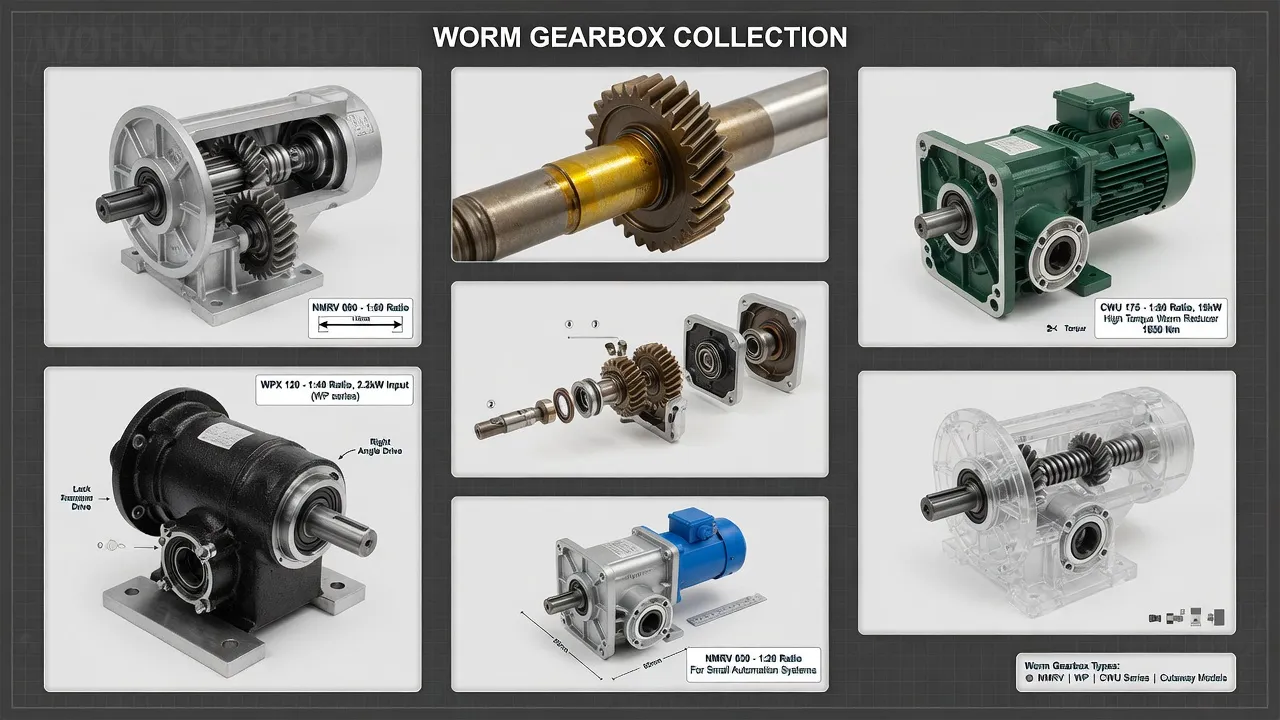
What Operating Environment Distinguishes Glass and Ceramic Drive Service?
Glass and ceramic production equipment imposes a combination of stresses that no general industrial application produces in the same intensity. Sustained ambient temperatures from radiant heat reach 60 to 110 °C on equipment positioned within thermal radiation distance of melting tanks, annealing lehrs, or tunnel kilns. Drive housings absorb this thermal load continuously, and standard ISO VG 220 mineral oil oxidizes within 6 to 9 months under these temperatures, losing the additive package that protects the bronze worm wheel from accelerated wear. Synthetic high-temperature lubricant fills extend the lubricant change interval from quarterly to multi-year cycles, eliminating the maintenance burden that mineral oil would impose.
Dust contamination from product handling compounds the thermal stress. Glass cullet, ceramic powders, and refractory dust generate fine abrasive particulates that infiltrate any imperfectly sealed housing, accelerating bronze wheel wear from the inside. Standard nitrile shaft seals fail under combined thermal cycling and dust exposure within 12 to 18 months, admitting contamination that destroys the lubricant before it can be detected through routine sampling. Selecting a worm gearbox for glass ceramic applications therefore means addressing thermal tolerance, dust-resistant sealing, and continuous-duty fatigue rating simultaneously — none of these specifications is optional in modern high-temperature processing equipment.
How Heat-Resistant Worm Geometry Solves Process Plant Constraints
Cast Iron Housing for Thermal Mass and Stability
Premium high-temperature worm gearboxes specify cast iron housings rather than the cast aluminum housings common on general industrial alternatives. Cast iron carries roughly 3 times the thermal mass per unit volume, dampening short-term temperature transients that thermal radiation imposes on equipment near hot zones. Cast iron also retains dimensional stability through repeated thermal cycling — aluminum housings expand and contract sufficiently to compromise bearing preload across hundreds of thermal cycles, eventually producing measurable bearing slop that aluminum-housed gearboxes cannot recover from. The cost premium for cast iron over aluminum runs 25 to 35 percent — a small premium relative to operational consequences of premature gearbox failure in continuous-campaign equipment.
Heat-Resistant Epoxy Coating for Dust Environment Protection
Glass and ceramic plant atmospheres carry combined thermal radiation, abrasive dust, and occasional chemical exposure from cleaning operations. Two-coat heat-resistant epoxy paint systems on the HRV104 housing exterior survive these conditions across multi-decade service while standard single-coat industrial enamel breaks down within 18 to 24 months. The coating remains intact at sustained 120 °C operation and resists chemical attack from process cleaners. Equipment mounted directly behind annealing lehr exit zones particularly benefits from the upgraded coating, as direct radiant exposure compounds with daily thermal cycling.
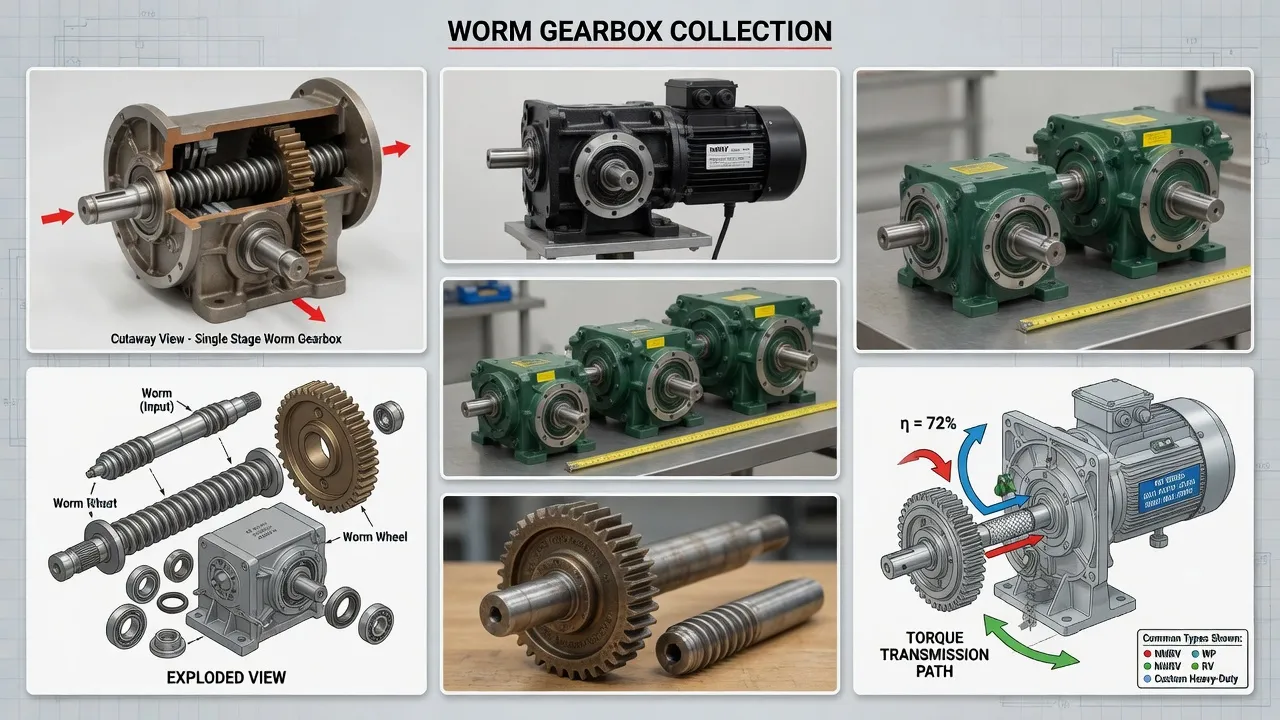
Technical Parameter Table: High-Temperature Specification Window
The table summarizes specifications that distinguish HRV104 high-temperature gearboxes from general industrial alternatives. Parameters reflect AGMA 6034-B92 worm gear design methodology combined with glass and ceramic industry conventions for thermal tolerance and continuous-duty rating.
| Parameter | HRV104 Specification | Generic Industrial |
|---|---|---|
| Output configuration | 90° right-angle, hollow shaft | 90° right-angle |
| Reduction ratio range | 5:1 to 100:1 | 5:1 to 100:1 |
| Operating temperature | -10 °C to +120 °C | -10 °C to +60 °C |
| Housing material | Cast iron, two-coat heat-resistant epoxy | Cast aluminum, single-coat enamel |
| Lubricant grade | Synthetic PAG ISO VG 460 | Mineral ISO VG 220 |
| Sealing rating | IP65 high-temp Viton with deflectors | IP54 nitrile |
| Self-locking torque (typ.) | 120 – 850 Nm at ≥30:1 | 120 – 850 Nm at ≥30:1 |
| Service factor | 2.0 minimum continuous duty | 1.0 – 1.5 typical |
| Compliance | CE, RoHS, ISO 9001 | CE only |
The single specification most often miscalculated on glass and ceramic plant projects is lubricant grade. Standard ISO VG 220 mineral oil works fine in temperate industrial environments but oxidizes rapidly when sustained housing temperatures exceed 80 °C. Glass and ceramic plant drives near hot zones routinely see 90 to 110 °C housing temperatures, and the lubricant must be high-temperature synthetic polyalkylene glycol (PAG) at ISO VG 460 to maintain load-carrying additives across multi-year service. The cost difference between standard mineral oil and high-temperature PAG runs roughly 4× per liter; the cost of premature gearbox replacement from oxidized lubricant runs hundreds of times that delta.
Application Matrix Across Glass and Ceramic Equipment
Annealing Lehr Conveyor Drives
Float glass production routes molten glass ribbon through annealing lehrs that gradually cool the glass while maintaining controlled stress profile. Lehr conveyor drives carry the glass ribbon through the cooling chamber at carefully controlled speeds matching production line output rates. The drives operate continuously through multi-year glass production campaigns with no scheduled outage opportunities, demanding service factor 2.0 minimum and high-temperature lubricant fills rated for sustained 100 °C+ housing temperatures. The HRV104 frame at ratios from 30:1 to 80:1 covers typical lehr conveyor duty, with output torques ranging 200 to 850 Nm depending on lehr length and ribbon weight.
Ceramic Tunnel Kiln Roller Drives
Ceramic tile production routes formed product through tunnel kilns where firing temperatures reach 1,180 to 1,250 °C across multi-hour residence times. Roller drives at the kiln entrance, exit, and intermediate transition zones must operate with thermal radiation absorbed continuously from hot kiln structures. The drives use worm gearboxes paired with primary helical reduction stages, with the worm gearbox providing self-locking that holds rollers stationary during emergency stops without back-driving under product weight. Output torques run 300 to 700 Nm per drive position. Service factor 2.5 covers the cyclic thermal stress on top of mechanical loading.
Glass Cullet and Batch Material Handling
Upstream of melting tanks, glass cullet and batch material handling systems use worm gearbox drives on conveyor belts and silo discharge augers. The applications combine abrasive dust contamination with shock loading from oversized cullet pieces or compacted batch material. Service factor 2.0 minimum covers the shock loading, while heavy-series chain drives downstream of the worm gearbox absorb peak loads that would otherwise transmit directly into the gearbox internal components. Output torques range 150 to 600 Nm depending on conveyor capacity and material density.
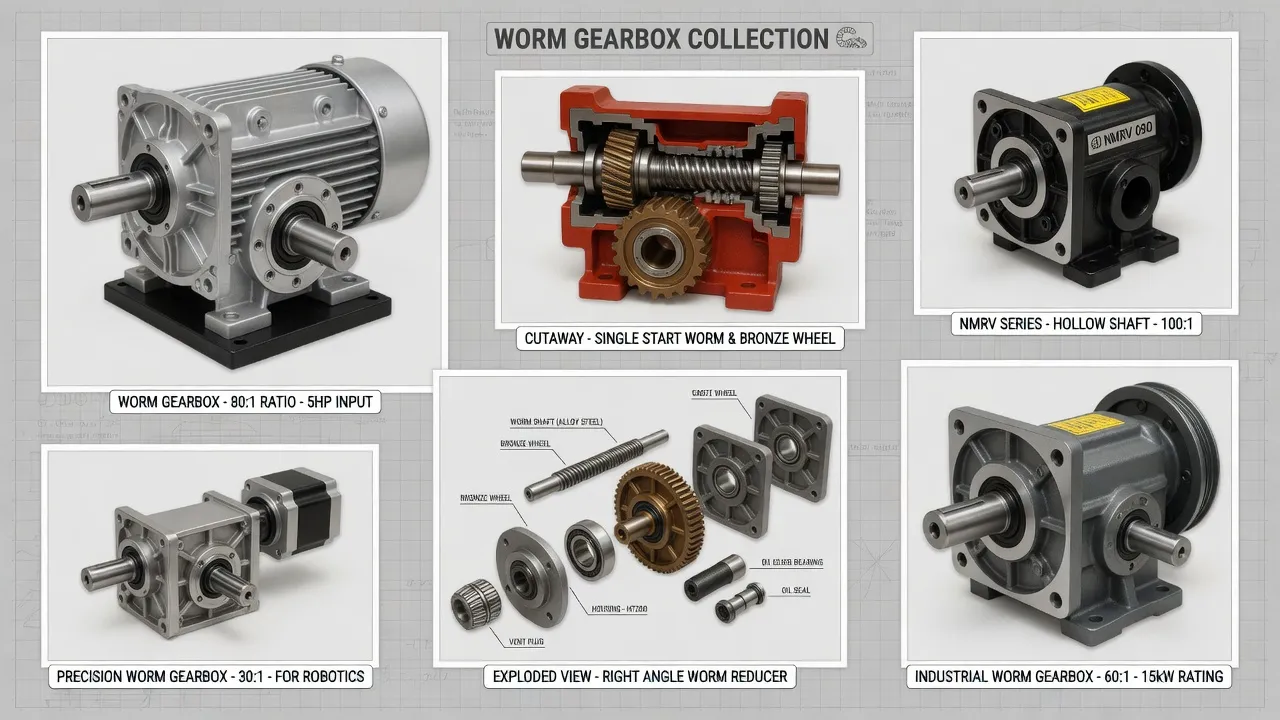
Selection Roadmap: Step-by-Step Workflow
The four-step procedure below covers high-temperature drive selection from initial requirements documentation through commissioning verification.
Document the Worst-Case Thermal Operating Window
Record the highest expected gearbox housing temperature under worst-case operating conditions (peak production, summer ambient, downstream of hot zone restart). Include the radiant heat source distance and any thermal shielding present. These parameters determine lubricant grade, sealing package, and any auxiliary cooling provisions needed. Insufficient thermal documentation here is the leading cause of premature lubricant oxidation failures.
Specify Synthetic PAG Lubricant from Day One
Order the HRV104 with synthetic polyalkylene glycol (PAG) lubricant fill at ISO VG 460 viscosity grade. PAG chemistry resists oxidation across continuous 120 °C operation with extreme-pressure additives that protect the bronze worm wheel from elevated-temperature wear. Field-converting from mineral oil later requires complete gearbox flushing because residual mineral oil is incompatible with PAG and produces gel formation that blocks lubrication channels.
Install Radiant Heat Shielding for Drives Near Hot Zones
Drives located within line-of-sight of glass tank crowns, lehr exit zones, or kiln walls need stainless steel or aluminum heat shields between the heat source and the gearbox housing. Air gap of 50 to 100 mm between shield and gearbox allows convective cooling to remove absorbed thermal load. Verify the shield does not block oil sight gauges, breather valves, or thermal sensor mounting points needed for routine inspection.
Install Output Bearing Temperature Monitoring
Mount a temperature sensor on the gearbox output bearing housing with output to the plant control system. This becomes the early-warning signal for lubricant degradation, bearing wear, or excessive ambient heating. Set alarm thresholds at 105 °C continuous and 120 °C peak for HRV104 with PAG fill. Trending the temperature data over months catches developing issues months before mechanical failure forces unplanned outage.
Spare Parts Integration for Continuous-Campaign Equipment
Glass and ceramic plant maintenance prioritizes replacement stock that supports planned cold-end shutdown rebuilds across multi-year campaigns. The worm wheel (centrifugal cast tin bronze ZCuSn10P1, ground tooth surfaces) is the higher-cycle wear component, with replacement intervals typically 30,000 to 40,000 hours under proper PAG lubrication and thermal management. Output shaft seals (high-temperature Viton with stainless garter springs) require preventive replacement at planned campaign-end shutdowns regardless of visible condition.
Bearings on the HRV104 frame use SKF or NSK premium-grade tapered roller bearings on the worm shaft for thrust capacity plus deep-groove ball bearings on the worm wheel shaft for radial support. L10 bearing fatigue life under elevated temperature operation typically reaches 40,000 hours — bearing replacement is performed concurrent with worm wheel service rather than as a separate maintenance event. Spare parts kits combining worm wheel, output and input shaft seals, bearing set, and high-temperature gasket kit provide complete rebuild capability suitable for cold-end shutdown maintenance schedules.
Cost & Sustainability: Total Ownership Across 12-Year Campaign Cycles
Glass production tank rebuilds typically run 8 to 12 years between major refractory replacements, while ceramic kiln rebuilds run 6 to 10 years. The table compares total cost of ownership across this campaign cycle for HRV104 specialized gearboxes against generic industrial alternatives.
| Cost Component | HRV104 Specialized | Generic Industrial |
|---|---|---|
| Initial unit price (FOB) | USD 580 – 880 | USD 380 – 520 |
| Replacement frequency | 1× over 12 years | 4 – 5× over 12 years |
| Lubricant interval | 6,000 hours / 24 months | 1,500 hours / 6 months |
| Unplanned outage risk | Low (PdM-based replacement) | High (mid-campaign failure) |
| 12-year cumulative TCO | ~ 1× installed cost | ~ 4.2× installed cost |
Sustainability and compliance documentation accompanies every HRV104 shipment. The housing carries CE marking per EU Machinery Directive 2006/42/EC and complies with RoHS Directive 2011/65/EU restricting hazardous substances. Manufacturing follows ISO 9001:2015 quality management procedures with full material traceability. Synthetic PAG lubricant fill produces 70 to 80 percent less waste oil over the equipment service life compared to mineral oil alternatives requiring quarterly changes — a substantial reduction in industrial waste oil disposal across multi-year campaign cycles. Worm gear tooth geometry follows DIN 3974 quality standards with worm wheel material per ISO 1338.
For broader product line context, the Akgnx engineering team manufactures the HRV104 alongside a family of high-temperature drive products including RR series heavy-duty metallurgy gearboxes for steel mill and refractory production applications. Production capacity supports OEM volumes for major glass plant equipment manufacturers and ceramic production line builders across European, Asian, and North American markets.
Customer Testimonials from Glass and Ceramic Plant Operators
“Our annealing lehr conveyor drives ran on generic gearboxes that failed every 22 to 28 months on average — always mid-campaign, always forcing emergency response from the on-call crew. We rebuilt the entire lehr drive train with HRV104 units during the 2024 cold-end shutdown. 14 months in, all drives operating to baseline specifications with synthetic PAG analysis showing minimal degradation. Eliminated mid-campaign outage events from this equipment class.”
— Maintenance Director, Float Glass Production Plant, Germany
“As a tunnel kiln equipment OEM serving the ceramic tile industry, we evaluated several drive suppliers for our roller drive position. HRV104 passed our 5,000-hour accelerated thermal cycling test at 110 °C sustained housing temperature with measured backlash growth under 0.08° — substantially better than competing alternatives. Akgnx held our annual production schedule across two consecutive years.”
— Chief Engineer, Ceramic Plant Equipment Manufacturer, Spain
“We sourced direct dimensional replacements for an installed fleet of 60 cullet conveyor drives across two glass plants. The HRV104 mounted to existing brackets without modification and reduced our annual gearbox replacement budget by 75 percent over 3 years. Documentation arrived complete with first shipment including CE Declaration, RoHS certificate, and material traceability records.”
— Plant Engineering Manager, Container Glass Group, Brazil
“Heat distortion of aluminum-housed gearboxes across multi-year campaigns produced visible bearing wear patterns we could not eliminate through any maintenance practice. Switching to cast iron HRV104 frames during our 2023 kiln rebuild cleared the recurring bearing replacement events and stabilized our campaign reliability metrics. The thermal mass advantage of cast iron showed up exactly as the engineering documentation predicted.”
— Operations Manager, Sanitary Ware Producer, China
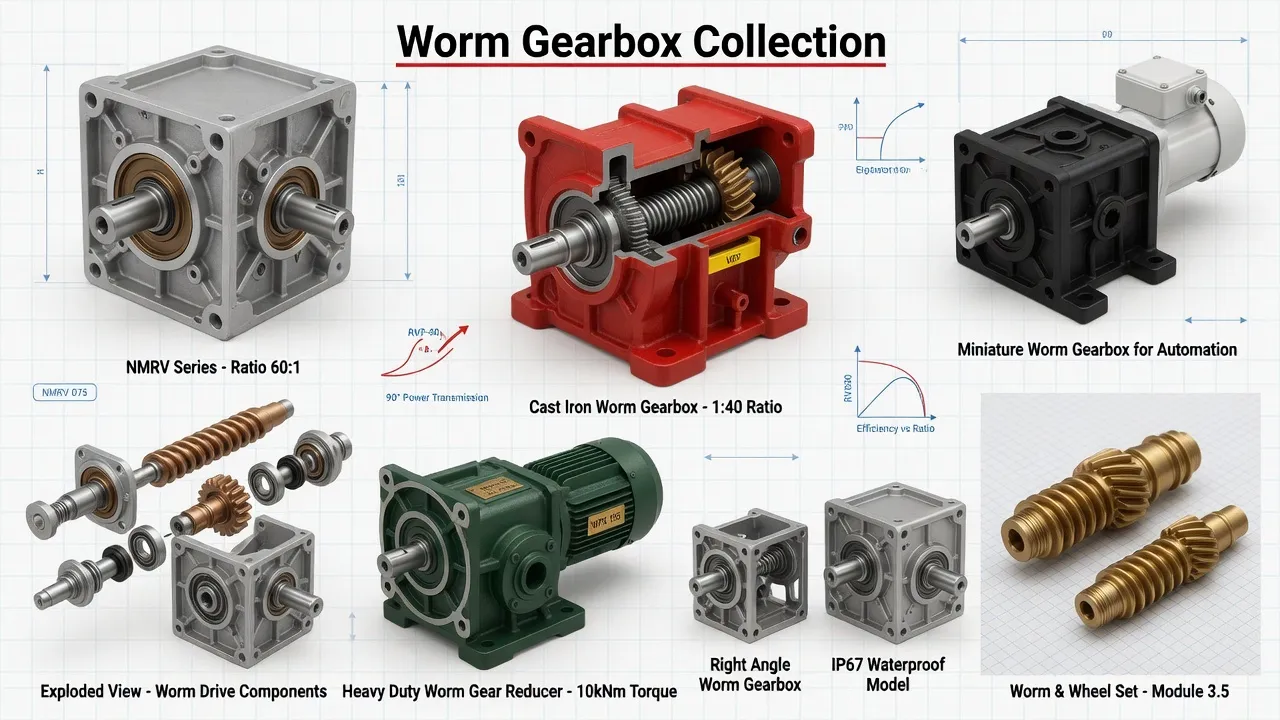
Recommended Drive: HRV104 Worm Gearbox for Glass and Ceramic
For glass and ceramic production equipment including annealing lehr conveyors, tunnel kiln roller drives, cullet and batch material handling, and finishing line conveyor positions, the HRV104 worm gearbox targets the high-temperature, dust-contaminated, continuous-duty service class with engineering features specifically chosen to address the failure modes that retire general industrial alternatives within campaign cycles.
Specifications include cast iron housing with two-coat heat-resistant epoxy coating tested across continuous 120 °C operation, synthetic polyalkylene glycol (PAG) lubricant fill at ISO VG 460 viscosity grade, high-temperature fluoroelastomer (Viton) double-lip seals with stainless garter springs and mechanical dust deflectors, and IP65 ingress protection. Reduction ratios from 7.5:1 through 100:1 cover lehr, kiln, and material handling applications. Output torque on the HRV104 frame reaches 850 Nm continuous with peak transient capacity to 1,800 Nm. CE marking, RoHS compliance, and ISO 9001 quality system certification ship with every unit.
Beyond the HRV104 frame, complete glass and ceramic plant drive packages typically pair the worm gearbox with IEC TEFC three-phase induction motors at appropriate frame size, heavy-series roller chain for any final reduction stages, and elastomeric shock-isolation couplings between motor and gearbox. The Akgnx engineering team supplies matched drive packages for plant equipment OEMs and provides aftermarket replacement units for installed equipment fleets across major glass and ceramic production regions globally.
Specifying Drives for High-Temperature Process Equipment?
Send equipment type, peak housing temperature, target output torque, and campaign duration. We supply HRV104 worm gearboxes engineered for glass and ceramic continuous-duty service.
Frequently Asked Questions
© Akgnx Co., Ltd · About Us · Contact Us · [email protected]