
A 5-axis machining center producing aerospace turbine blade roots, automotive transmission housings, or precision medical device components depends on an integrated rotary table that indexes the workpiece between machining operations with positioning accuracy specifications below 20 arcseconds and repeatability below 8 arcseconds — translating to feature-to-feature concentricity tolerances under 5 micrometers across workpieces 200-600 mm diameter. Across an 8-hour production shift, the rotary table accumulates 600-2,000 indexing events plus continuous coordinated motion under high-speed cutting tools generating 8-15 mm/s vibration RMS and cutting forces 800-3,500 N transmitted through the workpiece into the table mechanism. Drive backlash exceeding 30 arcseconds produces feature-to-feature errors that scrap aerospace and medical components costing USD 1,200-8,500 each in raw material plus accumulated machining time. Drive failure during a production run halts the entire 5-axis machining center — a USD 800,000-2,400,000 capital asset producing zero output while waiting for repair, with cumulative production loss easily reaching USD 4,000-9,000 per shift for high-mix precision manufacturing operations. Properly specified CNC rotary table worm gearbox equipment — engineered for sub-arcsecond accuracy, cutting force resistance, and sustained position holding under cutting loads — eliminates the unscheduled outage events and feature-error scrap that disrupt precision machining productivity.
This guide covers the unique drive duty profile of CNC rotary tables in 4-axis and 5-axis machining centers, addresses the cutting force loading environment and sub-arcsecond accuracy requirements, walks through selection criteria balancing positioning precision with production cycle life, and provides a maintenance roadmap suitable for precision machining operations managing tight tolerance commitments. Audience: machining center manufacturing engineers, precision component shop owners, machine tool builders, and consulting engineers specifying rotary axis equipment for 5-axis machining and turn-mill applications.
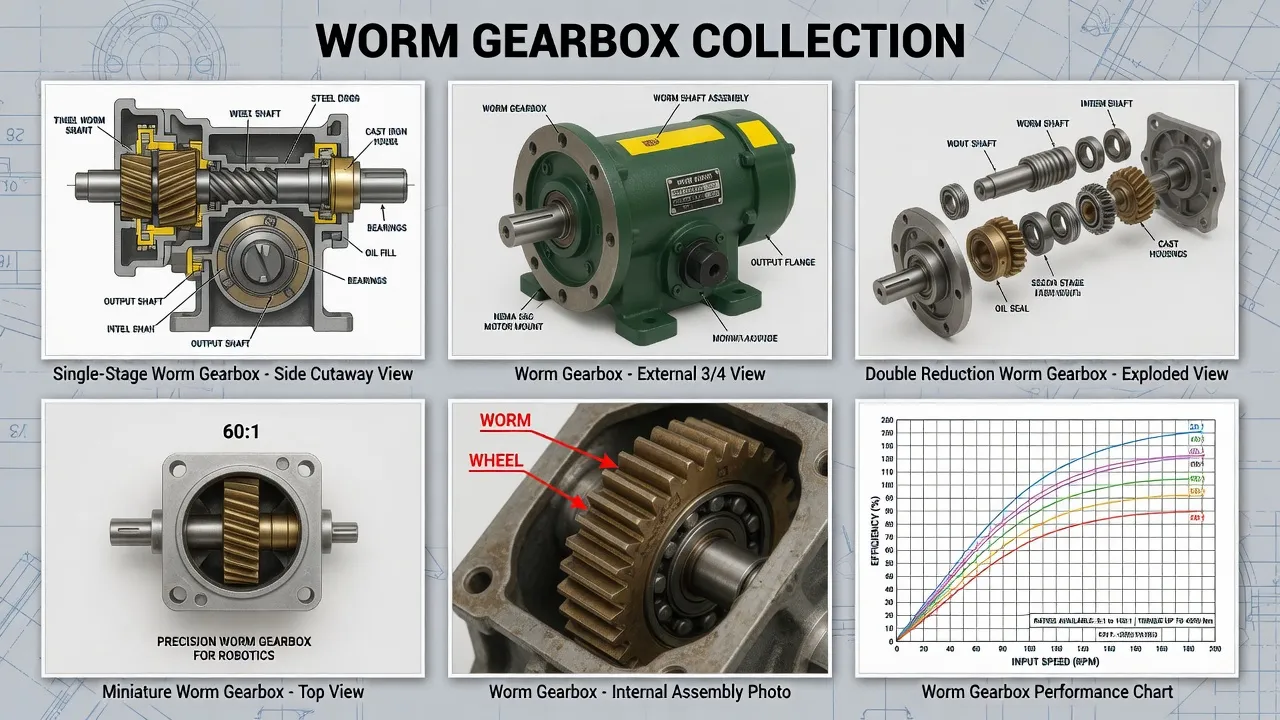
What Drive Demands Distinguish CNC Rotary Tables from General Service?
CNC rotary table drives combine four operational characteristics that distinguish them from any non-machining application. The first is the sub-arcsecond accuracy requirement: 5-axis machining of aerospace and medical components demands rotary axis positioning accuracy below 20 arcseconds with repeatability below 8 arcseconds — accuracy classes 100-1000× tighter than typical industrial positioning equipment. Drive backlash specifications below 6 arcseconds (1/30,000th degree) form the foundation of this accuracy budget, with the remaining error budget allocated to encoder resolution, servo loop performance, and mechanical tolerance stack-up. The second characteristic is the cutting force loading environment: cutting tools generate sustained forces 800-3,500 N transmitted through the workpiece into the rotary table mechanism, with cyclical force variations from intermittent cutting (milling) producing fatigue loading that ordinary positioning drives cannot withstand without progressive accuracy degradation.
The third characteristic is the position-holding requirement under cutting load: during contour milling operations, the rotary table must hold position absolutely under sustained cutting forces without measurable drift exceeding 2-4 arcseconds. Drive holding stiffness becomes a critical specification — typically 200-800 Nm per arcsecond at the table output flange. The fourth is the cutting fluid and chip exposure environment: rotary tables operate immersed in flood coolant flow with continuous chip flushing across all exposed surfaces. Drive housings face continuous coolant exposure with embedded steel and aluminum chips that challenge seal integrity and breather valve performance. The right precision rotary table gearbox selection addresses sub-arcsecond accuracy, cutting force resistance, holding stiffness, and coolant protection simultaneously per precision drive technical references.
How Do Precision Worm Drives Address CNC Rotary Table Failure Modes?
Precision-Ground Worm Geometry Achieves Sub-Arcsecond Backlash
Precision-ground worm and worm wheel geometry with selected tooth contact patterns delivers backlash specifications below 6 arcseconds — well within the sub-arcsecond accuracy budget required for 5-axis precision machining. The tooth grinding follows DIN 3974 quality grade Q5 (premium precision class) with worm helix angle and worm wheel tooth profile ground to micrometer-level dimensional control. Each worm and worm wheel pair undergoes individual factory matching to verify backlash specification before assembly, with serialized matching documentation accompanying each gearbox shipment.
Self-Locking Worm Geometry Holds Position Under Cutting Load
The self-locking worm gear geometry at high reduction ratios (typically 60:1 to 120:1) holds position absolutely under sustained cutting forces without dependence on servo loop position holding. The mechanical self-locking property maintains rotary table position during cutting operations even if servo power loss occurs, preventing the workpiece motion that would otherwise cause cutting tool damage and component scrap. Self-locking holding stiffness specifications reach 400-900 Nm per arcsecond at the output flange across the recommended product range, providing the holding rigidity needed for precision contour milling and grinding operations.
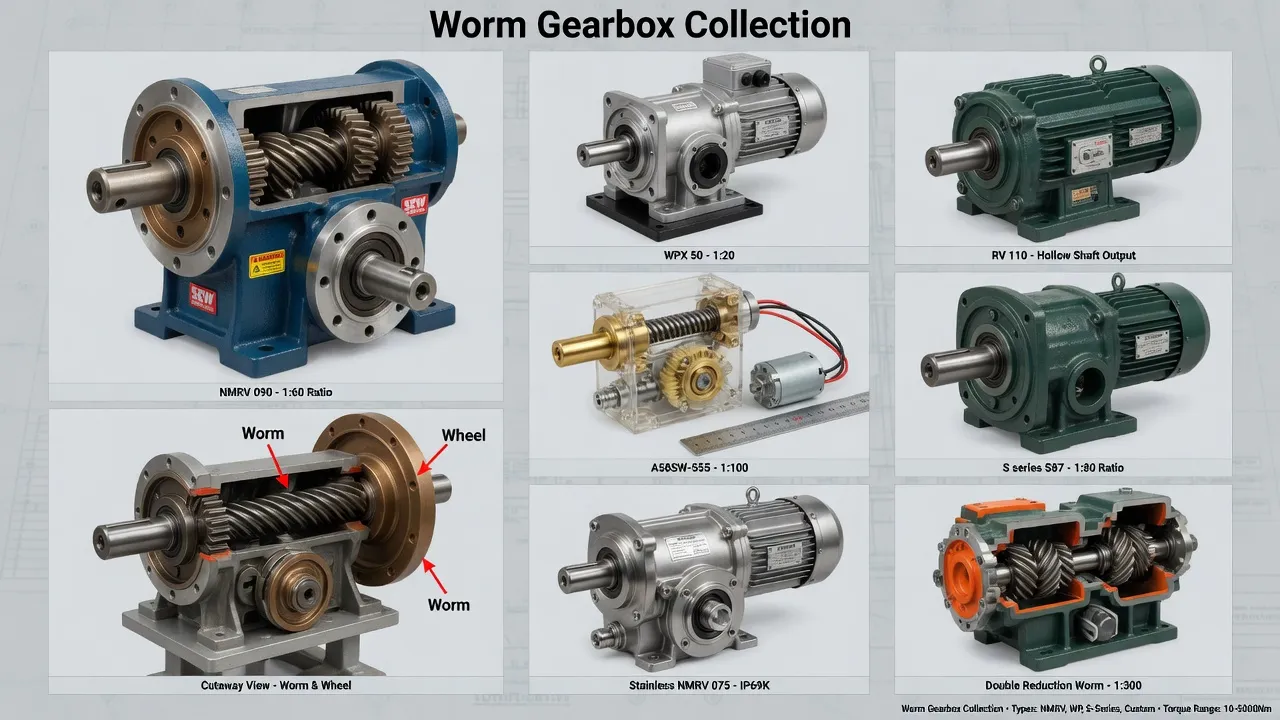
Technical Parameters: CNC Rotary Table Drive Specification Window
The table below summarizes specifications distinguishing CNC rotary table drives from generic industrial worm gearbox alternatives. Values reflect AGMA 6034-B92 worm gear power rating combined with machine tool industry conventions for precision machining service.
| Parameter | Rotary Table Spec | Generic Industrial |
|---|---|---|
| Indexing accuracy | ±15-20 arcseconds | ±0.5° (1,800 arcsec) |
| Backlash specification | Less than 6 arcseconds | 15-30 arcminutes |
| Reduction ratio | 60:1 – 120:1 | 5:1 – 100:1 |
| Tooth quality grade | DIN 3974 Q5 precision | DIN 3974 Q8 standard |
| Holding stiffness | 400-900 Nm/arcsec | 10-50 Nm/arcsec |
| Coolant resistance | IP67 flood coolant rated | IP54 standard |
| Service factor | 2.0 minimum cutting load | 1.0 – 1.25 typical |
| Output torque (rated) | 200 – 2,400 Nm | 200 – 4,000 Nm |
The single specification most often miscalculated on CNC rotary table projects is the holding stiffness under cutting load. Catalog torque ratings address steady-state torque transmission but rarely specify the holding stiffness — the angular displacement under sustained applied torque — that determines whether the rotary table maintains position accuracy during cutting operations. Holding stiffness specifications below 200 Nm per arcsecond produce table angular drift of 5-15 arcseconds under typical cutting forces, exceeding the accuracy budget for precision aerospace and medical component machining. Specify holding stiffness explicitly during the drive sizing process rather than assuming adequate stiffness from torque ratings alone.
Application Matrix: Where CNC Rotary Table Drives Operate
5-Axis Machining Center Rotary Tables
5-axis machining centers integrate rotary table mechanisms as the 4th and 5th axes (typically a tilting trunnion plus a rotational table) to enable complex contour machining of aerospace turbine components, medical device features, automotive transmission housings, and similar precision parts. Drive specifications include sub-arcsecond accuracy class, output torque 400-1,500 Nm depending on table diameter (typical 200-600 mm), and full coolant immersion protection. The 5-axis simultaneous machining capability requires coordinated motion control between the trunnion and table axes with matched servo response characteristics.
Horizontal Boring Mill Rotary Tables
Horizontal boring mills integrate large rotary tables (typical 1,000-2,500 mm diameter) for boring operations on heavy components — engine blocks, hydraulic pump housings, large valve bodies, and rotating machinery components. Drive specifications include heavy-duty torque capacity (output torque 1,200-2,400 Nm) reflecting the larger workpiece masses and cutting forces. The accuracy class often relaxes slightly compared to 5-axis machining centers (±25-40 arcsecond accuracy typical) but with elevated holding stiffness requirements due to the larger cutting forces in heavy boring operations.
Turn-Mill Center Rotary Axis Drives
Turn-mill centers integrate rotary axis drives for milling operations on turned components — supporting the C-axis rotation that combines with X, Y, Z linear axes to enable contour milling of off-axis features on shafts, hubs, and similar turned components. Drive specifications include sub-arcsecond accuracy class with output torque 200-800 Nm depending on the turn-mill spindle size (typical 6-inch through 12-inch lathe class). The axis drives integrate with main spindle drives to support coordinated turning and milling operations within single setup operations.
Inspection and Measuring Equipment Rotary Stages
Coordinate measuring machines (CMMs), gear measurement systems, and roundness/concentricity measuring equipment deploy rotary stages with similar precision requirements but typically reduced torque demands (output torque 50-300 Nm). The accuracy class often tightens further compared to machining applications (±5-10 arcsecond accuracy typical for premium measurement systems) — but with negligible cutting force loading. Reference precision worm gear specifications for measurement application-specific drive sizing.
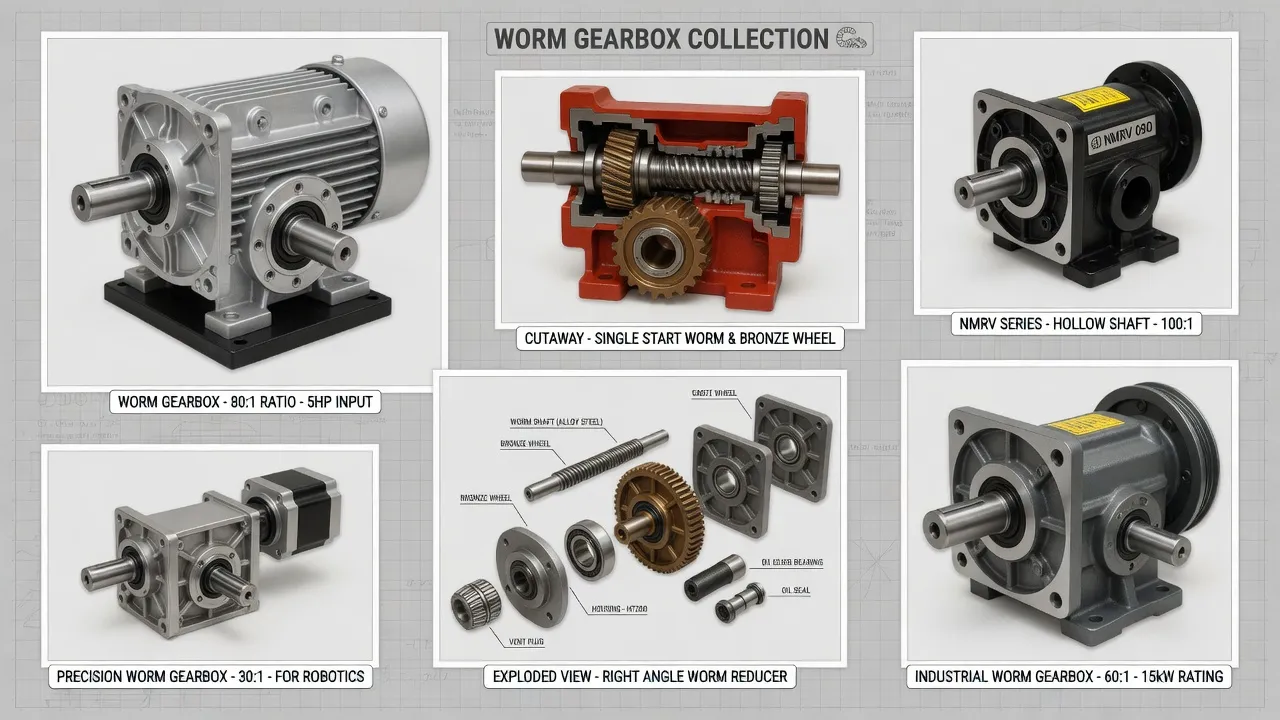
Selection Roadmap: Step-by-Step Workflow
The four-step procedure below covers CNC rotary table drive selection from initial requirements documentation through commissioning verification.
Calculate Cutting Torque and Holding Stiffness Requirements
Determine output torque from worst-case cutting forces (depth of cut, feed rate, tool engagement, material being machined) per the machining process specifications. Calculate holding stiffness requirement from the maximum allowable angular displacement under sustained cutting torque (typical 2-4 arcsecond drift budget under maximum cutting load). Document indexing acceleration requirements from the machining cycle program.
Specify Tooth Quality Grade and Backlash Class
Order DIN 3974 quality grade Q5 (premium precision class) for sub-arcsecond accuracy applications including aerospace and medical component machining. Specify backlash class below 6 arcseconds with factory-matched worm and worm wheel pairs documented through serialized matching certification. Verify reduction ratio matches the servo system characteristics — typical 60:1 to 120:1 ratios deliver appropriate output speeds (typically 1-30 RPM) for precision machining applications.
Verify Coolant Protection and Servo Compatibility
Confirm IP67 ingress protection rated for sustained flood coolant exposure typical of machining center service. Specify Viton fluoroelastomer seal materials rated for synthetic and water-based coolant compatibility plus elevated temperature operation. Verify servo motor flange compatibility with the machine tool servo system (typically IEC 72 frame standard with matched encoder communication protocol per machine tool builder specifications).
Document Acceptance Test Procedure and Calibration Schedule
Specify factory acceptance test procedure including measured backlash verification (below 6 arcseconds), holding stiffness verification under applied torque, and indexing accuracy verification at multiple positions across rotation range. Document field calibration schedule — typically annual verification using laser interferometer or autocollimator measurement, with corrective action triggered if measured accuracy degrades by more than 50 percent of specification.
Spare Parts Integration: Precision Machining Asset Management
Precision machining operations prioritize spare drive inventory matching the consequences of machining center outage on production schedules — typically every facility carries one complete spare drive matched to each rotary table configuration in the machine tool fleet. The precision-ground worm and worm wheel pair reaches 8,000+ operating hours under proper synthetic lubrication and cutting load protection — typically translating to 8-12 year service life under single-shift production patterns or 4-6 years under multi-shift operations.
Premium-grade SKF or NSK precision angular contact ball bearings throughout the drive handle the combined radial and thrust loads typical of rotary table service with L10 fatigue life exceeding 8,000 hours under rated load. The bearings undergo individual selection for matched preload to maintain rotational accuracy across the full service life. Viton fluoroelastomer seal lips with stainless garter springs maintain ingress protection across the flood coolant exposure period typical of machining center service environments.
Spare parts kits combining matched worm and worm wheel pair, complete bearing set, all shaft seals, gasket and o-ring kit, breather valve, and synthetic lubricant fill provide complete rebuild capability during scheduled machine tool maintenance windows. Akgnx Co., Ltd ships kits with serialized matching documentation for the worm-worm wheel pair, ensuring backlash specification reproducibility across rebuild cycles. All wear components ship from the same factory production runs to ensure dimensional consistency for precision rebuilds.

Cost & Sustainability: Total Ownership Across 10-Year Machine Life
Precision machining operations and machine tool builders evaluate rotary table drive investments across the machine tool economic life — typically 10 years matching depreciation schedules for major machine tool capital investments. The table compares total cost of ownership for precision-grade rotary table drives against generic industrial alternatives across this horizon.
| Cost Component | Precision-Grade VRV | Generic Industrial |
|---|---|---|
| Initial unit price (FOB) | USD 3,800 – 14,500 | USD 750 – 4,200 |
| Service life machining duty | 8-12 years single-shift | 2-3 years |
| Component scrap risk | Negligible | USD 1,200-8,500 per part |
| Machine downtime risk | Negligible | USD 4,000-9,000 per shift |
| Recalibration frequency | Annual standard | Quarterly required |
| 10-year cumulative TCO | ~ 1.6× installed cost | ~ 12× installed cost |
Sustainability and compliance documentation accompanies every precision-grade drive shipment. The housing carries CE marking per EU Machinery Directive 2006/42/EC and complies with RoHS Directive 2011/65/EU. Manufacturing follows ISO 9001:2015 quality management procedures with full material traceability from bronze worm wheel chemical composition through case-hardened worm shaft heat-treatment records. Worm gear tooth geometry follows DIN 3974 quality grade Q5 (premium precision class) with load capacity per AGMA 6034-B92 worm gear power rating methodology adjusted for rotary table cutting load service factor.
Synthetic polyalphaolefin (PAO) lubricant fills support 6,000-hour drain intervals (approximately 3 years of single-shift operation) producing significantly less waste oil compared to mineral oil alternatives requiring 1,500-hour change intervals. The 8-12 year service life eliminates 2-3 replacement cycles compared to generic industrial alternatives, substantially reducing the equipment lifecycle environmental footprint. Akgnx Co., Ltd manufactures precision-grade rotary table drives through a dedicated precision drive program serving machine tool builders, precision machining operations, and measurement equipment OEMs globally.
Customer Testimonials from Precision Machining Operations
“Our aerospace turbine component manufacturing facility operates 12 5-axis machining centers producing turbine blade roots and disc components. We standardized on VRV030 precision rotary table drives in 2021 after experiencing accuracy degradation on the original drives within 18-24 months of multi-shift production. Four years into the standardization, we’ve maintained ±18 arcsecond indexing accuracy across all 12 centers without recalibration events between annual scheduled inspections. The accuracy stability supports our AS9100 quality system certification commitments to our turbine engine OEM customers.”
— Manufacturing Engineering Director, Aerospace Component Manufacturer, USA Connecticut
“As a 5-axis machining center builder serving the European medical device manufacturing market, we evaluated multiple alternative rotary axis drive suppliers for our flagship machining product line. Akgnx VRV030 precision drives passed our sub-20 arcsecond accuracy verification including factory-matched worm-worm wheel backlash specification below 6 arcseconds. The serialized matching documentation supports our medical device manufacturer customers’ validation requirements for precision medical component machining applications.”
— Director of Engineering, Machine Tool Builder, Switzerland
“We retrofitted rotary table drives across 4 horizontal boring mills in our heavy machining shop after experiencing chronic accuracy issues affecting our hydraulic pump housing production tolerances. The VRV030 replacement drives mounted to existing rotary table mechanism interfaces with minor adapter plate fabrication. Three years into the retrofit program, we’ve eliminated the feature-error scrap that previously cost our shop approximately USD 280,000 annually across the affected machine tool fleet.”
— Production Manager, Heavy Machining Shop, USA Pennsylvania
“Our medical device contract manufacturing facility operates turn-mill centers producing surgical instrument components requiring sub-25 arcsecond positional accuracy across feature locations. The VRV030 precision drives we deployed across 8 turn-mill centers have completed approximately 1.2 million indexing cycles each over 3 years of multi-shift operation with zero accuracy degradation events. The reliability supports our medical device customer audit requirements and on-time delivery commitments.”
— Operations Director, Medical Device Contract Manufacturing, Germany

Recommended Drive: VRV030 Precision Worm Gearbox for Rotary Table Service
For 5-axis machining center rotary tables, horizontal boring mill rotary tables, turn-mill center rotary axis drives, and inspection equipment rotary stages, the VRV030 Precision Worm Gearbox in CNC rotary table specification targets the 8-12-year-service, sub-arcsecond-accuracy, cutting-load service class with engineering features specifically chosen to address the failure modes that retire generic gearbox alternatives within 2-3 years of precision machining service.
Specifications include precision-machined cast iron housing rated for sustained flood coolant exposure, factory-matched precision-ground worm and worm wheel pair (DIN 3974 quality grade Q5 premium precision class) with serialized matching documentation, centrifugally cast tin bronze ZCuSn10P1 worm wheel per ISO 1338 meshing with case-hardened 20CrMnTi steel worm shaft hardened to HRC 58-62 surface, premium-grade angular contact ball bearings rated for 8,000-hour L10 fatigue life under combined radial and thrust loading, fluoroelastomer (Viton) double-lip seals with stainless garter springs at all shaft penetrations rated for synthetic and water-based coolant compatibility, IP67 ingress protection plus splash-resistant breather configuration designed for flood coolant exposure, synthetic polyalphaolefin (PAO) lubricant fill rated for 6,000-hour drain intervals, servo motor mounting flange per IEC 72 standard with matched encoder communication protocol options, and stainless steel A2 mounting hardware throughout. Reduction ratios from 60:1 through 120:1 deliver appropriate output speeds (1-30 RPM typical) for precision machining applications. Output torque ratings reach 2,400 Nm continuous with backlash specification below 6 arcseconds factory-verified per unit. CE marking, RoHS compliance, and ISO 9001:2015 quality system certification ship with every unit.
Beyond the VRV030 frame, complete CNC rotary table drive packages typically pair the gearbox with high-resolution servo motors with matched absolute encoder feedback, shielded encoder cables rated for machine tool electromagnetic environment, electromagnetic brake assemblies for absolute position holding during cutting operations, and full grade 8.8 stainless steel mounting hardware throughout. Akgnx Co., Ltd supplies matched drive packages for machine tool builders and provides aftermarket replacement units for installed precision machining centers across major machine tool markets globally.
Specifying Drives for CNC Rotary Tables?
Send rotary table diameter, cutting force specifications, accuracy requirements, and existing drive specifications. We supply VRV030 precision drives engineered for sub-arcsecond accuracy with backlash below 6 arcseconds and IP67 flood coolant protection.
Frequently Asked Questions
© Akgnx Co., Ltd · About Us · Contact Us · [email protected]