
A theatrical fly system suspends 600 kg of lighting battens directly above performers and stage technicians during every rehearsal, technical run, and live performance — sometimes for 8 hours per day, 6 days per week, across 40-week production seasons. Drive equipment serving these fly systems must hold absolutely with zero perceptible drift, must operate below the audible threshold during quiet performance scenes, and must maintain fail-safe behavior regardless of power loss, control system fault, or motor failure. The acoustic constraint alone disqualifies most general industrial drive technologies — a stage drive that radiates 70 dB during a quiet dramatic scene is unusable regardless of any other specification. Properly engineered worm gearbox theatrical drives address all three demands simultaneously, with self-locking gear geometry providing the fail-safe property, ground worm surfaces delivering sub-58 dB acoustic emission, and proper bearing specifications supporting the multi-decade service life that theater capital cycles assume.
This guide covers the unique drive constraints of theatrical rigging applications, addresses the acoustic emission and fail-safe requirements that distinguish stage drives from any industrial alternative, walks through selection criteria per AGMA 6034-B92 worm gear power rating methodology adapted for performance venue service, and provides a complete maintenance roadmap suitable for the limited venue access windows typical of working theaters. Audience: theatrical rigging system OEM engineers, performance venue technical directors, and procurement specialists sourcing replacement drives for installed fly systems and stage lift equipment.
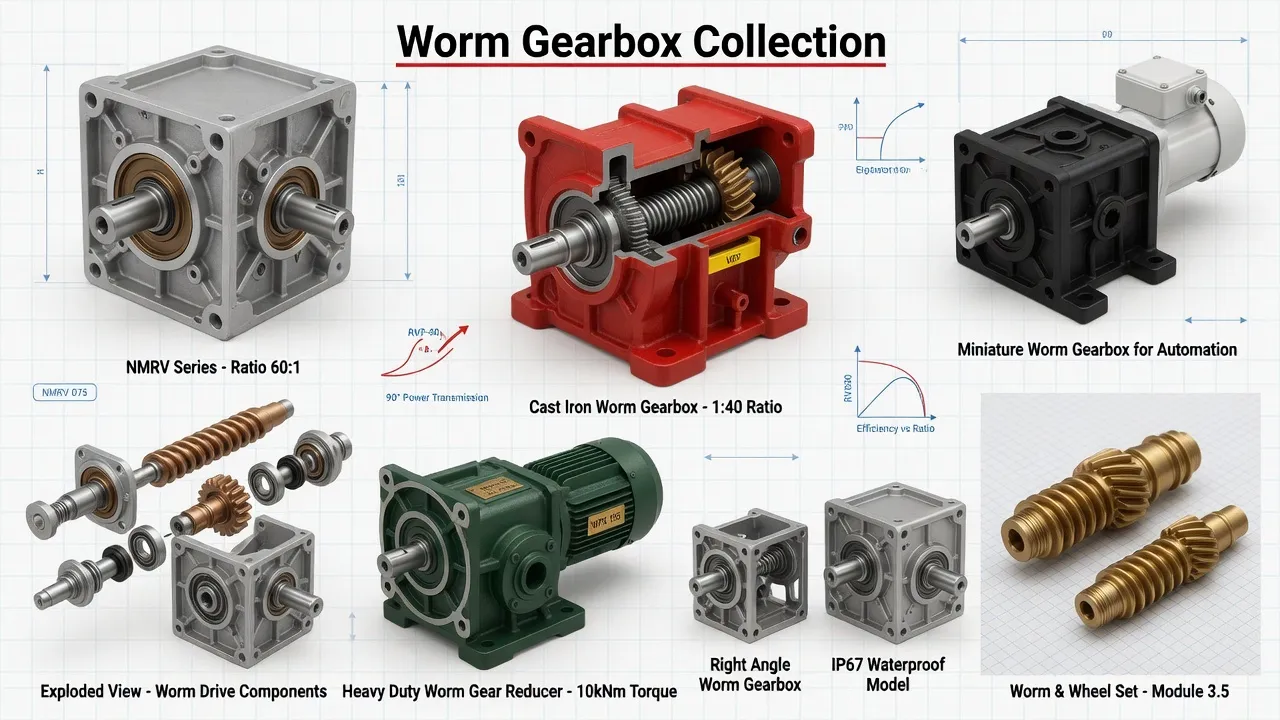
What Drive Demands Distinguish Theatrical Rigging from Industrial Hoisting?
Theatrical rigging drive specifications combine four constraints rare in any industrial application. The first is the audience proximity factor: drive equipment is typically positioned within 15 to 25 meters of seated audience members during performances, with no acoustic barrier between drive and audience beyond the open stage volume itself. Drive emission above approximately 50 dB at the audience position becomes audible as a distracting hum during quiet scenes, with venue acoustic design typically targeting 30 dB at audience seating during performance conditions. The second is the absolute fail-safe requirement: drive equipment must hold suspended loads with zero drift during multi-hour idle periods between performance scenes, regardless of power loss or control fault, because dropping a lighting batten or scenic element during performance would cause direct injury to performers below.
The third constraint is the venue access limitation. Theaters operate on rigid daily schedules with rehearsals during the day and performances in the evening, leaving narrow maintenance access windows typically 6 to 8 hours overnight. Drive equipment must support reliable operation across multi-decade service life with minimal maintenance intervention, because each unscheduled service event compromises the venue performance schedule. The fourth is the regulatory environment: most jurisdictions apply theater safety standards that mandate specific drive design features including dynamic braking redundancy, fail-safe behavior during power loss, and overspeed protection beyond what general industrial codes require. The right theatrical worm gearbox selection addresses acoustic emission, fail-safe holding, low-maintenance reliability, and theater-specific compliance simultaneously — these specifications work together as a system rather than independently.
How Do Worm Gearboxes Achieve Theater-Grade Acoustic Performance?
Ground Worm Surfaces vs Standard Milled Worms
Acoustic emission of a worm gearbox depends primarily on the worm thread surface finish quality. Standard milled worm surfaces meeting DIN 3974 quality grade Q9 produce gear meshing acoustic levels of 70 to 78 dB at one meter — completely incompatible with theatrical service. Ground and lapped worm surfaces meeting DIN 3974 quality grade Q7 reduce this to 56 to 60 dB at one meter, with quality grade Q6 (precision ground and selectively finished) reducing further to 52 to 55 dB at one meter. The acoustic difference results from elimination of the surface texture irregularities that produce high-frequency tooth meshing pulses, leaving smooth meshing engagement that propagates lower acoustic energy through the housing into surrounding airspace.
Acoustic Isolation and Drive Position Matter
Even with ground worm finishes, theatrical drive installation requires acoustic isolation hardware to achieve venue performance targets. Elastomeric vibration mounts beneath the gearbox housing decouple drive vibration from the surrounding building structure, preventing structure-borne acoustic transmission to audience seating. Drive position above the stage volume rather than at floor level adds path-length attenuation between drive and audience, reducing direct airborne acoustic transmission. Combined with ground worm finish and proper acoustic isolation, theatrical drive installations consistently achieve 30 dB or better at audience seating during full-rated drive operation — well below the threshold of perception during performance conditions per worm gearbox acoustic technical references.
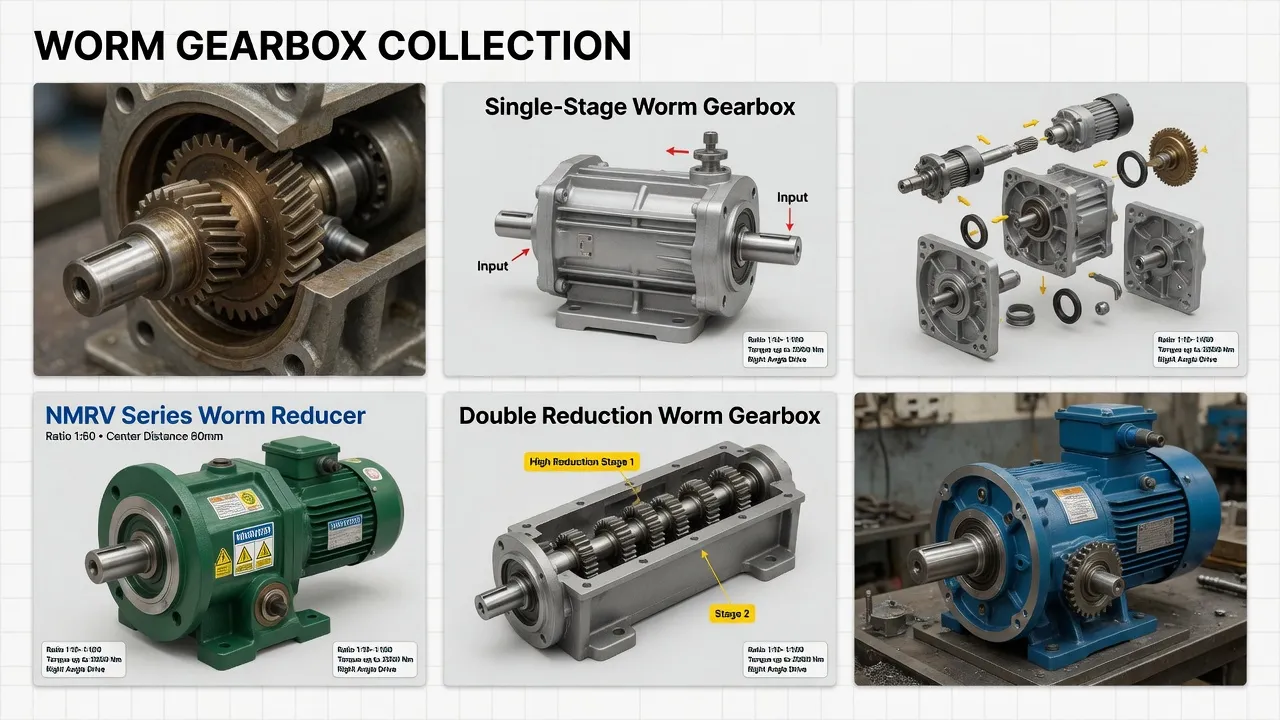
Technical Parameters: Theatrical Drive Specification Window
The table below summarizes specifications distinguishing theatrical-grade worm gearbox configurations from generic industrial alternatives. Values reflect AGMA 6034-B92 worm gear power rating combined with theatrical industry conventions for acoustic emission and fail-safe reliability.
| Parameter | Theatrical Specification | Generic Industrial |
|---|---|---|
| Worm finish grade | Ground / lapped Q6-Q7 (DIN 3974) | Milled Q9 typical |
| Acoustic emission (1 m) | ≤ 58 dB at full-rated load | 70 – 78 dB |
| Reduction ratio range | 50:1 to 100:1 (fail-safe self-lock) | 5:1 to 100:1 |
| Static self-locking torque | 80 – 950 Nm at 60:1+ | 25 – 280 Nm typical |
| L10 bearing life | ≥ 80,000 hours rated load | 25,000 hours typical |
| Service factor | 2.5 minimum, fail-safe rated | 1.0 – 1.25 typical |
| Operating temperature | +10 °C to +50 °C (venue conditioned) | -10 °C to +60 °C |
| Compliance | CE, RoHS, ISO 9001:2015 | CE only |
The single specification most often miscalculated on theatrical projects is the bearing fatigue life rating. Standard industrial bearings rated 25,000 hours under continuous duty deliver only 6 to 8 years in theater service if the venue runs typical 40-week seasons with rigging cycles during rehearsals and performances daily. Theater capital planning typically expects 20+ years of service from rigging drive equipment matching venue renovation cycles. Premium-grade bearings rated 80,000+ hours under L10 duty provide this service horizon. The cost premium for upgraded bearings runs less than 8 percent of total drive cost and pays back many times over through eliminated mid-season service interventions.
Application Matrix: Where Theatrical Drives Operate
Counterweight Fly System Drives
Traditional counterweight fly systems use mechanical counterweight balance to support scenic flats, lighting battens, and curtain bars, with a powered drive providing positioning and stage cueing motion. Drive duty involves moderate rated torque (typically 200 to 800 Nm depending on batten weight and counterweight mass) but stringent fail-safe requirements because operator-controlled positioning depends on drive holding capability between cue events. Output speeds range 0.2 to 0.8 m/s at the batten, with controlled acceleration profiles to prevent scenic element swing. Self-locking holds positioned battens absolutely during multi-hour scene transitions without continuous motor torque.
Direct-Drive Motorized Fly Systems
Modern theaters increasingly deploy direct-drive motorized fly systems eliminating the counterweight infrastructure. Drive equipment must lift the full batten weight (typically 200 to 1,500 kg) without counterweight assistance, requiring substantially larger drive frame sizes and reduction ratios. Output torques run 800 to 4,500 Nm depending on lift capacity. Fail-safe self-locking is even more critical than counterweight systems because no counterweight balance protects against drive failure modes. Acoustic emission requirements remain the same — sub-58 dB at one meter regardless of frame size.
Stage Lift and Orchestra Pit Mechanisms
Stage lifts and orchestra pit lifts elevate large platform sections between stage and basement positions, supporting scenic transitions and orchestra accommodation. The drive duty handles much heavier loads than fly systems — typical orchestra pit lifts handle 2,000 to 8,000 kg platform weight plus performers and equipment. Multiple worm gearboxes drive synchronized lift screw or rack mechanisms across the platform corners, with electronic synchronization maintaining platform level throughout the lift cycle. Output torques run 2,500 to 12,000 Nm per drive. Fail-safe self-locking holds the platform at any position without external brake hardware.
Scenic Lift and Track Drive Mechanisms
Custom scenic effects depend on motorized lifts and tracks operating during performance — flying figures, vehicle effects, mechanical scenic elements with controlled motion paths. The drive duty varies enormously with the scenic design but consistently demands fail-safe behavior, low acoustic emission, and smooth controlled motion. Output torques range 100 to 2,500 Nm depending on the scenic load. Custom drive packages typically combine standard worm gearbox frames with venue-specific mounting hardware and integrated control system interfaces matching the show control infrastructure deployed in modern performance venues.
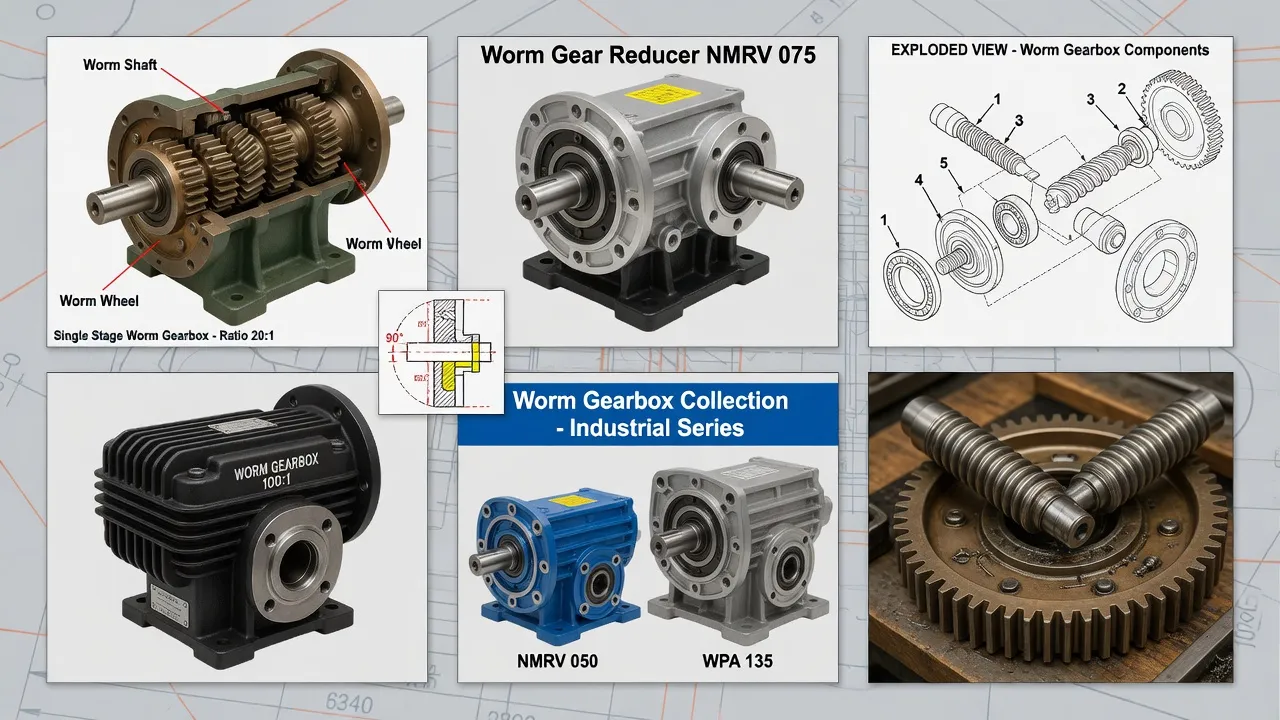
Selection Roadmap: Step-by-Step Workflow
The four-step procedure below covers theatrical drive selection from initial requirements documentation through commissioning verification.
1
Document Venue Acoustic Target at Audience Position
Record the acoustic emission target at the audience seating position during performance conditions, the venue acoustic isolation provisions between drive equipment and audience volume, and any local theater safety code requirements affecting drive specifications. Different venue types apply different acoustic standards — opera houses typically demand 25 dB at audience seating, while general-purpose theaters may accept 35 dB. Match the gearbox specification to the most demanding venue requirement plus margin.
2
Specify Ground Worm Finish Q6 or Q7 from Day One
Order the gearbox with ground and lapped worm shaft option meeting DIN 3974 quality grade Q7 minimum, with Q6 for opera house and concert hall applications. The acoustic difference between Q6/Q7 ground and Q9 milled worm finishes determines whether the installation meets venue compliance — and field-converting after installation is not practical because worm regrinding requires complete gearbox disassembly. Specify the surface finish requirement explicitly on procurement documentation.
3
Verify 80,000+ Hour L10 Bearing Life Rating
Confirm the bearing rating supports 80,000+ hours under L10 duty to match the multi-decade theater capital cycle. Standard industrial bearings rated 25,000 hours deliver only 6 to 8 years in theater service before fatigue spalling forces gearbox replacement. Premium-grade SKF or NSK bearings provide the upgraded fatigue life that theatrical service expects. The cost premium is small relative to mid-season service intervention consequences.
4
Document Baseline Acoustic Signature During Commissioning
Record acoustic emission and vibration spectrum at each gearbox during commissioning with the rigging operating at typical performance speed under representative load. These baseline signatures become the reference for predictive maintenance throughout the gearbox service life. Drift from baseline by 3 to 5 dB triggers inspection — most theaters catch developing issues 6 to 12 months before mechanical failure forces unscheduled outage during a production season.
Spare Parts Integration: Theater Maintenance Within Limited Access Windows
Theater maintenance teams prioritize replacement stock that supports rapid turnaround during the narrow overnight access windows between rehearsals and performances. The worm shaft, machined from 20CrMnTi case-hardened steel with ground and polished thread surfaces hardened to HRC 58-62 per DIN 3974 quality grade Q7, reaches 50,000+ operating hours under proper lubrication and theater-conditioned environment service. Worm shaft replacement is needed only at major rebuild events typically scheduled during multi-week venue dark periods between production seasons.
The worm wheel, centrifugally cast from premium tin bronze ZCuSn10P1 per ISO 1338 with ground tooth surfaces, is the higher-cycle wear component — replacement intervals run 35,000 to 50,000 hours depending on rigging cycle frequency. Premium-grade SKF or NSK bearings deliver L10 fatigue life of 80,000+ hours under rated load matching theatrical service expectations. Output and input shaft seals (Viton with stainless garter springs) require preventive replacement at 6-year intervals, performed during scheduled venue dark periods to avoid disrupting performance schedules. Reference bronze worm wheel material specifications for detailed wheel selection guidance.
Spare parts kits combining worm shaft, worm wheel, complete bearing set, all shaft seals, gasket kit, and breather valve provide complete rebuild capability within a single overnight maintenance window. Akgnx Co., Ltd ships kits packaged for typical theater technical department inventory practices, with all wear components sourced from the same factory production runs to ensure dimensional consistency across the rebuild cycle.

Cost & Sustainability: Total Ownership Across 20-Year Theater Service
Performance venue capital planning evaluates rigging investments across 20-year horizons matching typical venue renovation cycles. The table compares total cost of ownership for theater-grade specialized worm gearboxes against generic industrial alternatives across this horizon.
| Cost Component | Theater-Grade MRV | Generic Industrial |
|---|---|---|
| Initial unit price (FOB) | USD 680 – 2,800 | USD 380 – 1,400 |
| Replacement frequency | 1× over 20 years | 3 – 4× over 20 years |
| Acoustic compliance margin | 8 – 12 dB below threshold | Exceeds venue threshold |
| Mid-season service risk | Low (predictive maintenance) | High (mid-show failure) |
| Lubricant interval | 10,000 hours / 36 months | 2,000 hours / 8 months |
| 20-year cumulative TCO | ~ 1× installed cost | ~ 3.6× installed cost |
Sustainability and compliance documentation accompanies every theater-grade MRV gearbox shipment. The housing carries CE marking per EU Machinery Directive 2006/42/EC and complies with RoHS Directive 2011/65/EU. Manufacturing follows ISO 9001:2015 quality management procedures with full material traceability. Worm gear tooth geometry follows DIN 3974 quality grade Q6 or Q7 with load capacity per AGMA 6034-B92 worm gear power rating methodology adapted for theatrical fail-safe service factor. For applicable theatrical safety standards including ANSI E1.6-2012 (rigging system safety) and BS 7905 (suspension equipment design), Akgnx engineering provides documentation supporting venue compliance review processes.
Synthetic polyalphaolefin (PAO) lubricant fill produces 75 to 85 percent less waste oil over the 20-year service life compared to mineral oil alternatives — a substantial reduction in industrial waste oil disposal across theater facility operations. Akgnx Co., Ltd manufactures theater-grade worm gearboxes through a dedicated quiet-running drive program serving theatrical rigging system OEMs and performance venue technical departments across European, North American, and Asian theater markets.
Customer Testimonials from Performance Venue Operations
“Our 1,800-seat opera house renovation required replacing the original 1980s fly system with motorized direct-drive equipment meeting current acoustic standards. We standardized on theater-grade MRV gearboxes with Q6 ground worm finish across all 42 batten positions. Measured acoustic emission at audience seating ran 22 dB during full-rated drive operation — substantially below our 28 dB compliance threshold. Production directors reported zero acoustic complaints across the first season.”
— Technical Director, Opera House Performance Venue, Austria
“As a theatrical rigging system OEM, we evaluated five alternative gearbox suppliers for our standard motorized fly system package. MRV passed our 50,000-cycle accelerated life test with measured acoustic emission stable within 1.2 dB of baseline at test completion. Akgnx held our annual production schedule across two consecutive years for major performance venue project deliveries with consistent batch-to-batch quality.”
— Director of Engineering, Theatrical Rigging OEM, Germany
“We sourced direct dimensional replacements for an installed fleet of 28 fly system drives during a venue renovation closure. The MRV mounted to existing brackets without modification and supported our updated theater safety review documentation requirements with documented self-locking specifications. All 28 drives commissioned successfully within the 6-week renovation window.”
— Head of Stage Operations, Concert Hall Venue, United Kingdom
“Orchestra pit lift drives at our regional performing arts center handle 4,500 kg platform weight across 4 synchronized drive positions. The original drive packages produced perceptible drift during multi-hour orchestra positioning between performances. Theater-grade MRV replacement eliminated the drift entirely through documented self-locking and reduced our quarterly maintenance time by 60 percent.”
— Facilities Manager, Performing Arts Center, Canada
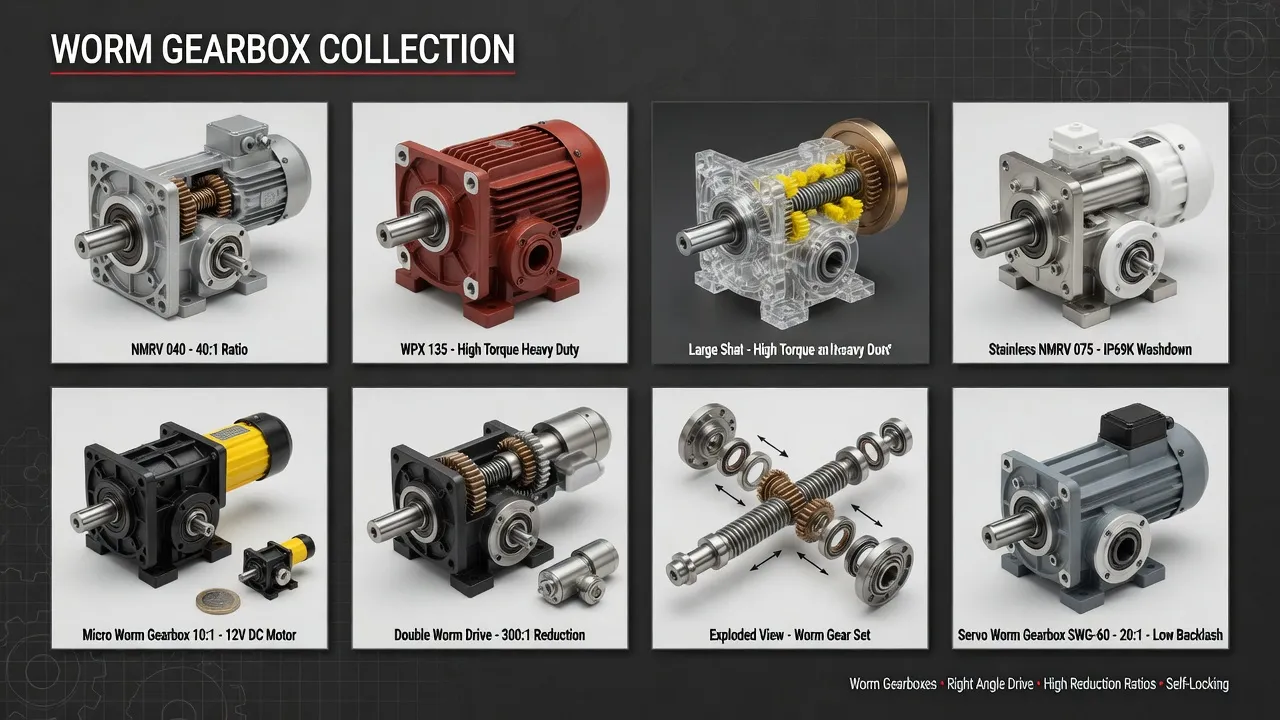
Recommended Drive: MRV NMRV Standard for Theatrical Service
For theatrical rigging applications including counterweight fly systems, motorized direct-drive fly systems, stage lifts, orchestra pit mechanisms, and scenic lift drives, the MRV NMRV Standard Worm Gearbox Series with theatrical-grade ground worm option targets the silent-running, fail-safe service class with engineering features specifically chosen to meet performance venue acoustic and reliability demands.
Theatrical specifications include cast iron housing with damped acoustic profile, ground and lapped worm shaft surfaces meeting DIN 3974 quality grade Q6 or Q7 for sub-58 dB acoustic emission, fluoroelastomer (Viton) double-lip seals with stainless garter springs, and IP65 ingress protection. Reduction ratios from 50:1 through 100:1 maintain reliable fail-safe self-locking across all theatrical duty profiles. Output torque on the MRV110 frame reaches 2,400 Nm continuous with self-locking holding torque to 480 Nm at 80:1 reduction. CE marking, RoHS compliance, and ISO 9001:2015 quality system certification ship with every unit, along with documentation supporting ANSI E1.6 and BS 7905 compliance review.
Beyond the MRV frame, complete theatrical drive packages typically pair the worm gearbox with low-inertia servo or vector-controlled induction motors at appropriate frame size, electromagnetic spring-applied brakes for redundant fail-safe operation, elastomeric vibration isolation mounts, and integrated control system interfaces matching modern show control infrastructure. Akgnx Co., Ltd supplies matched drive packages for theatrical rigging system OEMs and provides aftermarket replacement units for installed venue equipment across major performance venue markets globally.
Specifying Drives for Theatrical Rigging?
Send venue acoustic target, batten or lift weight, target output speed, and venue compliance standards. We supply theater-grade MRV worm gearboxes with ground worm finish engineered for silent fail-safe stage service.
Frequently Asked Questions
© Akgnx Co., Ltd · About Us · Contact Us · [email protected]