
A 400-meter center pivot irrigation system covering 50 hectares of corn cropland depends on roughly 8 wheel drive units distributed across the spans, each carrying a portion of the structural load while pulling the irrigation system in a slow rotational track around the pivot point. Each wheel drive must operate under continuous-duty conditions across 12 to 16 hour irrigation cycles for 4 to 6 months per growing season, must survive sub-zero winter storage exposure with no protective housing, and must continue running through field conditions including dust storms, mud, livestock impact damage, and the chemistry of fertigation solutions injected during fertilizer application. Standard cast iron wheel drives corrode within 3 to 5 growing seasons under this duty profile, with the failure typically appearing as bearing seizure during early-season startup events when the unit has been static across the winter — exactly the moment when irrigation system availability is most critical to crop yield. Properly specified center pivot wheel drive worm gearbox equipment — built for the unique combination of continuous-duty agriculture service, outdoor weather exposure, and seasonal operational cycles — extends service life to 12+ growing seasons while maintaining the reliability that crop yield economics demand.
This guide covers the unique drive duty profile of center pivot irrigation wheel drives, addresses the outdoor agricultural exposure environment typical of cropland installations, walks through selection criteria balancing torque capacity with seasonal storage tolerance, and provides a maintenance roadmap suitable for the limited service access windows of active growing season schedules. Audience: irrigation system OEM engineers, large-acreage farm operations managers, and procurement specialists sourcing replacement drives for installed center pivot equipment.
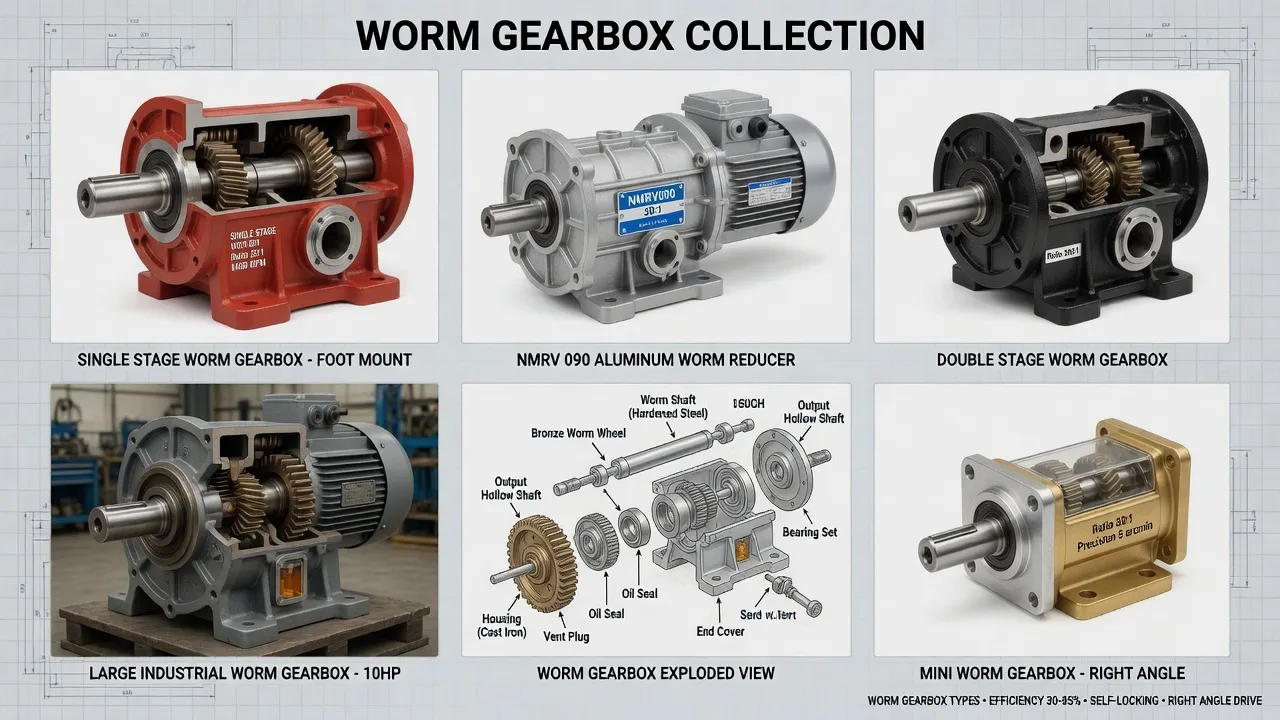
What Drive Demands Distinguish Center Pivot Wheels from General Industrial Service?
Center pivot irrigation wheel drives combine four operational characteristics rare in any non-agricultural application. The first is the seasonal duty cycle: irrigation systems run continuously across 4 to 6 months of the growing season then sit static through 6 to 8 months of winter storage with no operation. This start-stop annual cycle creates lubrication challenges that no continuous-duty industrial drive faces — the lubricant film breaks down during the static storage period, water condensation accumulates inside the housing through thermal cycling, and any internal corrosion that begins during storage compromises the early-season startup reliability that determines whether the drive survives into productive service. The second characteristic is the structural load profile: each wheel drive supports a portion of the irrigation system mass (typically 8 to 25 tonnes total system weight distributed across 6 to 12 wheel positions) plus the pulling force required to move the system in a controlled rotational track across cropland surfaces of varying soil firmness.
The third characteristic is the outdoor field exposure: wheel drives operate uncovered in cropland environments with dust deposition during dry conditions, mud immersion during wet spring conditions, ice and snow exposure during winter storage, livestock contact damage on grazing land applications, and ultraviolet degradation across multi-decade equipment service expectations. The fourth is the chemistry of the irrigation water and fertigation solutions that periodically wet the drive equipment — agricultural water often contains dissolved iron, manganese, and silica that produce hard mineral deposits on housing surfaces, while fertigation injection adds chemical aggressiveness from urea-based fertilizers, ammonia, and pH-adjusted solutions during application cycles. The right center pivot worm gearbox selection addresses continuous duty, structural load, outdoor exposure, and chemical resistance simultaneously per irrigation worm gearbox technical guides.
How Do Worm Gearboxes Address Center Pivot Wheel Drive Failure Modes?
Self-Locking Holds Wheels During Power Interruptions
Center pivot irrigation systems experience power interruptions from various causes including utility outages, control system events, and automatic shutdowns triggered by safety systems. Drive equipment must hold the wheel position absolutely during these power loss events to prevent the system from drifting on slopes, sliding into low spots during rain events, or rolling against adjacent equipment during wind events. Self-locking worm gearboxes at reduction ratios above 40:1 hold the wheel drive position passively without external brake hardware, maintaining system position regardless of how long the power interruption lasts. The static self-locking activates whenever the worm thread lead angle remains below the static friction angle of the bronze-on-steel meshing surfaces — a property of the gear geometry rather than any active mechanism that could fail.
High-Ratio Reduction Matches Wheel Drive Speed Requirements
Center pivot wheel drives operate at very low rotational speeds (typically 0.2 to 2 RPM at the wheel) with high torque requirements matching the structural load and pulling force needs. Worm gearboxes at single-stage reduction ratios from 40:1 to 100:1 efficiently handle this speed-torque conversion from typical 1,500 RPM induction motors, eliminating the need for multi-stage helical reduction trains that introduce additional bearing surfaces, additional sealing requirements, and additional failure modes. The single-stage worm reduction also provides the inherent self-locking property in the same physical envelope as the speed reduction function.
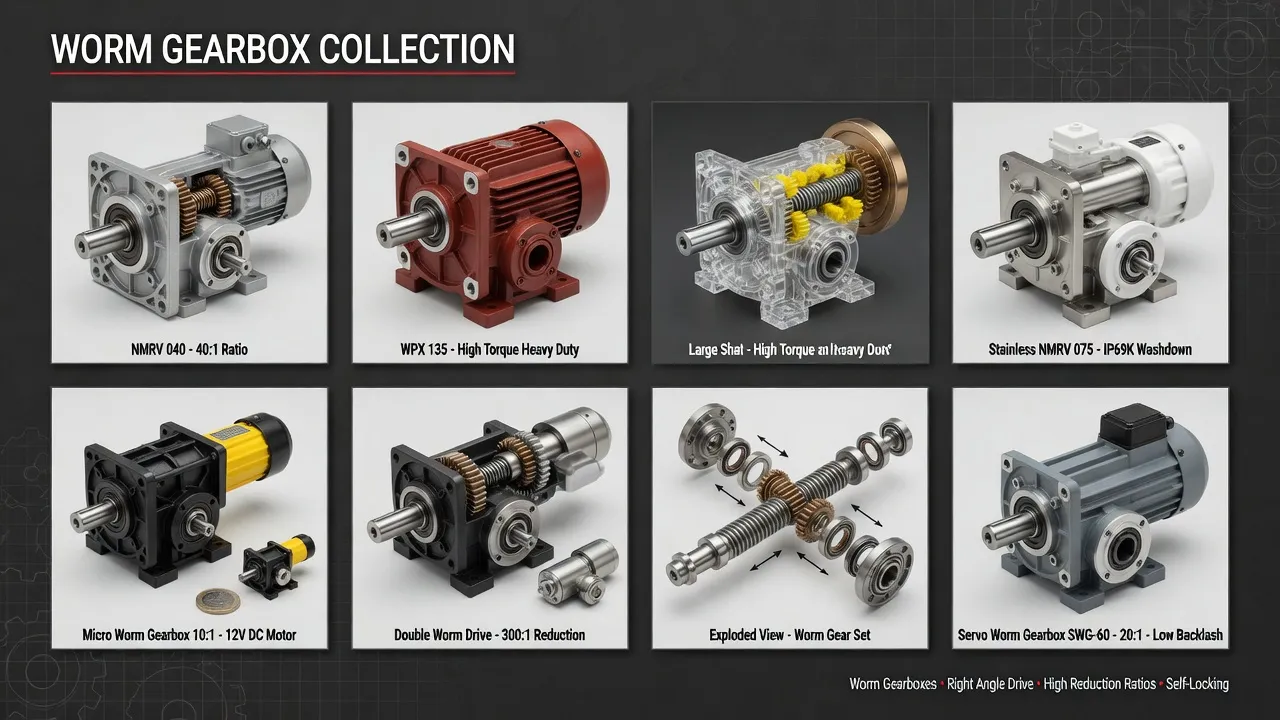
Technical Parameters: Center Pivot Drive Specification Window
The table below summarizes specifications distinguishing agricultural center pivot wheel drives from generic industrial alternatives. Values reflect AGMA 6034-B92 worm gear power rating combined with irrigation industry conventions for seasonal duty and outdoor exposure.
| Parameter | Center Pivot Spec | Generic Industrial |
|---|---|---|
| Output configuration | 90° hollow shaft on wheel hub | 90° solid shaft typical |
| Reduction ratio range | 40:1 to 80:1 (self-lock zone) | 5:1 to 100:1 |
| Output torque (rated) | 600 – 4,200 Nm | 200 – 2,000 Nm typical |
| Operating temperature | -30 °C to +55 °C | -10 °C to +60 °C |
| Sealing rating | IP66 plus condensation resistant | IP54 standard |
| Service factor | 2.0 minimum, 2.5 recommended | 1.0 – 1.25 typical |
| Lubricant | Synthetic PAO wide-temp range | Mineral oil typical |
| Compliance | CE, RoHS, ISO 9001:2015 | CE only |
The single specification most often miscalculated on center pivot projects is the operating temperature range. Catalog ratings typically assume -10 °C to +60 °C ambient, but cropland installations routinely face -25 °C to -35 °C winter storage temperatures across northern growing regions, plus +50 °C summer ambient temperatures inside dark-painted housings exposed to direct solar gain. Drives specified for standard industrial temperature range fail through lubricant viscosity issues during cold startup events and through seal degradation during hot summer operation. Specify -30 °C to +55 °C operating range with appropriate synthetic lubricant fill to cover the actual cropland service environment.
Application Matrix: Where Center Pivot Drive Equipment Operates
Standard Center Pivot Wheel Drives
Standard center pivot systems serve large-acreage row crop operations including corn, soybean, wheat, and cotton across regions with adequate water resources. System lengths range from 200 meters covering 12 hectares through 700 meters covering 150+ hectares, with 4 to 16 wheel drive positions distributed along the spans. Each wheel drive handles output torques from 600 to 2,400 Nm depending on system size, soil conditions, and span loading. Drive duty involves continuous-duty operation across 4 to 6 month growing seasons with rotational speed controlled to deliver target water application depth (typically 12 to 25 mm per pass).
High-Profile Pivot Drives for Tall Crops
High-profile pivot systems serve specialty crops including sugarcane, sorghum, and tall corn varieties with elevated truss profiles enabling clearance over crop canopy heights up to 4-5 meters. The elevated structure increases the wind loading on wheel drives during gusty conditions and increases the leverage forces on each wheel position during turning movements at end-tower turn arounds. Output torques on high-profile drives reach 1,800 to 4,200 Nm to handle the elevated structural loading. Service factor 2.5 covers the additional shock loading from wind events on tall structures.
Linear Move Irrigation Drive Systems
Linear move irrigation systems travel in straight-line patterns rather than rotational tracks, serving rectangular field shapes that don’t accommodate center pivot geometry efficiently. Drive duty parallels center pivot wheel drives but adds the specific challenge of straight-line tracking accuracy across multiple wheel positions that must remain in phase to prevent system jackknifing. Output torques range 800 to 3,200 Nm depending on system size. Drive specifications include the same outdoor exposure and seasonal duty considerations as center pivot applications, with additional emphasis on consistent rotational speed across all drive positions to maintain straight-line tracking.
Towable and Repositionable Pivot Drives
Towable pivot systems support irrigation on multiple field positions across a single growing season through periodic relocation between target fields. Drive duty includes standard center pivot rotation operation plus the additional duty of road-tow events at higher speeds during between-field repositioning. Output torque requirements match standard pivot drives, but bearing fatigue ratings benefit from additional margin to handle the road-tow shock loading. Reference agricultural reducer specification references for detailed application sizing examples.
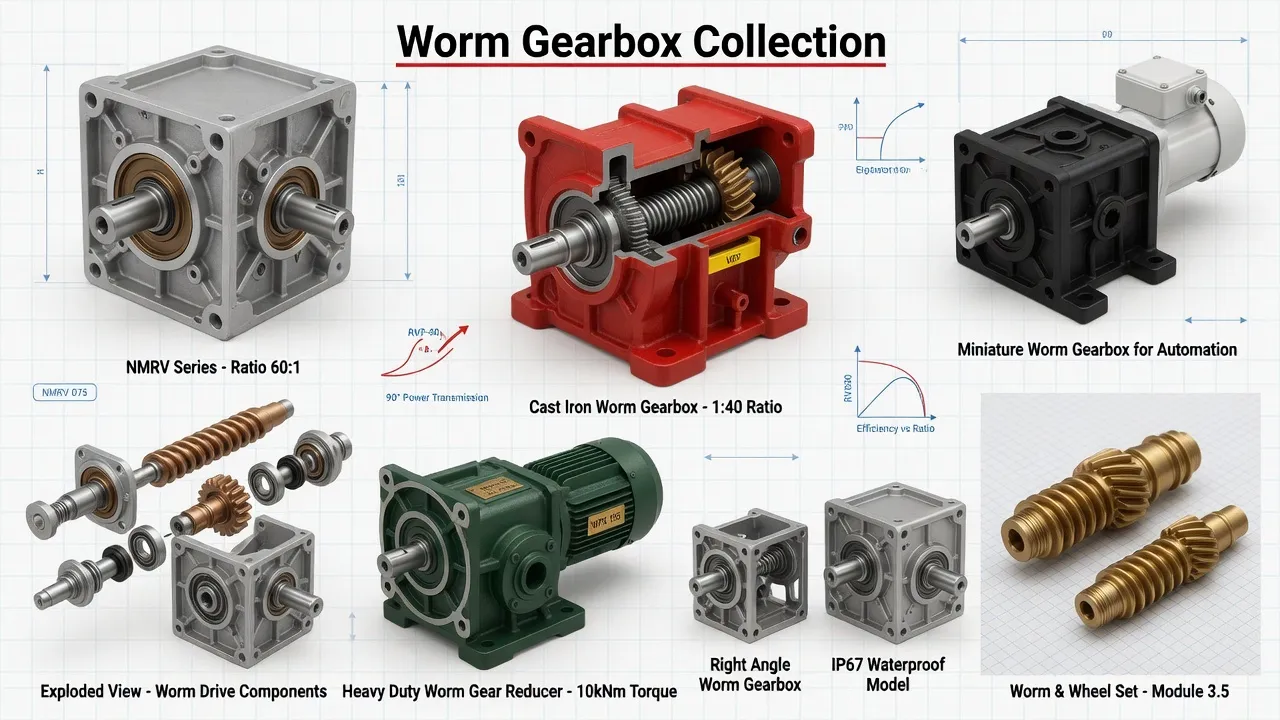
Selection Roadmap: Step-by-Step Workflow
The four-step procedure below covers center pivot wheel drive selection from initial requirements documentation through commissioning verification.
Calculate Per-Wheel Pulling Force and Torque
Determine total system weight (structure plus water plus pivot point loading) and divide across wheel drive positions accounting for end-tower load distribution that concentrates loading at outer drive positions. Calculate pulling force from soil rolling resistance coefficient (typically 0.06-0.12 for cropland) plus tilt component on sloped fields. Convert pulling force to wheel shaft torque using wheel radius. Document worst-case soil condition torque (mud during early-season wet conditions) for service factor sizing.
Apply Service Factor 2.0 Minimum for Agricultural Duty
Multiply calculated worst-case torque by 2.0 for typical center pivot wheel drive service, 2.5 for high-profile pivots and steep sloped fields, and 3.0 for towable systems with road-tow events. The resulting equivalent uniform-duty torque is what the catalog rating must exceed at the chosen reduction ratio. Service factor below 2.0 produces drives that fatigue within 5-7 growing seasons regardless of housing material or other specifications.
Specify Wide-Temperature Range Synthetic Lubricant
Order synthetic polyalphaolefin (PAO) lubricant fill rated for -30 °C to +55 °C operating range matching cropland service environment. Wide-range synthetic lubricants maintain pumping viscosity during early-season cold startup events and resist thermal degradation during summer operation under solar gain. Specify the lubricant requirement explicitly on procurement documentation rather than accepting default mineral oil fills that fail at temperature extremes.
Verify IP66 Plus Condensation-Resistant Sealing
Confirm the gearbox sealing package includes IP66 ingress protection for outdoor exposure plus condensation-resistant breather configuration that prevents water ingress during winter storage thermal cycling. Specify Viton seal lips at all shaft penetrations with stainless garter springs. Use stainless steel A2 mounting hardware throughout to prevent galvanic corrosion seizing during future maintenance operations after multi-year cropland exposure.
Spare Parts Integration: Pre-Season Preparation Maintenance
Center pivot maintenance prioritizes replacement stock matching the pre-season preparation window typical of cropland operations — typically 3 to 5 weeks of preparation work before first irrigation cycle each spring. The worm shaft, machined from 20CrMnTi case-hardened steel with ground and polished thread surfaces hardened to HRC 58-62 per DIN 3974 quality grade Q8, reaches 25,000+ operating hours under proper synthetic lubrication and IP66 sealing protection — typically translating to 12 to 15 growing seasons of cropland service before major rebuild.
The worm wheel, centrifugally cast from premium tin bronze ZCuSn10P1 per ISO 1338 with ground tooth surfaces, reaches 18,000 to 25,000 operating hours under proper lubrication. Premium-grade SKF or NSK tapered roller bearings handle the combined radial and axial loads typical of wheel drive service with L10 fatigue life exceeding 25,000 hours under rated load. Output and input shaft seals (Viton with stainless garter springs) require preventive replacement at 5-year intervals during scheduled fall winterization service. See worm and gear set technical references for component-level specification details.
Spare parts kits combining worm shaft, worm wheel, complete bearing set, all shaft seals, gasket kit, breather valve, and synthetic lubricant fill provide complete rebuild capability during fall winterization or pre-season preparation windows. Akgnx Co., Ltd ships kits packaged for typical large-acreage farm operations inventory practices, with all wear components sourced from the same factory production runs to ensure dimensional consistency across rebuild cycles.
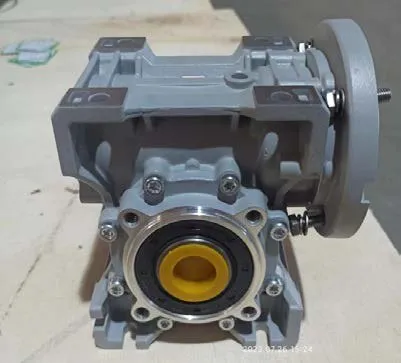
Cost & Sustainability: Total Ownership Across 15-Season Service
Large-acreage farm operations evaluate irrigation drive investments across 12 to 15 growing season horizons matching typical equipment depreciation schedules and field improvement amortization periods. The table compares total cost of ownership for agricultural-grade center pivot drives against generic industrial alternatives across this horizon.
| Cost Component | Agriculture-Grade MRV | Generic Industrial |
|---|---|---|
| Initial unit price (FOB) | USD 480 – 1,800 | USD 320 – 1,100 |
| Service life in cropland | 12 – 15 seasons | 3 – 5 seasons |
| Replacement frequency | 1× over 15 seasons | 3 – 4× over 15 seasons |
| Early-season failure risk | Very low (annual prep) | High in years 4-5 |
| Lubricant interval | 3 seasons / fall service | Annual replacement |
| 15-season cumulative TCO | ~ 1× installed cost | ~ 3.4× installed cost |
Sustainability and compliance documentation accompanies every agriculture-grade MRV gearbox shipment. The housing carries CE marking per EU Machinery Directive 2006/42/EC and complies with RoHS Directive 2011/65/EU. Manufacturing follows ISO 9001:2015 quality management procedures with full material traceability from bronze worm wheel chemical composition through case-hardened worm shaft heat-treatment records. Worm gear tooth geometry follows DIN 3974 quality grade Q8 with load capacity per AGMA 6034-B92 worm gear power rating methodology adjusted for agricultural service factor.
Synthetic polyalphaolefin (PAO) lubricant fill produces 60 to 70 percent less waste oil over the equipment service life compared to mineral oil alternatives requiring annual changes — biodegradable lubricant chemistry options meeting OECD 301 standards address environmental concerns at watershed boundaries adjacent to cropland installations. Akgnx Co., Ltd manufactures agriculture-grade worm gearboxes through a dedicated irrigation drive program serving center pivot OEMs, large-acreage farm operations, and agricultural equipment dealers across major cropland markets globally.
Customer Testimonials from Large-Acreage Farm Operations
“Our 14-pivot corn and soybean operation runs across 1,200 hectares of irrigated cropland. We replaced the original wheel drives with MRV agriculture-grade units after losing four drives during the 2022 early-season startup — the late starts cost us roughly USD 28 per hectare in delayed planting that would have been avoided with reliable drive availability. Three growing seasons into the new units, zero early-season failures and our spring preparation window dropped from 5 weeks to 3 weeks.”
— Farm Operations Manager, Row Crop Operation, Nebraska USA
“As a center pivot OEM serving the agricultural irrigation market, we evaluated four alternative gearbox suppliers for our standard wheel drive package across system sizes from 200m to 700m. MRV passed our 5,000-hour accelerated cropland duty test simulating wet-soil pulling forces — measured backlash growth under 0.06° at test completion. Akgnx held our annual production schedule across two consecutive years for spring delivery commitments to dealer networks.”
— Director of Engineering, Center Pivot OEM, Spain
“We sourced direct dimensional replacements for an installed fleet of 56 wheel drives across 8 center pivot systems on our cooperative member farm operations. The MRV mounted to existing brackets without modification and supported our seasonal maintenance protocol with documented inspection points and lubricant schedules. Documentation arrived complete with the first shipment including AGMA calculation summary and synthetic lubricant safety data.”
— Equipment Coordinator, Agricultural Cooperative, Argentina
“High-profile pivots on our sugarcane operation require service factor 2.5 plus the additional torque capacity for tall-crop wind loading. MRV at the upgraded specification reached 8 growing seasons of service before our first scheduled major rebuild — substantially better than any alternative we previously deployed. The reduction in mid-season service intervention freed roughly 240 hours of maintenance team time across our 18-pivot installation each year.”
— Operations Director, Sugarcane Estate, Brazil
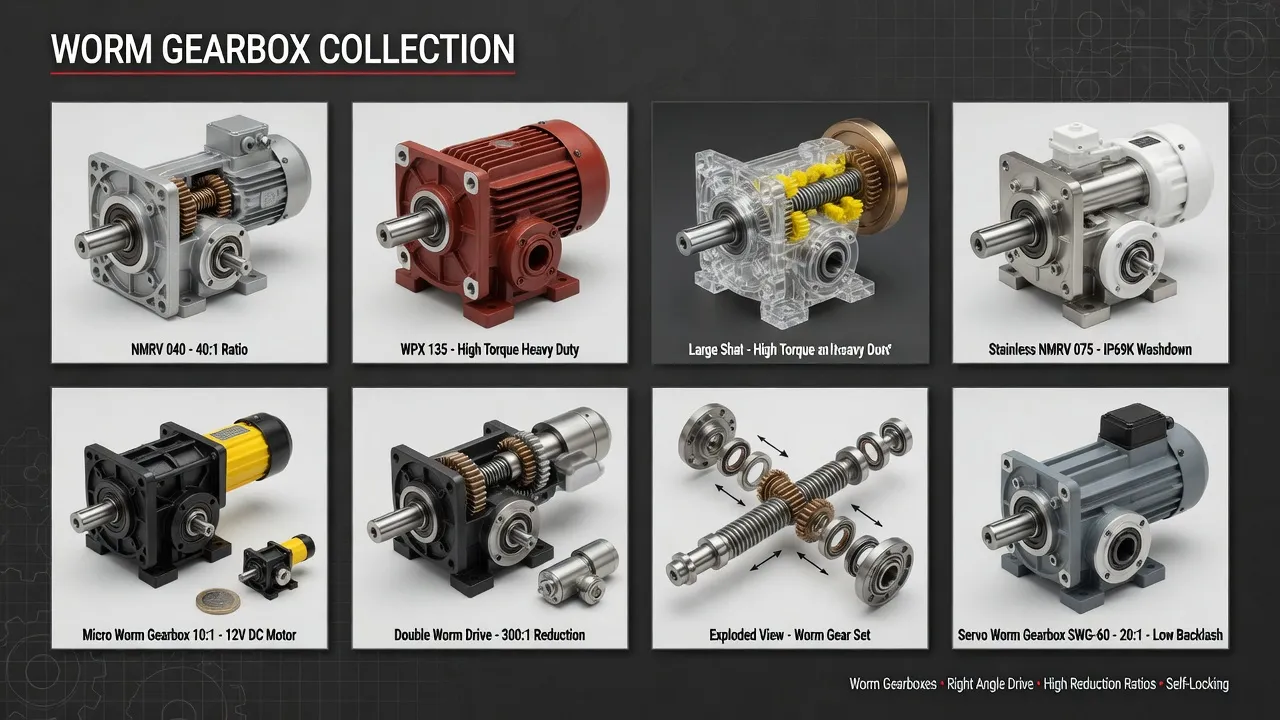
Recommended Drive: MRV NMRV Standard for Center Pivot Wheel Drives
For center pivot irrigation applications across standard and high-profile systems, linear move equipment, and towable pivot systems, the MRV NMRV Standard Worm Gearbox Series in agricultural specification targets the seasonal-duty, outdoor-exposure, self-locking service class with engineering features specifically chosen to address the failure modes that retire generic industrial alternatives within 3 to 5 growing seasons of cropland installation.
Specifications include cast iron housing with two-coat industrial epoxy paint plus UV-resistant topcoat for cropland exposure, centrifugally cast tin bronze ZCuSn10P1 worm wheel meshing with case-hardened 20CrMnTi steel worm shaft per DIN 3974 quality grade Q8, fluoroelastomer (Viton) double-lip seals with stainless garter springs, IP66 ingress protection plus condensation-resistant breather configuration, and synthetic polyalphaolefin (PAO) lubricant fill rated for -30 °C to +55 °C operating temperature range. Reduction ratios from 40:1 through 80:1 maintain reliable static self-locking across the full irrigation duty range. Output torque on the MRV130 frame reaches 3,400 Nm continuous with self-locking holding torque to 720 Nm at 60:1 reduction. CE marking, RoHS compliance, and ISO 9001:2015 quality system certification ship with every unit.
Beyond the MRV frame, complete center pivot drive packages typically pair the worm gearbox with agricultural-rated IEC TEFC induction motors at 0.75 kW or 1.1 kW frame size, weatherproof control connection box, and stainless steel A2 mounting hardware throughout. Akgnx Co., Ltd supplies matched drive packages for center pivot equipment OEMs and provides aftermarket replacement units for installed irrigation equipment fleets across major agricultural markets globally.
Specifying Drives for Center Pivot Irrigation?
Send system size, structure type, soil conditions, and required wheel torque. We supply MRV NMRV worm gearboxes engineered for self-locking seasonal-duty cropland service with IP66 outdoor sealing.
Frequently Asked Questions
© Akgnx Co., Ltd · About Us · Contact Us · [email protected]