
The Engineering Reality of Material Selection in Worm Gearboxes
In high-torque industrial transmissions, selecting the wrong material for a worm wheel can result in an efficiency loss of over 30% and premature failure within 500 operating hours. According to AGMA 6034-B92 standards, the sliding action inherent in a $90^\circ$ worm gear configuration demands a delicate balance of friction coefficients and thermal conductivity. Whether you are operating a heavy-duty winch or a precision solar tracker, the choice between phosphor bronze, ductile cast iron, or high-performance polymers determines your system’s longevity and total cost of ownership.
At gearboxesworm.net, we specialize in high-efficiency transmission solutions. This guide provides a technical roadmap for procurement officers and mechanical engineers to navigate the complexities of worm gear metallurgy.
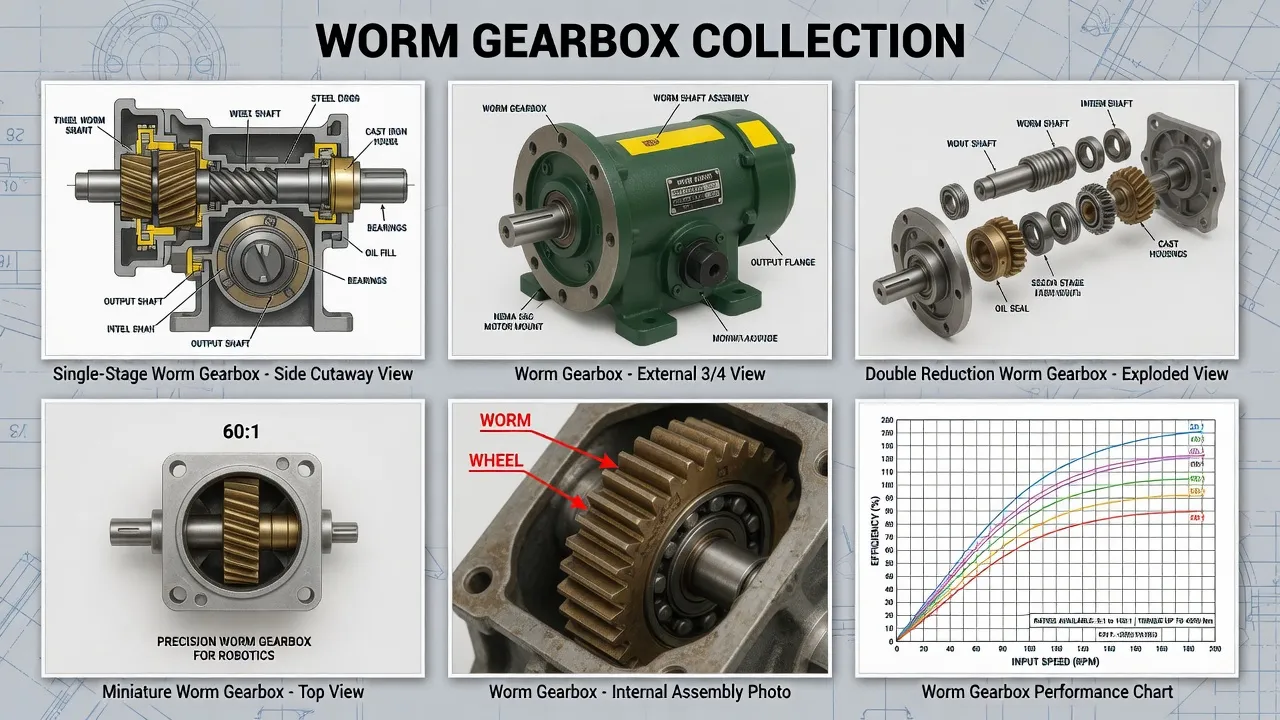
Core Materials: Comparative Engineering Analysis
1. Phosphor Bronze (The Gold Standard)
Bronze is the most common material for the gear (wheel) because its low coefficient of friction against a hardened steel worm prevents galling. High-tin bronze alloys are preferred for their superior wear resistance under boundary lubrication conditions.
- Best For: High-speed continuous duty.
- Key Benefit: High heat dissipation and “self-lubricating” properties.
2. Ductile Cast Iron (Heavy Load)
Used primarily in low-speed, high-torque applications where shock loads are frequent. While more abrasive than bronze, cast iron provides exceptional structural integrity and compression strength for static loads.
- Best For: Heavy lifting and intermittent motion.
- Key Benefit: Lower material cost and high vibration damping.
3. High-Performance Plastics (Nylon/POM)
Modern polymers offer significant advantages in noise reduction and weight. When paired with a polished worm, plastic gears can operate with minimal lubrication in food-grade environments.
- Best For: Pharmaceutical and food processing.
- Key Benefit: Corrosion resistance and ultra-quiet operation.
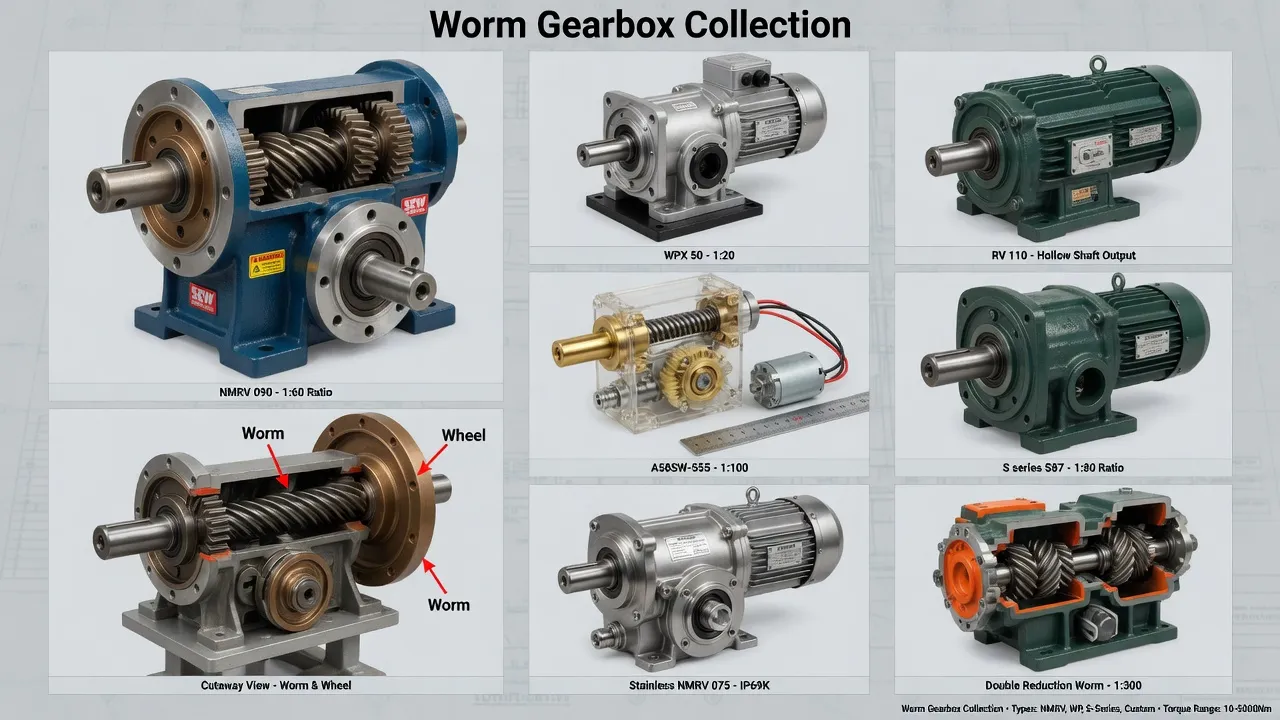 Technical Specifications Matrix
| Parameter | Bronze Wheel | Cast Iron Wheel | Plastic (Nylon) |
|---|---|---|---|
| Typical Gear Ratios | 5:1 to 100:1 | 10:1 to 60:1 | 5:1 to 40:1 |
| Self-Locking Ability | Excellent (High Friction) | High (Lead angle dependent) | Moderate |
| Standard Compliance | DIN 3974 Grade 6-7 | ISO 9001:2015 | RoHS/FDA Compliant |
| Operating Temperature | Up to 120°C | Up to 200°C | -20°C to 70°C |
Application Matrix: Where Materials Meet Motion
Solar Tracking Systems
Worm gearboxes are critical for solar trackers because of their self-locking torque values. Bronze wheels are utilized here to withstand constant micro-adjustments and harsh UV exposure, ensuring the solar panels remain positioned against wind loads without back-driving.
Industrial Conveyors & Logistics
In logistics centers, $90^\circ$ angle worm reducers save space. Our MRV series worm gearbox features a die-cast aluminum housing and a synthetic lubricant-filled bronze gear, optimized for 24/7 operation with minimal heat buildup.
)
Food & Pharmaceutical Machinery
For washdown environments, the HSRV Stainless Steel Worm Gearbox is the industry preference. Utilizing plastic worm wheels or specialized bronze alloys, these units prevent contamination while adhering to strict CE and RoHS regulations.
Engineering Selection Guide: 4 Steps to the Right Material
Define Sliding Velocity
If velocity exceeds 5 m/s, bronze is mandatory to prevent thermal seizure.
Analyze Duty Cycle
Continuous duty requires the heat dissipation of metals; intermittent can use polymers.
Environmental Check
Use stainless steel/plastic for washdown or corrosive chemical zones.
Back-Driving Needs
Calculate lead angles for self-locking requirements in hoisting applications.
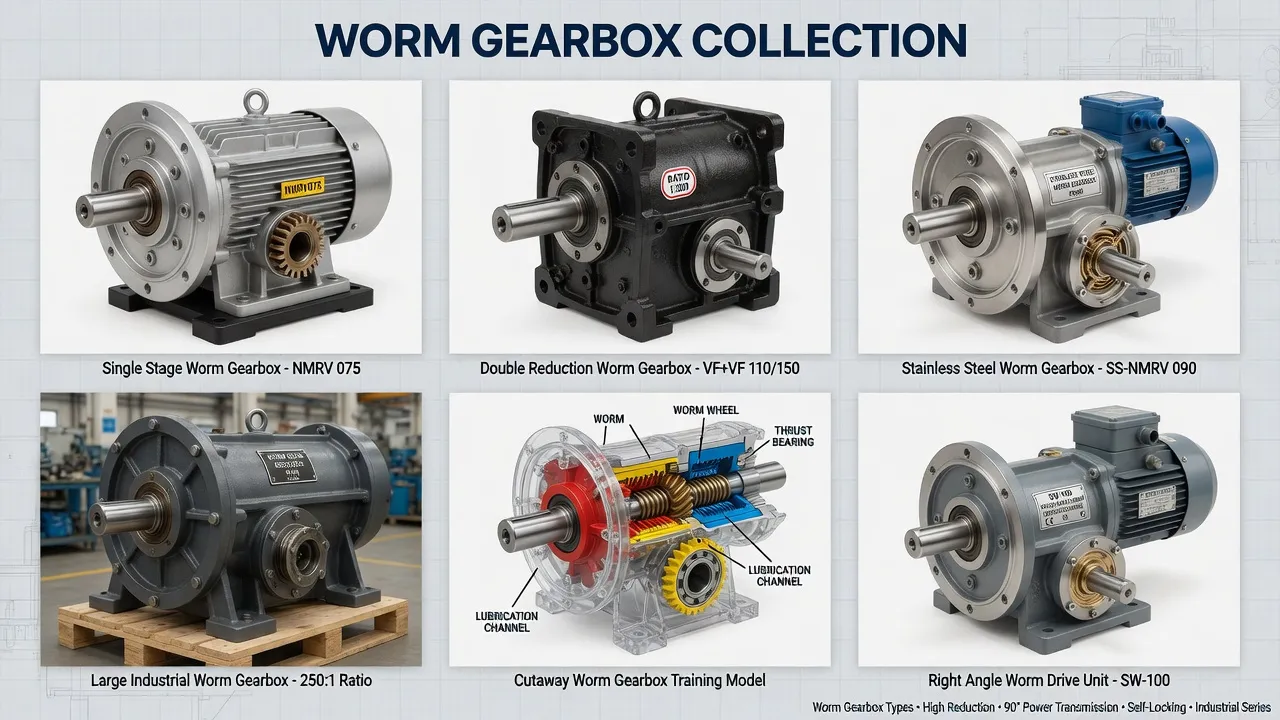 Spare Parts Integration & Sustainability
A gearbox is only as strong as its weakest component. To maintain the structural integrity of your drive system, we offer precision-machined worm shafts, matched worm wheel sets, and high-performance tapered roller bearings. By adhering to ISO 9001 manufacturing standards, our replacement parts extend the service life of existing units, significantly reducing industrial waste.
Cost & Lifecycle Comparison
| Material Type | Relative Initial Cost | Maintenance Cycle | Sustainability Rating |
|---|---|---|---|
| Bronze Wheel | High (Raw material cost) | Semi-annual (Oil change) | High (Recyclable) |
| Cast Iron Wheel | Medium | Annual (Wear inspection) | Moderate |
| Nylon / Polymer | Low | Low (Self-lubricating) | Variable (Depends on resin) |
Industry Feedback
“The bronze wheel selection for our high-speed sorting line reduced heat-related downtime by 40%.”
“Upgrading to your stainless steel series was a game-changer for our FDA compliance audit.”
“We found the load capacity of the cast iron wheels perfect for our mining winches.”
“The technical support regarding lead angle and self-locking was top-tier.”
Frequently Asked Questions
Why is bronze used for worm gears instead of steel?
Worm gears have high sliding friction. Pairing steel with steel leads to galling; bronze provides a lower coefficient of friction and acts as a sacrificial wear material to protect the harder steel worm.
What is the typical efficiency of a 100:1 worm gearbox?
At high ratios like 100:1, efficiency can drop to 40-50% due to the steep lead angle and friction losses. High-quality bronze wheels help mitigate these losses.
Are plastic worm gears durable enough for industrial use?
Yes, but only for low-torque, clean environment applications where noise and lubrication-free operation are prioritized over raw power.
What lubricant should I use for bronze worm gears?
Synthetic PAG-based lubricants are recommended to reduce friction and improve thermal management in bronze/steel pairs.
Explore more about our manufacturing processes at About Us or reach out for a custom quote at Contact Us.
Refer to external standards at ISO and AGMA.
“`